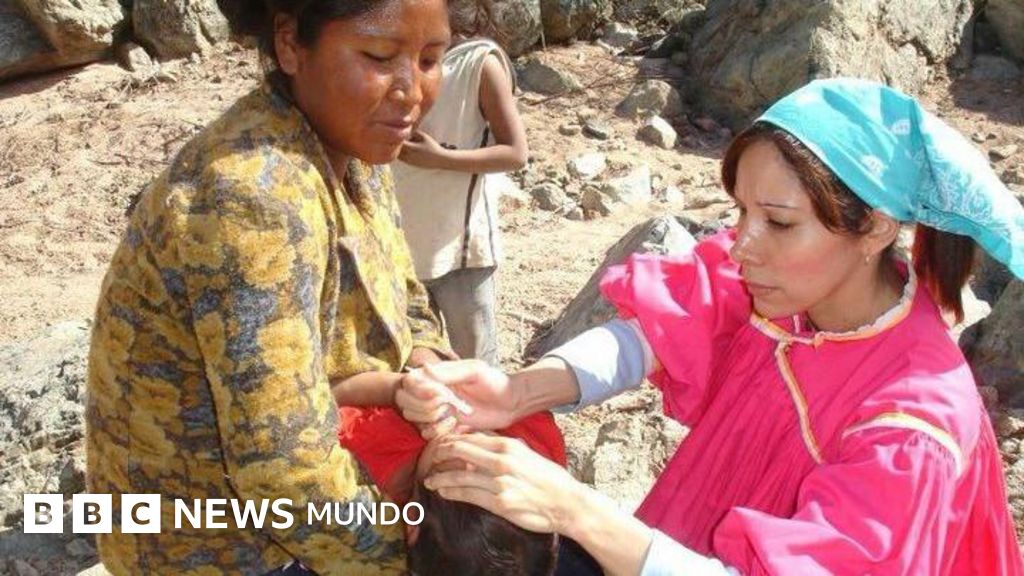
In the rugged expanse of the Sierra Tarahumara, where deep canyons and extreme climates create formidable barriers to basic human services, the difference between life and death often depends on a single person’s determination. For over 30 years, Julia Paredes has been that person, traversing some of Mexico’s most inhospitable terrain to ensure that life-saving vaccines reach those the modern healthcare system frequently overlooks.
Paredes’ journey into public health began not with a degree, but with a necessity. At age 16, unable to afford high school, she began assisting a medical intern in Batopilas, a little town of about a thousand residents in the state of Chihuahua. What started as a way to support her family evolved into a lifelong mission to combat preventable diseases in indigenous and mestizo communities. Her operate highlights the critical intersection of geography, ethnicity and healthcare access—a challenge that continues to define public health efforts in remote regions globally.
From a medical perspective, the challenges Paredes faced were immense. The Sierra Tarahumara is characterized by canyons that reach depths of up to 1,800 meters, making terrestrial communication nearly impossible in many areas. For the Rarámuri, a seminomadic indigenous people who migrate between high and low regions depending on the season, traditional healthcare delivery models are often ineffective. This mobility, combined with a lack of official civil registration for many Rarámuri individuals, historically made population counts and vaccination coverage nearly impossible to track.
A Catalyst for Change in Loreto
The trajectory of Paredes’ career was permanently altered at the age of 17 in the locality of Loreto, Chihuahua. There, she witnessed the devastating impact of measles, a disease that is entirely preventable through vaccination. She recalls the profound trauma of seeing children, the most vulnerable members of the community, succumb to the infection and hearing the cries of grieving families.
This experience solidified her commitment to nursing. Reflecting on her path, Paredes has stated that she did not choose nursing, but rather that nursing chose her. The realization that a simple vaccine could prevent such widespread suffering became the driving force behind her work, leading her to spend the next three decades navigating mountains to bring hope and health to the region.
Bridging the Gap for the Rarámuri People
When Paredes began her work in the late 1980s, the landscape of preventative medicine in Mexico was in its infancy. The national vaccination program began in 1986, and in the remote reaches of Chihuahua, initial coverage was staggeringly low. Paredes estimates that vaccination coverage in those communities may have been as low as 5% during that era.
Her approach was grassroots and exhaustive. Alongside the medical intern who first trained her, Paredes conducted house-to-house vaccination campaigns, alternating weeks between vaccinating children and animals. Beyond the clinical administration of vaccines, she became a fundamental part of the community’s social fabric, often serving as a midwife and becoming a godmother to many of the children she helped bring into the world.
By the late 1990s, Paredes’ deep knowledge of the terrain and the trust she had built with the local populations allowed her to transition into a strategic role. She became a guide for the opening of new health routes across Chihuahua, the largest state in Mexico, helping the government establish sustainable pathways to deliver healthcare to previously unreachable points.
From Field Work to State Supervision
The transition from a field nurse to a policy-influencing role marks a significant achievement in public health leadership. Today, at age 52, Julia Paredes serves as the state supervisor of the Universal Vaccination Program in Chihuahua. In this capacity, she oversees the strategic deployment of vaccines, ensuring that the lessons she learned in the canyons—the importance of cultural sensitivity, the need for flexible delivery schedules, and the necessity of trust—are integrated into the state’s health strategy.
Her career trajectory underscores a vital lesson in medical journalism and public health: the most effective healthcare interventions are often those led by individuals who understand the specific cultural and geographical barriers of the population they serve. By bridging the gap between centralized health programs and the nomadic realities of the Rarámuri, Paredes has helped transform the health outcomes of an entire region.
Key Challenges in Remote Vaccination
| Barrier | Impact on Public Health | Paredes’ Approach |
|---|---|---|
| Geography | Canyons up to 1,800m deep. extreme climates. | Physical traversal of mountains; creating new health routes. |
| Population Mobility | Seminomadic Rarámuri movements. | House-to-house visits; seasonal tracking. |
| Administrative Gaps | Lack of civil registration for indigenous people. | Direct community engagement and manual tracking. |
| Initial Coverage | Estimated 5% vaccination rate in late 1980s. | Consistent, long-term presence and trust-building. |
As the Universal Vaccination Program continues to evolve, the focus remains on eliminating the “last mile” of healthcare delivery. The work of supervisors like Paredes ensures that the most remote communities are not just counted in statistics, but are actively protected against preventable diseases.
The ongoing effort to maintain high vaccination rates in Chihuahua requires constant vigilance and the continued adaptation of delivery methods to meet the needs of indigenous populations. The next phase of these efforts involves sustaining the health routes established over the last three decades to prevent the resurgence of diseases like measles.
We invite our readers to share their thoughts on the challenges of rural healthcare delivery in the comments below.
Worth a look