Unveiling “The Cliff“: A New Black Hole Star Model Challenges Early Galaxy formation Theories
For decades, astronomers have puzzled over enigmatic objects in the early universe dubbed “Little Red Dots.” These faint, distant sources defy easy categorization, and one particularly perplexing example, nicknamed “The Cliff,” has presented a unique challenge. Now, a groundbreaking new model – the “Black Hole Star” (BH) – proposed by an international team of researchers, offers a compelling explanation for The Cliff’s unusual characteristics and could reshape our understanding of early galaxy growth.
The Mystery of The Cliff: A Spectrum Unlike Any Star
The Cliff’s spectral signature is strikingly peculiar.Unlike the smooth, predictable light patterns emitted by stars and even galaxies, The Cliff’s spectrum exhibited a dramatic, steep rise – a feature astronomers termed “The Cliff” itself. This spectral profile didn’t resemble any known stellar phenomenon. Instead, it mirrored the intense, focused energy output of a single, incredibly hot star, a stark contrast to the blended light expected from an entire galaxy. This anomaly demanded a new theoretical framework.
Introducing the Black Hole Star (BH): A Hybrid Engine
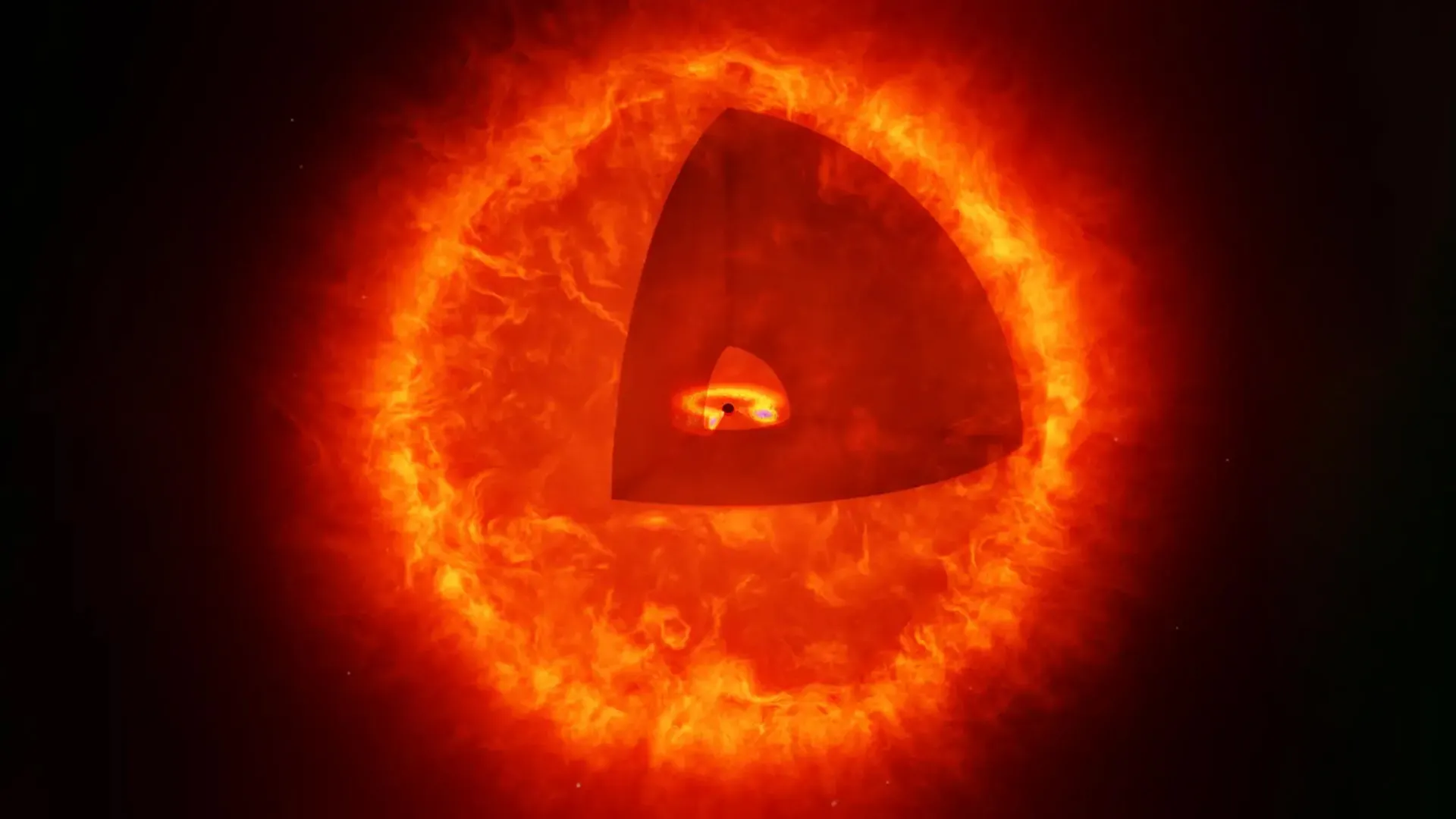
Led by Anna de graaff of the Max Planck Institute for Astronomy, the research team proposes a novel concept: the Black Hole Star (BH). This isn’t a star in the conventional sense, powered by nuclear fusion. Rather, a BH is an active galactic nucleus (AGN) – a supermassive black hole actively consuming matter – surrounded by an exceptionally dense and turbulent envelope of hydrogen gas.
Here’s how it works: the accretion disk around the black hole generates immense heat. This heat, in turn, energizes the surrounding hydrogen gas, causing it to glow. The dense gas layer reddens the emitted light,and crucially,replicates the outward appearance of a star’s outer layers. While lacking fusion, the energy source – the black hole - mimics the heating process of a star, creating a surprisingly similar observable effect.
“the models we’ve developed are early proofs of concept, but they successfully reproduce the observed features of The cliff far better than any previous attempt,” explains de Graaff. “The steep rise in the spectrum,The Cliff itself,is elegantly explained by this dense,spherical,and turbulent gas envelope surrounding the active galactic nucleus.”
Implications for Rapid Black Hole Growth in the Early Universe
The BH* model isn’t just about explaining a single,unusual object. It has profound implications for understanding how supermassive black holes formed and grew so rapidly in the early universe. Previous theoretical work on intermediate-mass black holes suggested that a gas-enshrouded environment could facilitate exceptionally fast accretion.
JWST (James Webb Space Telescope) observations have already revealed surprisingly massive black holes existing much earlier in cosmic history than previously thought. If supermassive BH* objects grow in a similar manner, they could provide a crucial mechanism for explaining this rapid growth, offering a new pathway for understanding early galaxy evolution.
A Cautionary Note: Peer Review and Future Validation
While the initial results are highly promising, the team emphasizes the need for continued scrutiny. The findings have been accepted for publication in Astronomy & astrophysics (de Graaff et al., ”A remarkable Ruby: Absorption in dense gas, rather than evolved stars, drives the extreme Balmer break of a Little Red Dot at z = 3.5″), alongside a companion paper detailing the broader RUBIES survey (Hviding et al., “RUBIES: A spectroscopic census of little red dots — All point sources with v-shaped continua have broad lines”). However, as with all scientific advancements, widespread acceptance hinges on further evidence and rigorous peer review.
Unanswered Questions and the Road Ahead
The BH* model, while groundbreaking, raises new and compelling questions:
* Formation: How do these black hole stars initially form? What conditions are necessary to create such a dense and persistent gas envelope?
* Sustainability: How does the gas envelope remain stable over extended periods, given the black hole’s constant consumption of material? What replenishes the gas supply?
* Spectral Details: What accounts for the other, more subtle spectral characteristics observed in The Cliff’s light?
To address these challenges, de Graaff’s team has already secured follow-up observations with JWST, scheduled for next year. These observations will focus on The Cliff and other intriguing Little Red Dots, aiming to refine the BH* model and gather further evidence.
A Potential Paradigm Shift in Early Galaxy Studies
The discovery of the BH* model represents a significant step forward in our understanding of the early universe. While the role of these objects in shaping the earliest galaxies remains to be definitively established, the possibility is undeniably intriguing. continued research, fueled by the power of JWST, promises to unlock further secrets
Keep reading