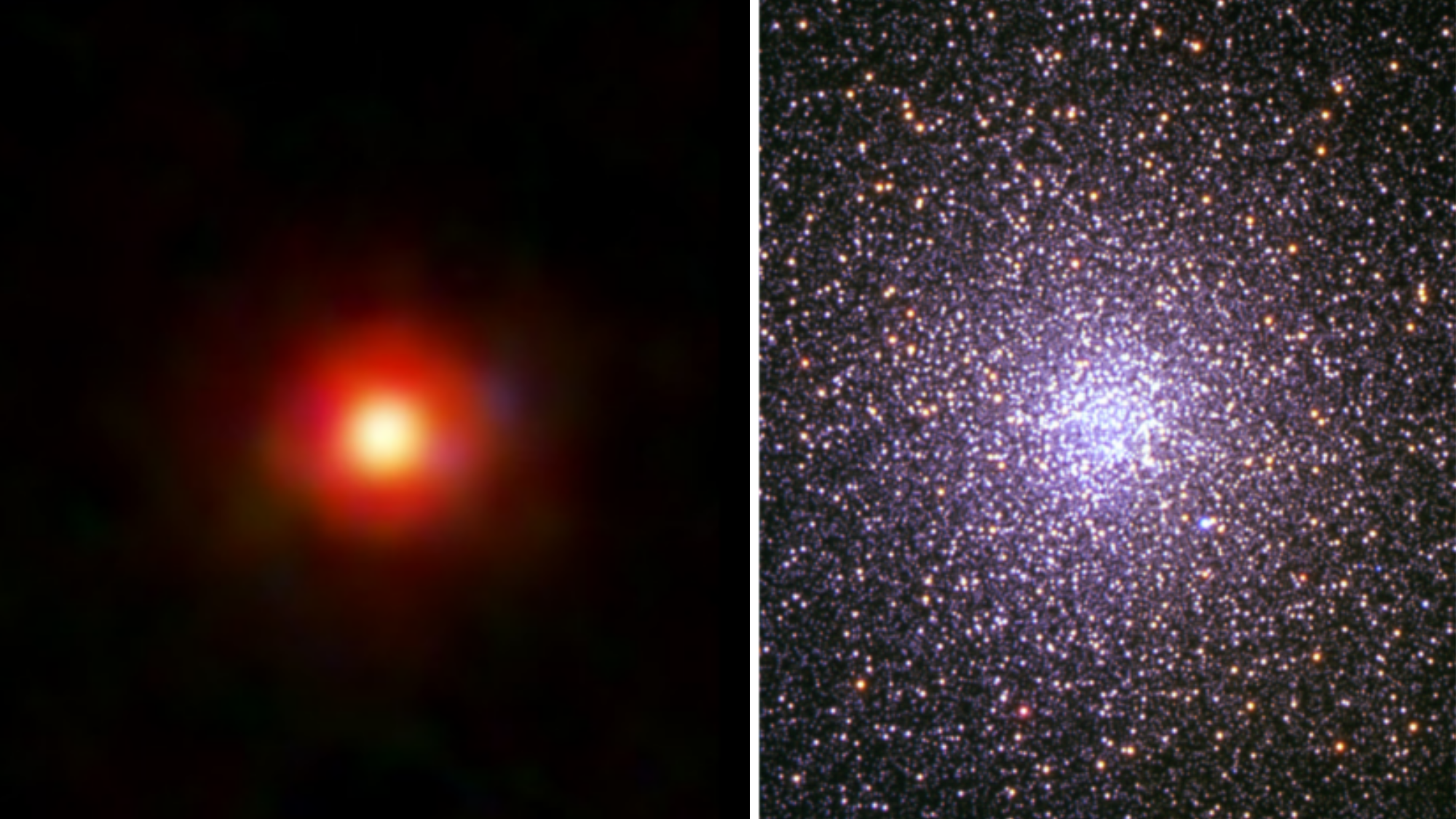
Astronomers studying tiny red smudges spotted by the James Webb Space Telescope propose they are not supermassive black holes, but newborn globular clusters forming in the early universe.
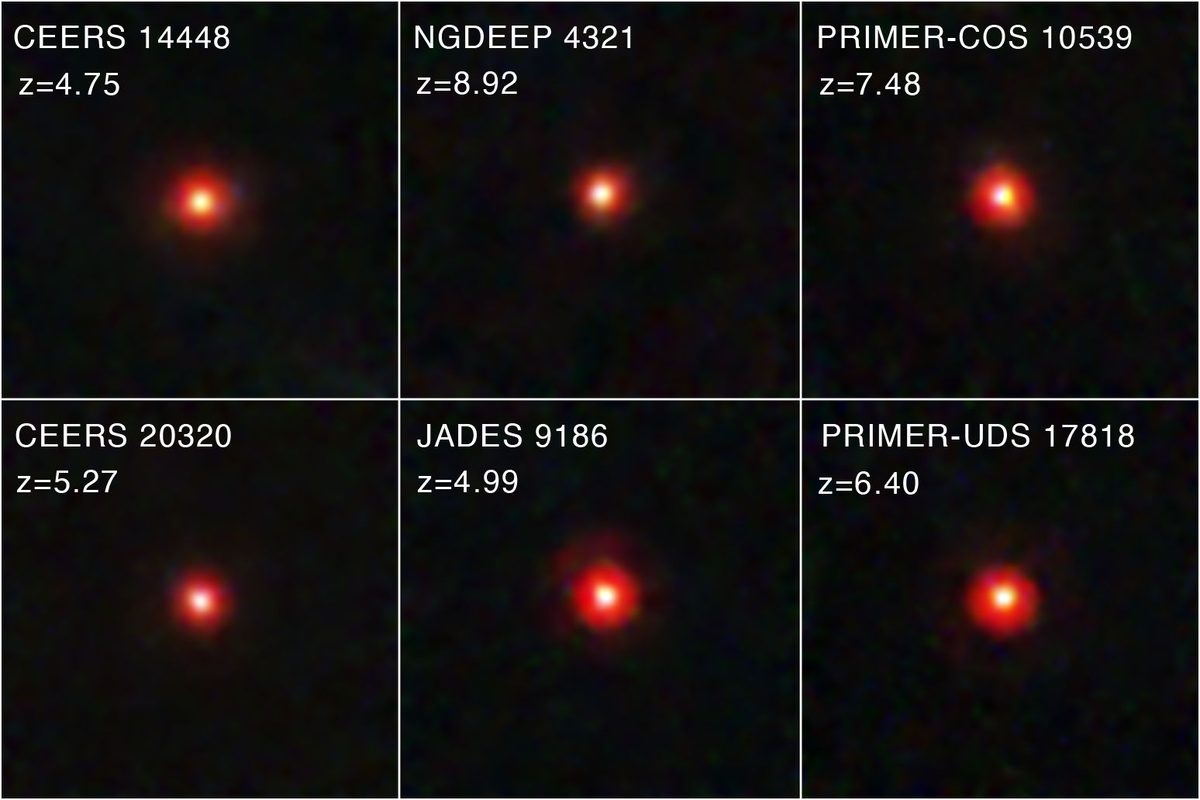
The James Webb Space Telescope upended conventional astronomy in 2022 when it began capturing an abundance of compact, brilliant red objects scattered across the early cosmos. These mysterious anomalies, quickly dubbed Little Red Dots,
emerged roughly 600 million years after the Big Bang before largely disappearing about a billion years later. Scientists have proposed many different explanations for Little Red Dots, including the suggestion that they could be black hole stars,
or black holes wrapped in vast shrouds of dense gas and dust.
Newborn Star Clusters and the Mysterious V-Shaped Light Signature
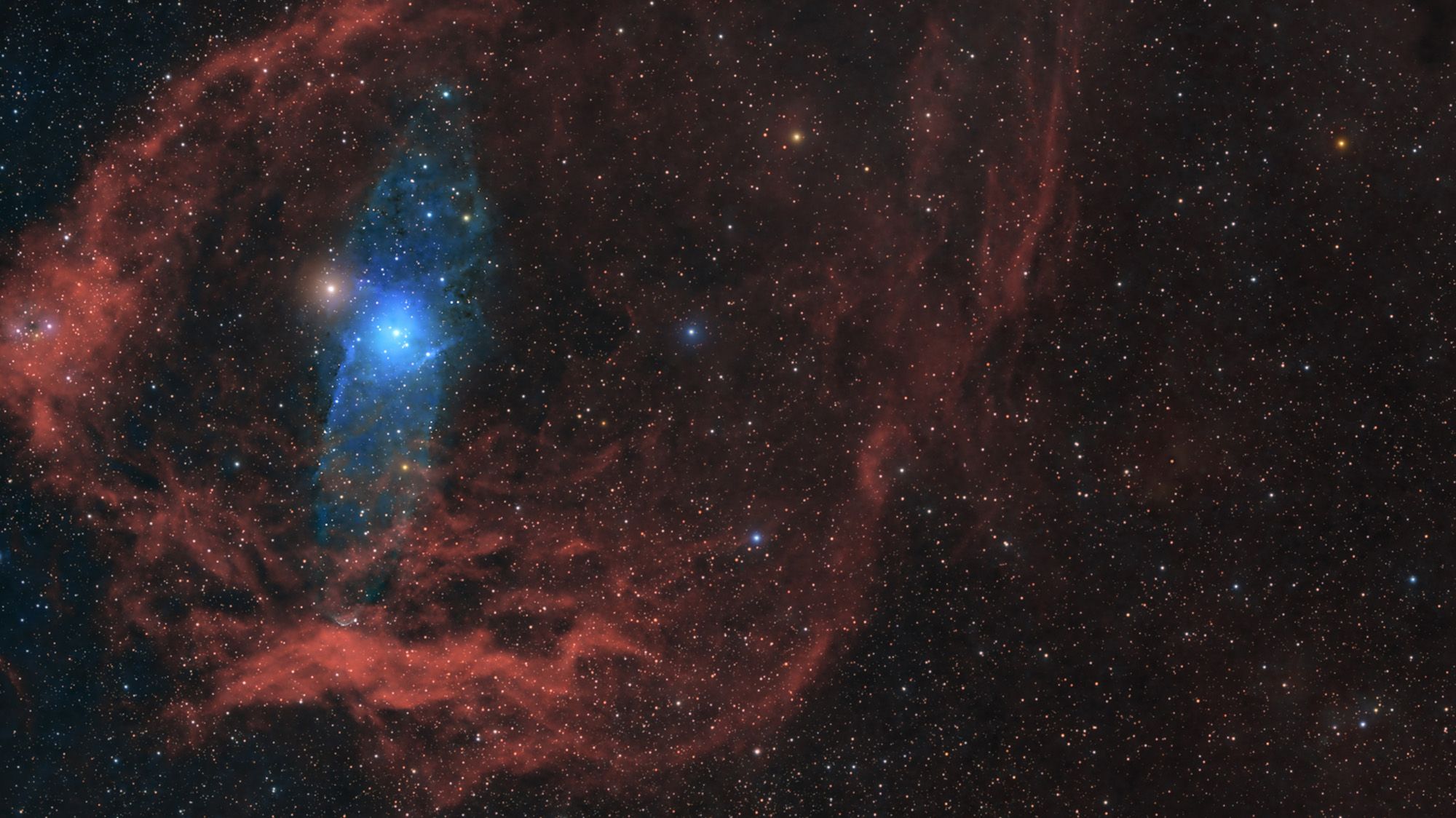
A study led by researchers at the University of Texas at Austin offers a radically different explanation. Rather than feeding black holes, these objects could be ancient globular clusters caught in the act of forming according to Space. Our Milky Way galaxy hosts at least 150 of these dense, spherical star aggregations, but astronomers have long struggled to reconstruct their original birth conditions because modern globular clusters are billions of years old with their initial gas cleared out.
The UT Austin team analyzed the peculiar light profile of Little Red Dots. Their models indicate that a forming globular cluster with a supermassive star, a hypothetical short-lived stellar body with between 1,000 and 10,000 times the mass of the Sun, would look a lot like a Little Red Dot at its heart.
“These may not be just a strange new JWST population with no connection to the universe around us today,” team leader John Chisholm of the University of Texas Austin said in a statement. “Instead, Little Red Dots may persist past the early universe, evolving into something relatively familiar.”
John Chisholm, University of Texas Austin
Models of Little Red Dot evolution show that their estimated masses could easily lead to the masses of globular clusters seen in the recent universe.
Little Blue Companions and Direct-Collapse Black Hole Formation
Parallel research published in The Astrophysical Journal Letters introduces another piece to the puzzle by examining the immediate surroundings of these objects. Combing through ultradeep surveys containing a sample of 83 Little Red Dots, researchers discovered that 36 of them—including over 80% of the brightest ones—host at least one companion shining brightly in blue-ish ultraviolet light according to Live Science.
“The most surprising aspect… is that these little red dots are not just ‘red dots,’ but there is a more complex emission nearby and around them,” Josephine Baggen, an astronomer at Yale University and first author of the study, told Live Science in an email. “We think those what we call ‘companions’ are starlight.”
Josephine Baggen, Yale University
Quasi-Stars
Other theoretical approaches test whether a black hole can maintain an active shroud of gas, creating a quasi-star model where a lightweight black hole weighing approximately 100,000 solar masses sits inside a dense atmospheric envelope reported BBC Sky at Night Magazine. While this model successfully matches observed infrared and hydrogen brightness, it struggles to predict ultraviolet output without assuming surrounding star formation noted BBC Sky at Night Magazine.
Whether viewed as newborn globular clusters, quasi-star cocoons, or other phenomena, Little Red Dots continue to challenge astronomers seeking to decode the earliest chapters of cosmic history.
Keep reading