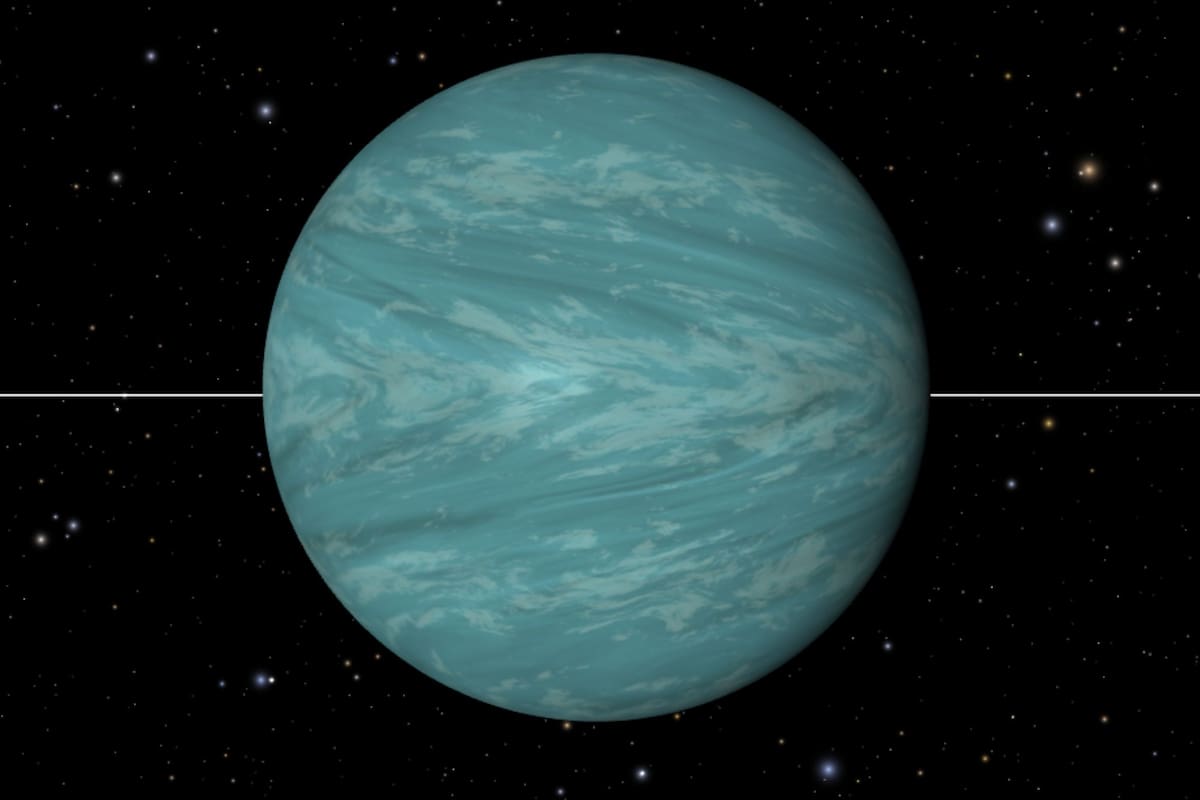
The quest to understand our place in the cosmos has reached a pivotal moment as the James Webb Space Telescope (JWST) continues to redefine the boundaries of astronomical observation. By peering into the deepest reaches of space, this premier observatory is providing scientists with an unprecedented seem at the early universe and the atmospheric conditions of distant worlds.
Among the most ambitious goals of the mission is the attempt to map the climates of planets that share characteristics with Earth. Recent reports have highlighted a surprising discovery regarding the temperature profiles of these distant bodies, suggesting that the “day-side” of some of these planets may reach temperatures between 100°C and 200°C. While these specific figures are based on emerging data and remain a subject of intense scientific scrutiny, they underscore the complexity of planetary climates outside our own solar system.
The ability to detect such precise thermal variations is a testament to the telescope’s sophisticated design and its strategic position in space. By analyzing infrared radiation, the JWST can “spot” through cosmic dust and detect heat signatures that were previously invisible to earlier generations of telescopes, allowing astronomers to build the first detailed climate maps of exoplanets.
The Engineering Behind the Discovery
To achieve this level of sensitivity, the James Webb Space Telescope was designed with groundbreaking technology. Launched on December 25, 2021, the observatory is a collaborative effort between NASA, the ESA, and the CSA. Unlike the Hubble Space Telescope, which orbits the Earth, the JWST orbits the Sun at a specific location known as the second Lagrange point, or L2.

This position, located 1.5 million kilometers (approximately 1 million miles) away from Earth, is critical for the telescope’s operation. By staying at L2, the JWST can keep the Sun, Earth, and Moon in a single direction, allowing its massive sunshield to protect its sensitive instruments from their infrared radiation NASA Science.
The sunshield is a marvel of engineering, consisting of five layers that provide a level of protection compared to an “SPF 1 million” sunblock. This extreme cooling is necessary because the telescope operates in the infrared spectrum; any heat leaking from the spacecraft itself would drown out the faint signals coming from galaxies born over 13.5 billion years ago.
Mapping the Climate of Distant Worlds
The primary objective of mapping exoplanet climates is to determine whether these worlds could potentially support life. By measuring the temperatures of a planet’s day-side and night-side, astronomers can infer the presence of an atmosphere and determine how heat is distributed across the planet’s surface.

When a planet is “tidally locked”—meaning one side always faces its star—the temperature difference between the permanent day-side and the permanent night-side can be extreme. The reported findings of temperatures between 100°C and 200°C on the day-side of some Earth-like candidates suggest that these worlds may be far more hostile than previously hoped, or that they possess atmospheric dynamics that move heat in ways we do not yet fully understand.
This process of “climate mapping” involves observing the planet as it passes in front of its host star. As the planet orbits, the telescope captures the light filtering through the planet’s atmosphere and the thermal emission from the planet itself, allowing scientists to calculate precise temperature ranges and identify chemical signatures in the air.
The Quest for Life-Supporting Systems
Beyond temperature mapping, the JWST is tasked with studying every phase of the universe’s history. This includes observing the first luminous glows after the Big Bang and the formation of solar systems that could potentially support life on planets similar to Earth NASA Science.
The search for habitable zones—the “Goldilocks” region where temperatures are just right for liquid water to exist—is a central pillar of the mission. Even if certain planets prove to be too hot, as suggested by the 100°C to 200°C reports, these discoveries are vital. They help astronomers refine their models of planetary evolution and narrow the search for truly habitable worlds.
The telescope’s unprecedented sensitivity allows it to detect the evolution of our own Solar System by looking at other systems in various stages of development. This comparative analysis provides a window into the past, showing how planets form from discs of gas and dust and how their atmospheres evolve over billions of years.
Key Technical Specifications of the JWST
| Feature | Detail |
|---|---|
| Launch Date | December 25, 2021 |
| Orbit Location | Second Lagrange Point (L2) |
| Distance from Earth | 1.5 million kilometers |
| Primary Goal | Study the early universe and exoplanet atmospheres |
| Partners | NASA, ESA, CSA |
As the James Webb Space Telescope continues its mission, the scientific community expects more data to emerge regarding the atmospheric compositions of rocky planets. Each new measurement brings us closer to answering the fundamental question of whether Earth is unique in its ability to sustain life.

The next confirmed phase of the mission involves the continued release of deep-field images and spectral analysis of target exoplanets as part of the telescope’s ongoing cycle of observations.
Do you think we will identify a truly habitable “Earth 2.0” in our lifetime? Share your thoughts in the comments below and share this article with fellow space enthusiasts.