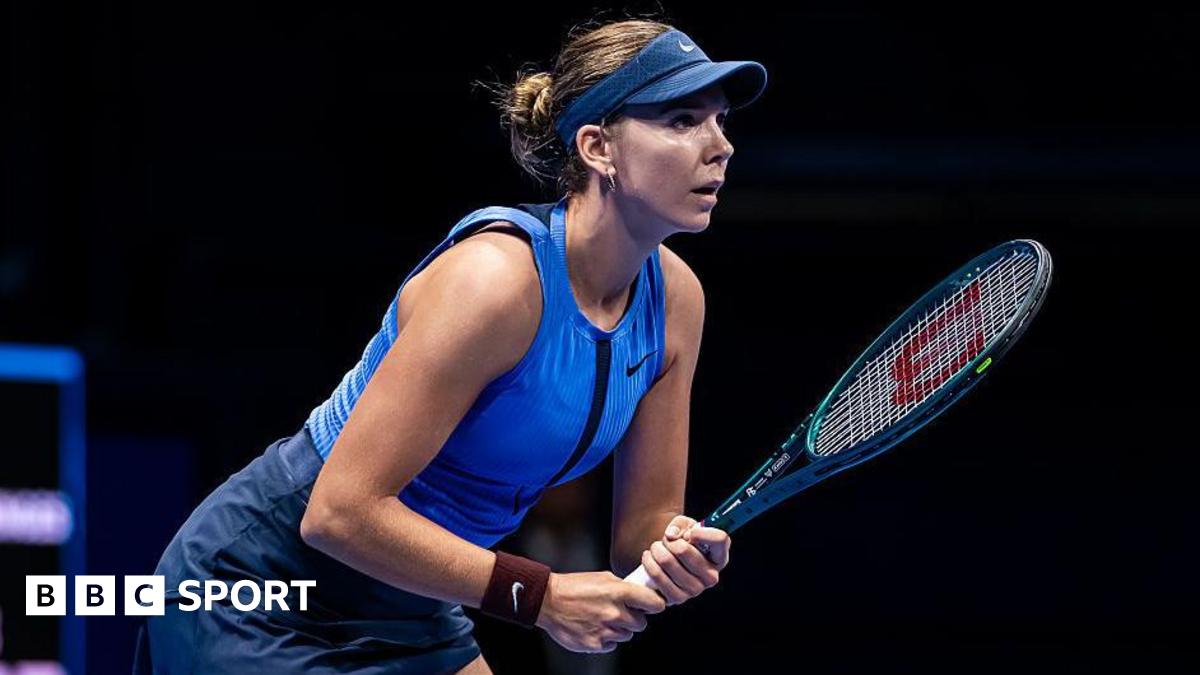
Katie Boulter‘s Recent Struggles: Analyzing a Dip in Form for the British Tennis Star
Are you a fan of Katie boulter, following her journey on the WTA tour? Recent results haven’t been kind to the British number three, and many are wondering what’s behind her current slump. This article dives deep into Katie Boulter’s recent performance, examining her losses in Tokyo and beyond, exploring potential causes, and looking ahead to what she needs to do to regain her competitive edge. We’ll cover her recent matches, analyse her statistics, and discuss the broader context of her career trajectory.
Boulter’s latest setback came at the Pan Pacific Open in Tokyo, where she suffered a swift 6-2, 6-1 defeat to Eva Lys, ranked 44th in the world. The match concluded in just one hour and 14 minutes,highlighting a important disparity in performance. This loss continues a concerning trend for the 29-year-old, raising questions about her current form and planning. It’s a stark contrast to the heights she reached, previously holding a world ranking of 29.
Understanding the Recent Losses
This defeat follows a similar pattern. just five days prior, Boulter lost in straight sets to Sorana Cirstea at the Japan Open. Before that, she hadn’t progressed past the second round of a tournament since the Nottingham Open in June.These consecutive losses aren’t simply bad luck; they point to underlying issues impacting her game.
The statistics from the Tokyo match are particularly revealing. Boulter only won 50% of points on her first serve and was broken five times by Lys. These figures indicate a struggle with consistency and a vulnerability under pressure. A key aspect of competitive tennis is minimizing unforced errors, and Boulter’s recent matches suggest an increase in these costly mistakes.
adding to the challenges, Emma Raducanu’s season ended prematurely due to illness, leaving Boulter as the sole British player in the Pan Pacific Open main draw. While a chance to shine,it also placed added pressure on Boulter to represent British tennis. Fran jones, ranked fourth in britain, also faced a first-round defeat at the Guangzhou Open, losing to Wang Xiyu in straight sets.
What could be contributing to this downturn? Several factors could be at play, including:
* Physical Condition: The demanding tennis schedule can take a toll on the body.
* Mental Fatigue: Pressure to perform and consistent travel can lead to burnout.
* Tactical Adjustments: Opponents may have identified weaknesses in Boulter’s game and are exploiting them.
* Surface Preference: Some players perform better on certain court surfaces (grass, clay, hard).
Analyzing Boulter’s Game and Potential Solutions
Boulter is known for her aggressive baseline game and powerful serve. However, recent performances suggest a decline in these areas. To regain her form, she needs to focus on several key areas. according to recent data from the WTA (October 2023), players who consistently improve their first-serve percentage by even 5% see a noticeable increase in their win rate.
here’s a step-by-step approach Boulter could take:
- Serve Consistency: Prioritize improving her first-serve percentage through targeted practice drills.
- Return of Serve: Work on reading opponents’ serves and developing a more aggressive return strategy.
- Mental Toughness: Engage a sports psychologist to develop coping mechanisms for pressure situations.
- physical Conditioning: Implement a tailored fitness programme to enhance endurance and prevent injuries.
- Match Analysis: Thoroughly review match footage to identify areas for advancement.
LSI Keywords: WTA rankings, tennis performance, professional tennis, sports psychology, tennis training, competitive tennis, baseline game, serve percentage.
The Broader Context: British Tennis and Rising Competition
Boulter’s struggles come at a time of transition for British tennis.With Raducanu sidelined, the pressure falls on players like Boulter and jones to carry the flag. However, the WTA tour is becoming increasingly competitive, with a new generation of talented players emerging. A recent report by the Lawn Tennis Association (LTA) highlights a need for increased
Related reading