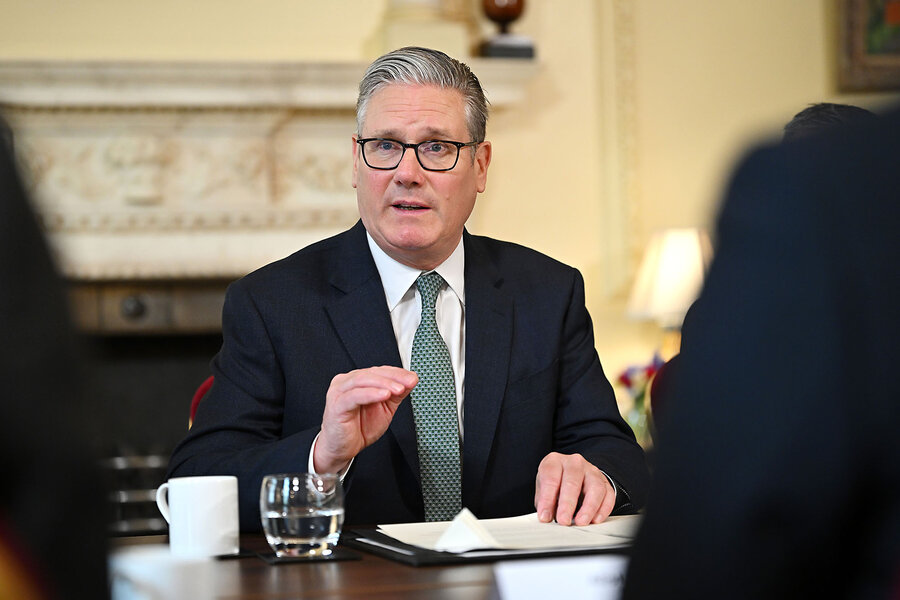
Keir Starmer became British prime minister in July 2024 after leading the Labour Party to a decisive victory in the general election, ending 14 years of Conservative rule. His campaign centered on promises of national renewal, economic stability, and restoring public trust in government following a period of political turbulence. Now, nearly a year into his premiership, Starmer faces growing scrutiny over his leadership, with critics accusing him of failing to deliver on key pledges and misleading the public about the government’s direction.
The pressure on Starmer has intensified amid rising living costs, strained public services, and internal Labour Party dissent. While he maintains support in Parliament, opinion polls show declining confidence in his ability to handle the cost-of-living crisis and healthcare delays. Opponents argue that his cautious, centrist approach has left voters disappointed, particularly those who hoped for more radical reforms after years of austerity. Supporters, but, contend that stabilizing a fractured economy and rebuilding institutional credibility require time and pragmatism.
As editor of the World section at World Today Journal, I’ve observed how leaders inheriting complex crises often face the harshest judgment not for what they break, but for what they fail to fix quickly enough. Starmer’s situation reflects a broader global trend: leaders elected on mandates of change are frequently judged against impossibly high expectations, especially when economic headwinds persist. What follows is a verified examination of the challenges confronting the British prime minister, the basis of the criticism against him, and what his continued leadership means for the UK’s political trajectory.
The Promise of Stability and the Reality of Governance
When Starmer entered 10 Downing Street on July 5, 2024, he did so with a clear mandate: to end the volatility that had seen four prime ministers in as many years. His victory speech emphasized unity, competence, and a commitment to “rebuild trust” in politics. Official records from GOV.UK confirm his assumption of office on that date, following Labour’s landslide win in the July 4 general election, which secured 412 seats in the House of Commons.
Starmer’s background as a former Director of Public Prosecutions and human rights lawyer shaped his campaign narrative — one of integrity, legal precision, and institutional respect. He positioned himself as the antidote to what he described as years of ethical lapses and chaotic governance under Conservative leaders Boris Johnson, Liz Truss, and Rishi Sunak. Central to his platform was a pledge to grow the economy through investment in green energy, skills training, and public sector modernization, while avoiding tax increases on working families.
Yet governing has proven far more complex than campaigning. The UK economy continues to grapple with stagnant growth, high inflation in essential goods, and record-breaking waiting times in the National Health Service (NHS). According to Biographical data from Britannica, Starmer has consistently emphasized fiscal responsibility, ruling out a return to austerity but also rejecting large-scale borrowing or wealth taxes as primary tools for recovery. This middle-path approach has drawn fire from both the left, who want bolder intervention, and the right, who accuse him of excessive state involvement.
Accusations of Misleading the Public
The most serious political threat to Starmer’s leadership comes from allegations that he has misled the British public about the feasibility and timing of his government’s promises. Critics point to specific commitments made during the 2024 election campaign — such as reducing NHS waiting lists within six months, cutting energy bills through immediate intervention, and delivering measurable improvements in school infrastructure — as examples of pledges that have not materialized as advertised.

In particular, Labour’s promise to cut NHS waiting times for elective care by 50% within a year has come under fire. Latest data from NHS England shows that while some progress has been made in reducing the longest waits, overall waiting list numbers remain above 7.5 million as of early 2026 — only slightly lower than when Starmer took office. GOV.UK’s official biography notes his continued focus on healthcare reform but does not cite specific achieved targets related to waiting time reductions.
Similarly, Starmer’s vow to impose a windfall tax on energy companies to fund household bill support was modified after taking office, with the government opting instead for targeted subsidies funded through general taxation. While officials argue this approach is more sustainable, opposition MPs and advocacy groups have claimed it constitutes a breach of faith with voters who interpreted the pledge as a direct, company-funded relief mechanism.
These developments have fueled narratives in parts of the press and Parliament that Starmer has engaged in “promise inflation” — making ambitious commitments to win votes, then scaling them back quietly once in power. Labour officials reject this characterization, arguing that governing requires adapting to unforeseen economic constraints and that transparency about challenges is not equivalent to deception.
Internal Party Pressures and Leadership Challenges
Beyond public criticism, Starmer must manage a Labour Party that remains ideologically diverse and, in some factions, deeply skeptical of his leadership style. Though he secured re-election as party leader in 2023 without opposition, recent local election results and by-election performances have shown signs of voter fatigue in traditional Labour strongholds.
Some MPs on the party’s left wing have expressed frustration over what they perceive as the abandonment of socialist principles in favor of electoral triangulation. Key votes on issues such as public ownership of utilities, rent controls, and wealth taxation have seen Labour whip the party to abstain or oppose amendments, prompting resignations from shadow ministerial roles and public critiques from figures like former Labour MP Claudia Webbe (though her comments are tied to her own expulsion from the party and not reflective of current frontbench sentiment).
Starmer’s allies, including Deputy Prime Minister Angela Rayner and Chancellor Rachel Reeves, insist that his leadership has restored discipline and credibility to a party once seen as unelectable. They highlight Labour’s success in winning back voters in suburban and formerly Conservative-held areas as evidence that his strategy is working. Wikipedia’s entry on Starmer confirms his continuous tenure as Labour Party leader since April 4, 2020, noting that he has maintained party unity despite internal debates over policy direction.
What’s at Stake: Governance, Credibility, and the Next Election
The implications of Starmer’s potential departure extend beyond personal political survival. A leadership change within Labour could trigger another general election if no successor commands parliamentary confidence, plunging the UK back into uncertainty at a time when allies in Europe and North America are watching closely for signs of British steadiness on issues ranging from Ukraine support to trade policy.
More immediately, the government’s ability to pass key legislation — including reforms to planning laws aimed at accelerating housing construction and updates to workers’ rights legislation — depends on maintaining a stable majority in the House of Commons. Any perception of weakness could embolden opposition parties to delay or obstruct business, further slowing the pace of change.
For the public, the core issue remains trust. Surveys conducted by YouGov and Ipsos in early 2026 indicate that while a plurality of Britons still prefer Labour over the Conservatives on economic management, confidence in Starmer personally has dipped below 40% in some polls. Whether he can rebuild that trust through visible action — rather than reframing expectations — will likely determine not just his political future, but the extent to which Labour can translate its electoral mandate into lasting reform.
The next major checkpoint in this unfolding story is the release of the UK government’s spring economic forecast, scheduled for March 2026, which will offer updated projections on growth, inflation, and public borrowing — key metrics by which Starmer’s stewardship will continue to be measured.
If you’ve followed this developing story, we invite you to share your thoughts in the comments below. Is the British prime minister being held to an unfair standard, or is accountability long overdue? Your perspective helps deepen the conversation for readers around the world.