
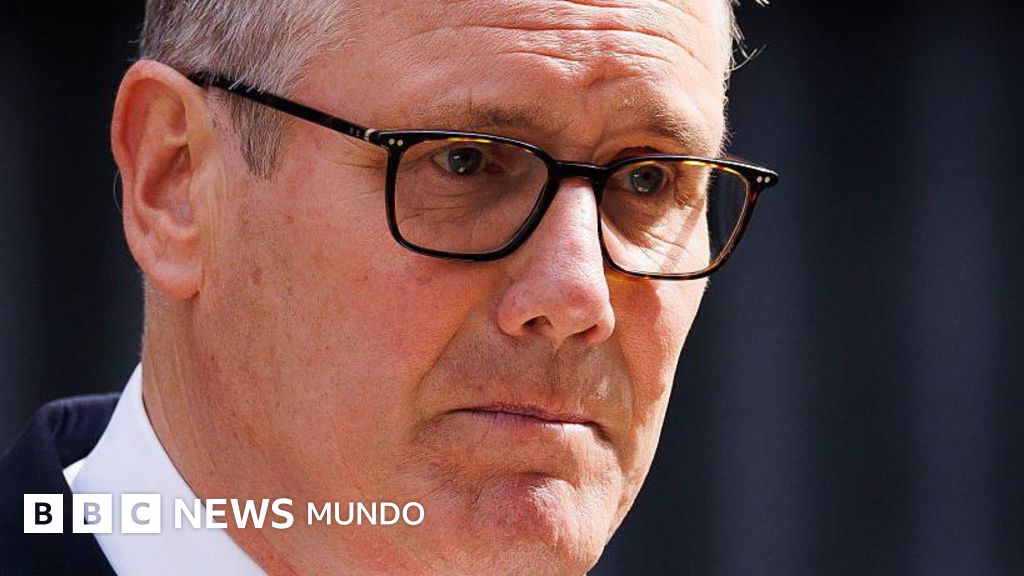
United Kingdom Prime Minister Keir Starmer has announced his resignation, marking an abrupt end to his premiership less than two years after taking office. The Labour leader, who secured a victory in the July 2024 general election, confirmed his departure following mounting internal pressure and a series of political challenges that stalled his legislative agenda. His exit triggers a leadership contest within the Labour Party and creates immediate uncertainty regarding the stability of the British government, which has now seen a succession of leaders in a volatile decade of domestic politics.
The resignation follows months of speculation regarding Starmer’s policy direction and his ability to maintain party unity. According to reports from the British Broadcasting Corporation (BBC), the decision was finalized after a period of intense deliberation within the Cabinet. Starmer, who assumed the role of Prime Minister on July 5, 2024, after leading the Labour Party to a significant majority in the House of Commons, faced criticism from both opposition benches and members of his own parliamentary party over his handling of economic reforms and foreign policy commitments, as detailed by the UK Parliament official records.
The Context of a Short-Lived Premiership
Starmer’s tenure, which lasted significantly less than the standard five-year parliamentary term, stands as one of the shortest in modern British history. Analysts have pointed to the “revolving door” of Downing Street as a defining feature of current UK governance, with Starmer becoming the latest in a line of six Prime Ministers to serve within the last ten years. This instability has prompted concerns among international observers regarding the consistency of British foreign and economic policy, particularly in the aftermath of the 2024 election cycle.

The resignation has prompted reactions from European leaders, including Spanish Prime Minister Pedro Sánchez, who publicly expressed his recognition of Starmer’s work during his time in office. This diplomatic acknowledgment highlights the importance of the UK-EU relationship, which remained a central pillar of Starmer’s administration. Despite the collaborative tone from international partners, the domestic reality remains one of political transition, with the Labour Party now tasked with selecting a successor to maintain the mandate granted by voters in July 2024.
Potential Successors and Party Dynamics
Speculation regarding the next leader of the Labour Party has already begun, with several high-profile figures being mentioned as potential candidates for the premiership. Andy Burnham, the Mayor of Greater Manchester, has been frequently cited in political commentary as a frontrunner due to his broad support base and experience in both national and local government. The process for selecting the new leader will follow the standard Labour Party rules, which involve a combination of parliamentary support and membership votes, as outlined in the official Labour Party rule book.
The transition period is expected to be closely monitored by financial markets and international allies who are waiting to see if the next administration will maintain the current fiscal trajectory. While the party hierarchy has not yet released a formal timeline for the leadership election, the urgency of the situation suggests that a successor could be identified within the coming weeks to minimize the period of government paralysis. The focus for the interim administration will be the continuity of essential public services and the fulfillment of pre-existing international treaty obligations.
Comparative Overview of Recent British Prime Ministers
The following table summarizes the tenure of recent UK Prime Ministers, highlighting the frequency of leadership changes since 2014, as documented by official UK Government archives.

| Prime Minister | Term Start | Term End |
|---|---|---|
| David Cameron | 2010 | 2016 |
| Theresa May | 2016 | 2019 |
| Boris Johnson | 2019 | 2022 |
| Liz Truss | 2022 | 2022 |
| Rishi Sunak | 2022 | 2024 |
| Keir Starmer | 2024 | 2025 |
What Happens Next in Westminster
The immediate next step in this political process is the formal meeting of the Labour Party’s National Executive Committee (NEC) to establish the rules and dates for the leadership contest. This committee is responsible for ensuring that the transition complies with party statutes and that the democratic process remains transparent for the electorate. Once the nominations are open, candidates will likely begin their campaigns across the country, focusing on addressing the issues that contributed to the current political climate.
For the British public, the coming weeks will be a period of observation as the government continues to operate under ministerial guidance until a new Prime Minister is sworn in by the Monarch. Official updates regarding the leadership election timeline will be posted to the Labour Party official website as they become available. We will continue to track these developments as they unfold in Westminster. Please share your thoughts on this transition in the comments section below or join the discussion on our social media channels.