
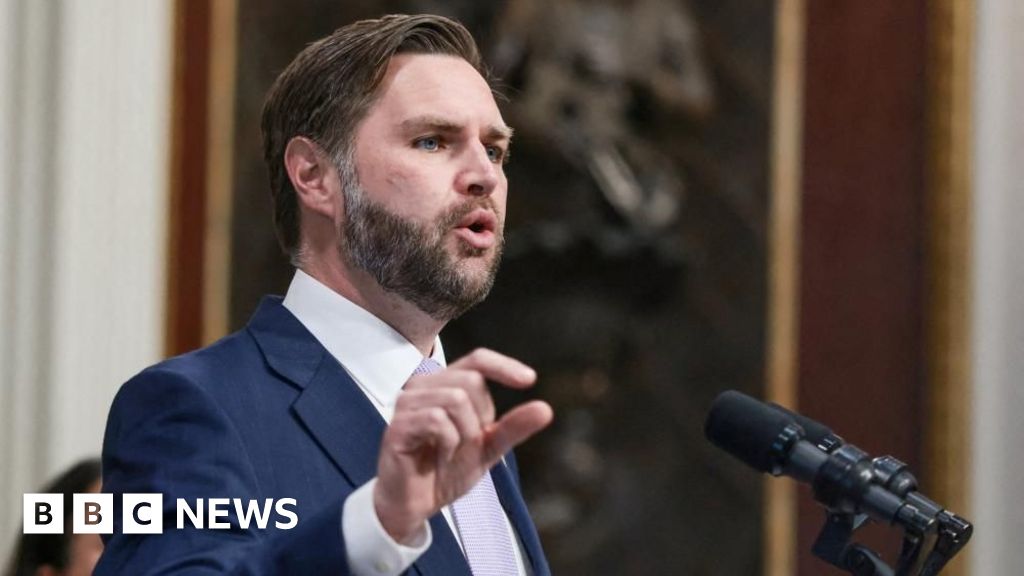
Downing Street has issued a formal rebuttal against international figures attempting to interfere in British domestic affairs, following a series of social media posts regarding the murder of 18-year-old Henry Nowak. The response from the Prime Minister’s office comes after U.S. Vice President JD Vance publicly linked the teenager’s death to migration policies, an intervention that officials in London have characterized as an attempt to “stir up division” within the United Kingdom.
The controversy centers on the fatal stabbing of Henry Nowak, who was killed in Southampton on December 3, 2023. The perpetrator, Vickrum Digwa, was subsequently convicted and sentenced to life imprisonment with a minimum term of 21 years. The case, which has been the subject of significant public discourse in the UK, saw tensions rise following the release of police bodycam footage capturing the moments after the attack. The government’s recent statement emphasized that the victim’s family has explicitly requested that their loss not be utilized for political discourse or the promotion of societal discord. You can find official updates on criminal justice procedures and victim support services through the UK Ministry of Justice.
The Context of the Diplomatic Friction
The tension escalated after the U.S. Vice President posted comments on the social media platform X, attributing the death of the student to what he described as a “mass invasion of migrants.” The post further claimed that the teenager had been “abandoned and handcuffed by authorities who neither trusted nor cared for him.” These assertions were met with a swift and firm response from Downing Street, which underscored the importance of maintaining national cohesion during sensitive legal and social matters.
A spokesperson for the Prime Minister stated: “Our politics should bring people together even in the most terrible of circumstances. That is who we are as a country.” By directly addressing the commentary, the UK government signaled a refusal to allow the tragic murder to be leveraged by external political actors. The Crown Prosecution Service (CPS) has confirmed that the perpetrator, Digwa, was born in Britain, a detail that contrasts with the narrative presented in the external commentary regarding the origins of the individuals involved. Information regarding the legal proceedings and the sentencing guidelines for such offenses in England and Wales is available via the Crown Prosecution Service official portal.
Public Sentiment and the Risk of Misinformation
The murder of Henry Nowak has been a source of profound grief and national outrage. Following the circulation of the bodycam footage, incidents of civil unrest were reported in Southampton. These events have highlighted the challenges of managing public discourse in an era where digital content can rapidly influence domestic stability. Experts in political communication and social cohesion often point to the dangers of “stoking division” through the selective use of tragic events, particularly when such narratives diverge from established legal facts.
The UK government remains focused on the legal finality of the case. Digwa, who utilized a 21cm (8in) blade during the incident, was brought to justice through the standard application of British law. The government’s stance is that the integrity of the judicial process must be protected from political interference, whether domestic or foreign. For those seeking to understand the legal standards regarding the carrying of bladed articles and the associated sentencing, the Sentencing Council for England and Wales provides comprehensive public guidance.
Moving Forward: The Government’s Stance
As the UK navigates the aftermath of this incident, the focus remains on community resilience and the prevention of future violence. Prime Minister Sir Keir Starmer has consistently advocated for a political environment that rejects the polarization often fueled by international observers. By framing the intervention as an attempt to “interfere in our democracy,” the administration is asserting its sovereignty over domestic political narratives and the handling of sensitive criminal cases.
The government’s message is clear: the sanctity of the victim’s memory and the stability of the nation take precedence over the political agendas of foreign officials. As the legal chapter of the Nowak case concludes with the perpetrator’s imprisonment, the broader conversation about social harmony and the impact of digital rhetoric will likely continue. Further official guidance on community safety and public order can be monitored through the official police reporting and information service.
We invite our readers to join the conversation on how digital platforms should handle political commentary on sensitive criminal investigations. Do you believe international figures should refrain from commenting on domestic legal matters? Share your thoughts in the comments section below.