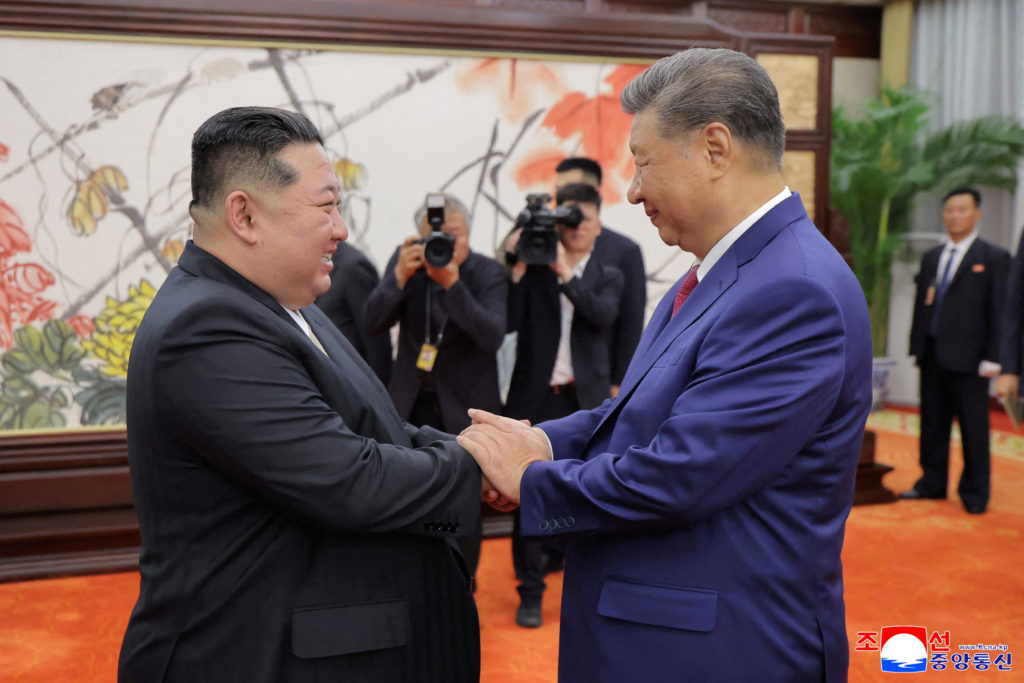
North Korean leader Kim Jong Un recently met with China’s foreign minister to discuss strengthening the diplomatic and strategic ties between the two nations. The meeting, reported by the state-run Korean Central News Agency (KCNA), underscores a continued effort by Pyongyang to solidify its relationship with its closest ally during a period of regional volatility.
The encounter, which took place on Saturday, April 11, 2026, was framed by state media as a call for deeper cooperation. According to reports from Reuters, the meeting focused on the pursuit of stronger ties between the Democratic People’s Republic of Korea (DPRK) and the People’s Republic of China.
As a seasoned observer of global markets and economic policy, I view these diplomatic maneuvers not just as political gestures, but as critical signals for regional stability. When the leadership of North Korea engages in high-level dialogue with Beijing, it often reflects a strategic alignment intended to counter external pressures and ensure economic survival through bilateral support.
The Role of KCNA in State Communications
The details of this meeting were disseminated via the Korean Central News Agency, the official state news agency of North Korea. Established on December 5, 1946, KCNA serves as the primary vehicle for portraying the views of the North Korean government to both domestic and international audiences.

Operating under the Korean Central Broadcasting Committee, the agency is ultimately controlled by the Propaganda and Agitation Department of the Workers’ Party of Korea. Because KCNA is a state-owned entity, its reports are designed to project strength and unity, specifically emphasizing the “stronger ties” sought by Kim Jong Un in his discussions with the Chinese foreign minister.
For those tracking these developments, KCNA provides translations of its news in several languages, including English, Russian, Chinese, Japanese, and Spanish, to ensure its government’s narrative reaches a global audience. Yet, access to these official sites remains restricted in some regions; for instance, the South Korean government has blocked access to North Korean news sites since 2004, requiring specific authorization for entry.
Strategic Implications of the Kim-China Meeting
The call for stronger ties comes at a time when North Korea continues to navigate complex geopolitical tensions. By engaging directly with China’s foreign minister, Kim Jong Un reinforces a partnership that is vital for the DPRK’s economic and political security.
China remains North Korea’s most significant trading partner and a critical diplomatic shield on the international stage. The emphasis on “stronger ties” likely encompasses a range of interests, from trade and border security to coordinated stances against Western sanctions and diplomatic pressure.
Key Takeaways from the Diplomatic Engagement
- High-Level Dialogue: Leader Kim Jong Un met directly with China’s foreign minister on Saturday, April 11, 2026.
- Objective: The primary goal of the meeting was to call for and establish stronger ties between the two nations.
- Information Channel: The meeting was officially announced and detailed by the state-owned KCNA.
- Geopolitical Context: This meeting reinforces the strategic alliance between Pyongyang and Beijing.
From a financial and economic perspective, the stability of the North Korea-China relationship is a key variable for analysts monitoring East Asian markets. Any shift in the level of cooperation—or a perceived cooling of relations—can impact regional security assessments and, by extension, the risk profiles of investments in neighboring economies.
While the official statements from KCNA focus on friendship and cooperation, the broader implication is a mutual desire to maintain a stable buffer and a unified front in the face of international scrutiny. The frequency and nature of these high-level visits often serve as a barometer for the health of the bilateral relationship.
As we continue to monitor these diplomatic shifts, the next confirmed checkpoint will be the official responses or reciprocal statements from the Chinese Ministry of Foreign Affairs regarding the specific outcomes of this meeting.
We invite our readers to share their perspectives on the implications of these strengthening ties in the comments section below.
Keep reading