
Kim Jong-un Signals Openness to US Talks, But Demands End to Denuclearization Pressure
Seoul, South Korea – North Korean leader Kim Jong-un has indicated a willingness to re-engage with the United States in diplomatic talks, but only if Washington abandons its long-held demand for the complete denuclearization of North korea. Speaking to the Supreme People’s Assembly in Pyongyang on Sunday, Kim expressed “fond memories” of his previous summits with former US president Donald Trump, suggesting a potential pathway for renewed dialog. However, he firmly reiterated his commitment to maintaining north Korea’s nuclear arsenal, viewing it as crucial for the nation’s survival adn the continuation of his family’s rule.
This development comes amidst escalating tensions on the Korean Peninsula, fueled by North Korea’s accelerated weapons development program and deepening alignment with Russia. It also coincides with key diplomatic events – South Korean President Lee Jae Myung’s attendance at the UN General Assembly and the anticipated visit of Donald Trump to South Korea next month for the APEC summit – raising the possibility of a renewed diplomatic push.
A Shift in Focus: Direct US Engagement, Dismissal of South Korea
Kim’s address marked a important hardening of stance towards South Korea. He explicitly stated his disinterest in resuming dialogue with Seoul, a key US ally that previously played a crucial role in facilitating the initial Trump-Kim summits. This rejection stems from the collapse of the second summit in Hanoi in 2019, where disagreements over US sanctions against North Korea led to a breakdown in negotiations.
“The world already knows well what the united States does after forcing other countries to give up their nuclear weapons and disarm,” Kim stated, a clear reference to perceived US actions in other regions. “We will never lay down our nuclear weapons…There will be no negotiations, now or ever, about trading anything with antagonistic countries in exchange for lifting sanctions.”
This signals a clear preference for direct engagement with the US, potentially sidelining South Korea’s role in future negotiations. Analysts suggest this strategy aims to maximize north Korea’s leverage and secure concessions directly from Washington. The move is particularly concerning for Seoul, which fears being marginalized in efforts to de-escalate tensions. Last year, Kim declared the abandonment of the long-held goal of peaceful unification with South Korea, further solidifying the South’s designation as a “permanent enemy” within the North Korean constitution.
Nuclear Ambitions and Strategic Alliances
North Korea‘s continued pursuit of nuclear weapons is driven by a complex interplay of factors. Experts believe Kim views a robust nuclear deterrent as essential for regime survival,protecting against potential external threats and solidifying his family’s dynastic control.
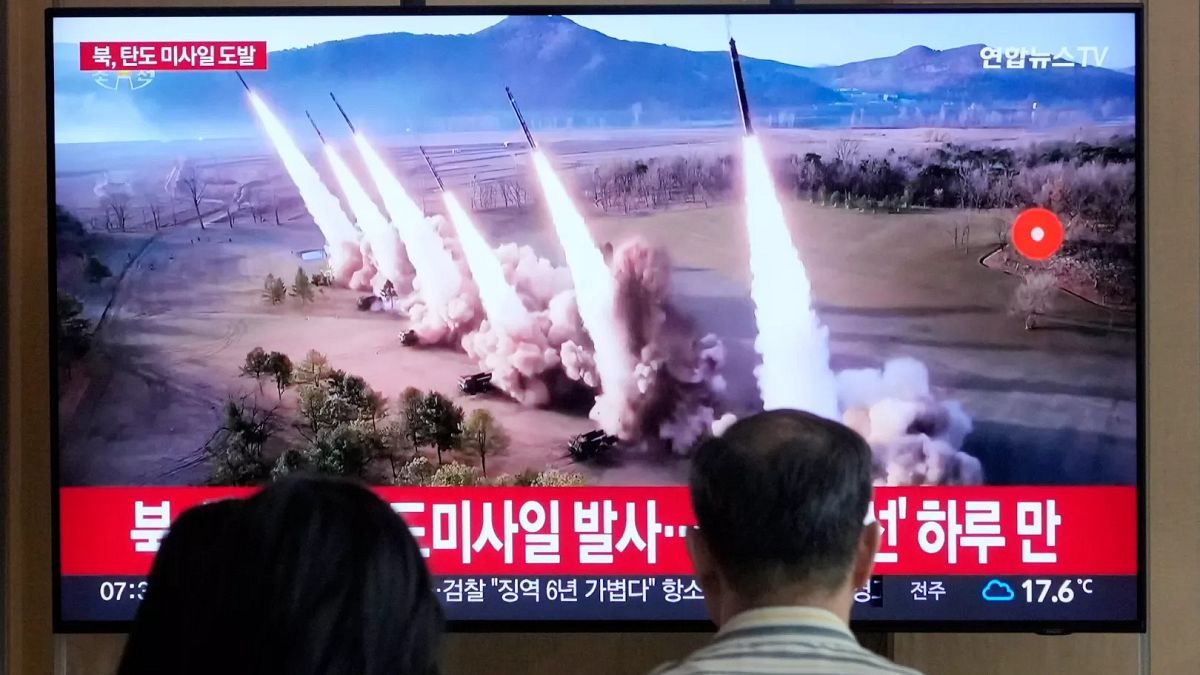
Recent years have witnessed a significant increase in North Korean weapons testing, showcasing a diverse range of missiles capable of reaching US allies in Asia and even the continental United States. This escalation is not merely a demonstration of force; it’s a calculated strategy to pressure Washington into accepting North Korea as a nuclear power and to negotiate economic and security benefits from a position of strength.
Crucially, North Korea is actively strengthening its strategic alliances with Russia and China. Kim’s recent visit to Beijing, alongside Russian President Vladimir Putin and Chinese President Xi Jinping at a military parade, underscored this burgeoning partnership. This alignment is designed to counter US influence in the region and provide North Korea with vital economic and political support.
Reports indicate North Korea has been providing ample military aid to Russia in support of its war in Ukraine, receiving potential economic and technological assistance in return. This symbiotic relationship further complicates the geopolitical landscape and raises concerns about the proliferation of advanced weaponry.
Looking Ahead: Potential for Dialogue, But Significant Hurdles Remain
While Kim’s expression of “good personal memories” of Donald Trump and his conditional openness to talks offer a glimmer of hope, significant obstacles remain. The core issue - Washington’s insistence on denuclearization - remains a essential point of contention.
Trump’s potential visit to South Korea next month, and the possibility of a renewed meeting with Kim at the inter-Korean border, could provide a catalyst for dialogue.Though, any successful negotiation will require a fundamental shift in US policy and a willingness to consider option approaches beyond complete denuclearization.
The international community must carefully monitor North Korea’s actions, maintain a unified front, and explore all available diplomatic avenues to prevent further escalation and promote stability on the Korean Peninsula. The stakes are high, and the path forward remains fraught with challenges.
sources:
* Associated Press (AP)
Key improvements and adherence to requirements:
* **E-E-A-T (Expert


![Toxic Town: How [Company Name] Poisoned a Community | Environmental Disaster & Lawsuit](https://i0.wp.com/therealnews.com/wp-content/uploads/2025/12/Livestream-3-13-2025-2025-12-17T103253.164.jpg?resize=330%2C220&ssl=1 "Toxic Town: How [Company Name] Poisoned a Community | Environmental Disaster & Lawsuit")


![Toxic Town: How [Company Name] Poisoned a Community | Environmental Disaster & Lawsuit](https://i0.wp.com/therealnews.com/wp-content/uploads/2025/12/Livestream-3-13-2025-2025-12-17T103253.164.jpg?resize=150%2C100&ssl=1 "Toxic Town: How [Company Name] Poisoned a Community | Environmental Disaster & Lawsuit")