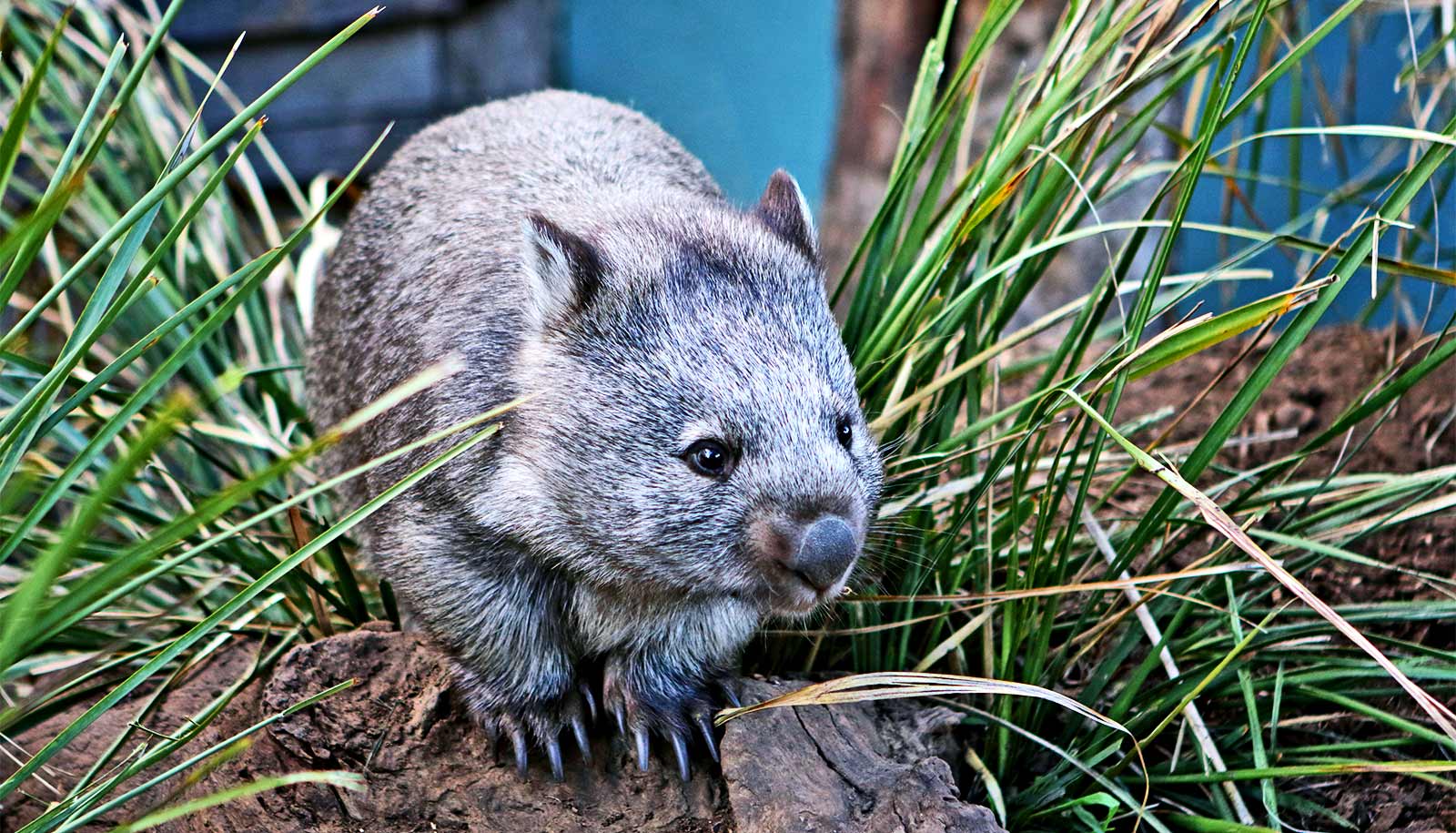
The Secret Language of Wombat Poo: Unlocking the Mysteries of Olfactory Communication in Australia’s Iconic Marsupial
For years, the peculiar cube-shaped scat of the common wombat has intrigued scientists. But beyond its geometric novelty, this seemingly simple byproduct holds a surprisingly complex key to understanding how these solitary Australian marsupials navigate their world and communicate wiht one another. Recent research is revealing that wombat latrines aren’t just bathroom breaks – they’re bustling hubs of olfactory data, a sophisticated system of “scent posts” that allow wombats to identify neighbors, assess reproductive status, and maintain social awareness.
This article delves into the groundbreaking research unraveling the secrets hidden within wombat poo, exploring the science behind their exceptional sense of smell and the implications for understanding communication in solitary animals.
The Curious Case of Square Poop & Communal Latrines
Wombats are captivating creatures. They are burrowing marsupials known for their robust builds and nocturnal habits. They frequently shift burrows, often revisiting old homes.
But their behavior around waste is notably noteworthy. Unlike many animals, wombats consistently deposit their feces in designated communal areas – latrines – often strategically placed on prominent landscape features like logs and rocks. And, of course, their poop isn’t round. It’s remarkably cube-shaped.
This isn’t a random quirk of anatomy.The square shape prevents the scat from rolling away, ensuring its scent remains concentrated and detectable for longer. This is crucial for a species relying heavily on olfactory communication.
A Nose for Knowing: The Wombat’s Sensory Superpower
For a long time, the purpose of these latrines remained a mystery. Researchers suspected scent played a role, but lacked concrete evidence. The breakthrough came with a closer look at wombat anatomy.
Dr. Carolyn Carver and her team at the University of Tasmania discovered that wombats possess a highly developed vomeronasal organ (VNO). This specialized olfactory structure, also found in cats and snakes, is dedicated to detecting pheromones and other chemical signals.
* the VNO in Action: Think of a cat “flehmening” – that facial contortion? It’s exposing the VNO to scents in the habitat.
* reduced in Primates: Unlike humans, wombats haven’t lost this crucial sensory ability. Their VNO suggests a powerful capacity for detecting and interpreting smells.
decoding the chemical Signatures in Wombat Scat
With a strong sense of smell established, the next step was to determine what information wombats were gleaning from the latrines. Researchers employed advanced techniques – gas chromatography and mass spectrometry – to analyze the chemical composition of wombat poo.
The results were remarkable.
* Individual Odors: Each wombat’s scat contained a unique chemical signature,a distinct “odor fingerprint.”
* Individual Recognition: This meant wombats could perhaps identify each other simply by smell.
“New Neighbor Alert!” – Experimental Evidence of Scent-Based Communication
To test this hypothesis, the team conducted a clever experiment. They transplanted scat from a distant latrine into a latrine within a different wombat neighborhood. Then, they set up wildlife cameras to monitor the reactions.
The results were conclusive: wombats spent substantially more time investigating latrines containing unfamiliar scat. This demonstrated their ability to detect the arrival of new individuals in their territory solely through scent.
beyond Identity: What Else is Wombat Poo Saying?
While individual recognition is a significant finding, researchers believe the story doesn’t end there. The 44 distinct compounds identified in wombat poo likely convey a wealth of information.
Scientists suspect wombats can discern:
* Sex
* Age
* Reproductive Status
* Social Hierarchy
Further research is underway to decode the meaning of each chemical compound and build a extensive understanding of wombat olfactory communication.
Implications for Understanding Solitary Animal Behavior
This research has broader implications for our understanding of animal communication. Solitary animals, by definition, have limited opportunities for visual or auditory interaction. Olfactory communication provides a vital choice.
As Dr. Carver points out, we frequently enough underestimate the complexity of the animal world around us.Our pets – cats and dogs – constantly sniff their surroundings, gathering information we can’t even perceive. Wombats are simply taking this to another level.
The Future of Wombat Research
The study of wom