
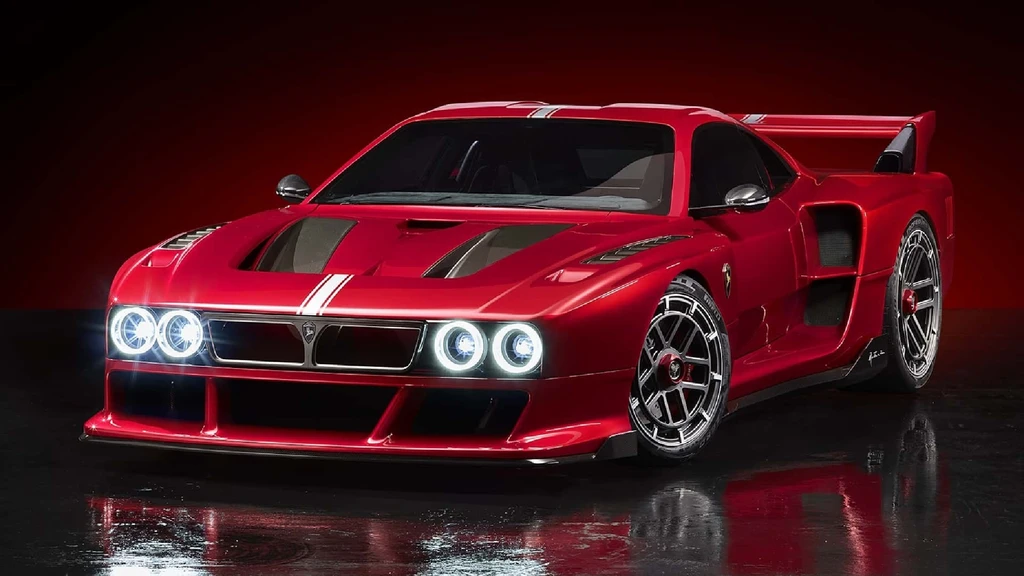
The automotive landscape is currently undergoing a fascinating shift where the pursuit of raw, mechanical engagement is finding a new champion in the form of the Kimera K39. In an era where many manufacturers are gravitating toward increasingly digitized, less visceral driving experiences, Kimera Automobili has positioned itself as a boutique manufacturer focused on the intersection of endurance racing heritage and modern engineering performance. As a financial observer of the automotive sector, this latest venture represents a significant strategic pivot for the Italian firm, moving beyond the restomod philosophy that defined its earlier projects.
The K39 is not merely an evolution of previous designs; it is a ground-up hypercar featuring a carbon-fibre monocoque, manual transmission, and rear-wheel drive. Most notably, the vehicle serves as the platform for a high-profile collaboration with Koenigsegg, the Swedish manufacturer known for its commitment to high-performance engineering. This partnership, which integrates a bespoke twin-turbo V8 engine into the K39, underscores a growing trend of specialized, low-volume manufacturers leveraging cross-border technical expertise to challenge established market incumbents.
Engineering a New Italian Hypercar
At the core of the K39 lies a 5.0-litre twin-turbo V8 engine, a unit developed by Koenigsegg specifically for Kimera’s performance requirements. According to the manufacturer, this powertrain delivers 1,000 hp and 1,200 Nm of torque. The collaboration is described by the companies as a meeting of two independent visions, combining Swedish technological excellence with an Italian approach to mechanical design and aesthetics. The focus is explicitly on precision, response, and usability within a package that maintains a road-legal identity while being capable of extreme environments, including a dedicated Pikes Peak configuration.
The design philosophy behind the K39 draws inspiration from 1980s endurance racing, specifically referencing the 1981 Lancia Beta Montecarlo Turbo Group 5 and the 1983 Lancia LC2. This choice of historical reference points indicates a clear intent to target a niche demographic of enthusiasts who value the “hairy-chested” motorsport aesthetic over the more sterilized performance metrics often seen in modern mass-market supercars. By utilizing a carbon-fibre monocoque, Kimera aims to balance structural rigidity with the lightweight requirements necessary for competitive track performance.
Strategic Implications for the Boutique Sector
For Kimera, the transition from the EVO37 and EVO38—which were celebrated for their tribute to the Lancia 037 Group B rally car—to the K39 marks a graduation into the hypercar segment. This move is indicative of a broader pattern in the automotive industry: the “small-scale” manufacturer is increasingly capable of delivering performance figures that rival or exceed those of legacy brands. By focusing on manual gearboxes and rear-wheel drive, the company is catering to a market segment that remains deeply invested in the tactile, traditional aspects of driving.
The partnership with Koenigsegg is particularly noteworthy from a business perspective. It validates Kimera’s position within the performance automotive hierarchy and suggests that technical partnerships are becoming an essential tool for smaller firms to achieve the R&D milestones required to compete at the highest levels. The K39 is designed to function in both road and track environments, effectively widening its potential appeal to collectors and track-day enthusiasts alike.
Looking Ahead: The Path to Production
As Kimera Automobili moves forward with the K39, the industry will be watching to see how the company scales its production and maintains the quality standards associated with its previous “EVO” models. The integration of such a high-output engine into a bespoke chassis is a complex engineering challenge, and the success of the K39 will likely depend on the reliability and performance of this Swedish-Italian collaboration in real-world conditions.

For those tracking the development of the K39, updates regarding its technical specifications and future racing configurations are expected to be released through the official company channels. As the automotive market continues to prioritize electrification and autonomous systems, the existence of a high-performance, manual-transmission hypercar like the K39 serves as a reminder of the enduring demand for mechanical purity. We invite our readers to share their thoughts on whether this “back to basics” approach is the future of the hypercar segment or a final salute to the internal combustion era.