
London’s AI Revolution: How King’s Cross Became the Global Epicenter for Tech and Venture Capital
The skyline of North London is undergoing a profound transformation, but the most significant shifts are not just occurring in steel and glass—they are happening in the code and capital flowing through the streets of King’s Cross. Once defined by its industrial grit and railway infrastructure, the N1C district has emerged as the undisputed heartbeat of the United Kingdom’s technological resurgence. As 2026 progresses, the area has solidified its reputation as a premier global hub for artificial intelligence, venture capital, and software innovation.
At the center of this metamorphosis is the imminent opening of Google’s massive new UK headquarters. The arrival of such a significant anchor tenant is more than just a real estate milestone; it is a signal to the global markets that London’s “Knowledge Quarter” is no longer just a local research district, but a primary destination for the world’s most influential technology entities. The magnetism of the area is already pulling in the heavyweights of the generative AI era, creating a dense ecosystem where talent, funding, and computing power converge.
This concentration of resources is creating a “cluster effect” rarely seen outside of Silicon Valley. By bringing together established tech giants, high-growth AI labs, and the venture capital firms that fuel them, King’s Cross is effectively building a self-sustaining engine for the next generation of digital innovation. For the global tech industry, the message is clear: the future of AI is being written in London, and the headquarters of that future are increasingly centered in King’s Cross.
The Google Catalyst: A New Landmark for UK Tech
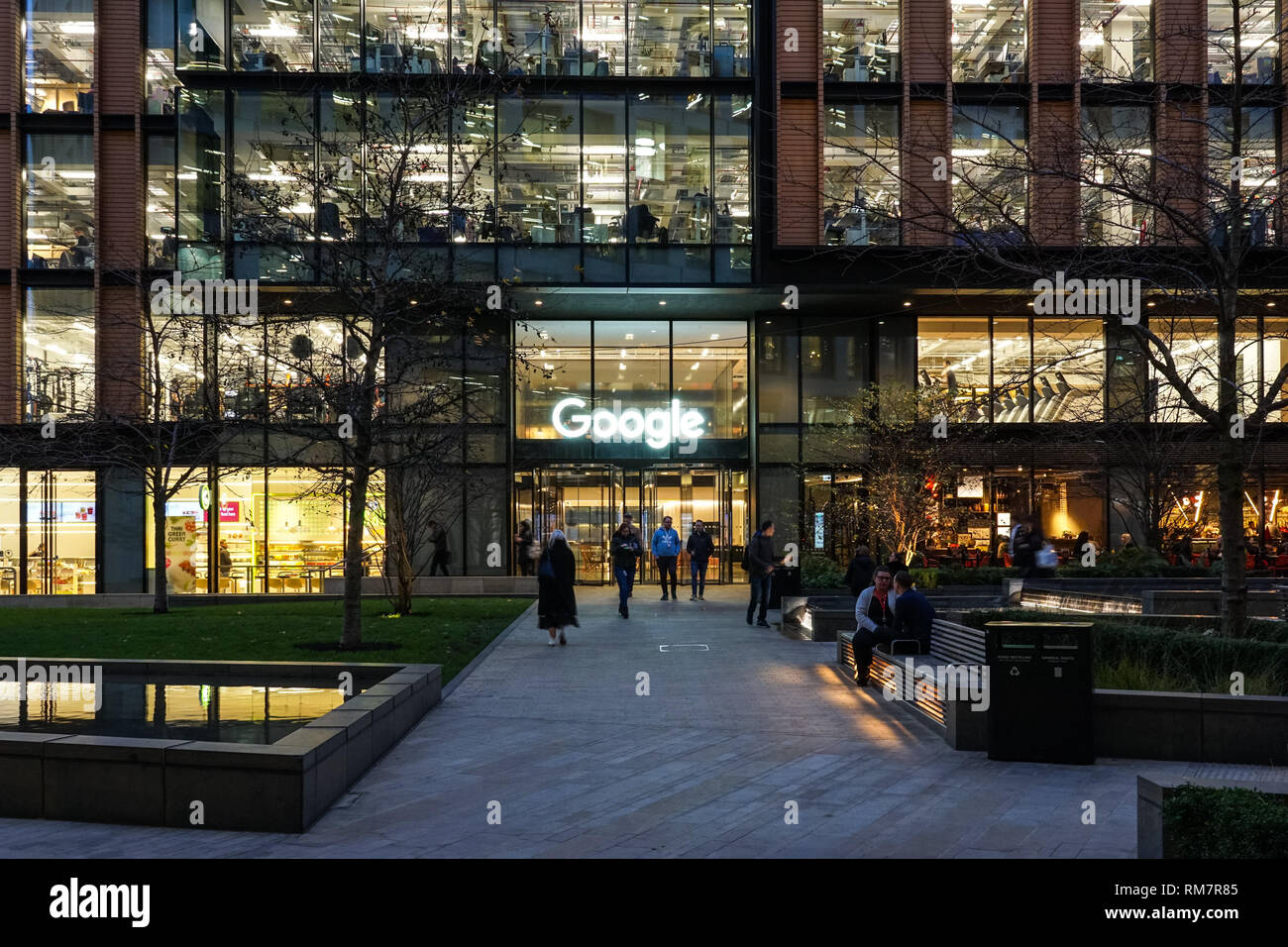
The most visible driver of this regional shift is Google’s ambitious expansion into the King’s Cross area. The company’s new purpose-built campus, which is slated to open its doors later this year, represents a massive commitment to the UK’s digital economy. This is not merely an expansion of existing office space; it is a sophisticated, large-scale architectural statement designed to foster a specific type of collaborative culture.
The project is a massive undertaking, consisting of an 11-storey building that covers more than 1 million square feet. Google is expected to occupy approximately 650,000 square feet of this space, creating a centralized hub for its London-based workforce. The design of the building is a collaboration between two of the world’s most renowned architectural firms: Heatherwick Studio and Bjarke Ingels Group (BIG). The aesthetic is reportedly centered on a natural theme, utilizing materials sourced through the company’s own healthy materials program to create a workspace that prioritizes employee well-being.
For Google, the move is strategic. By consolidating its London teams—which were previously spread across various locations, including 6 Pancras Square—the company aims to unify its “London Googlers” in a single, state-of-the-art environment. This centralization is intended to shape and strengthen the company’s internal culture, facilitating the rapid cross-pollination of ideas that is essential for maintaining a lead in the competitive AI and software sectors.
The AI Magnet: OpenAI, Anthropic, and the Race for Intelligence
While Google provides the structural anchor, the true energy of the King’s Cross tech scene is being driven by the explosive growth of artificial intelligence. The district has become a primary magnet for the world’s leading AI research labs and deployment companies. As the race for artificial general intelligence (AGI) intensifies, the demand for proximity to top-tier talent and specialized infrastructure has turned King’s Cross into a high-stakes battleground for dominance.

Industry observers have noted the increasing presence of major AI players in the vicinity. High-profile organizations, including OpenAI and Anthropic, have established significant footprints in London, and the gravitational pull of the King’s Cross ecosystem is making the area the preferred base for their UK operations. This influx of AI expertise is not just about office space; it is about the density of specialized knowledge. When researchers from competing labs, hardware engineers, and AI ethicists all occupy the same square mile, the rate of innovation accelerates.
This clustering is a classic hallmark of a mature tech ecosystem. In the early stages of a technology’s lifecycle, companies may be scattered, but as the industry matures, they gravitate toward “innovation nodes.” King’s Cross has become one of these nodes, providing the proximity required for the informal networking and rapid talent acquisition that define the current AI boom.
The Knowledge Quarter: A Convergence of Talent and Capital
The success of King’s Cross is not an accident of real estate; it is the result of its integration into the broader “Knowledge Quarter.” This designation refers to a unique geographic area where world-class academic institutions, research hospitals, and technology companies exist in close proximity. The presence of institutions like University College London (UCL) provides a constant pipeline of highly skilled graduates in mathematics, computer science, and engineering—the very lifeblood of the AI industry.
This academic foundation has, in turn, attracted a sophisticated layer of venture capital. As AI startups emerge from the research labs of local universities, they require immediate access to the capital necessary to scale. The King’s Cross area has become a preferred meeting ground for venture capitalists who are looking to deploy billions of dollars into the next wave of transformative technologies. The proximity between the “builders” (the engineers and researchers) and the “funders” (the VCs) creates a high-velocity cycle of innovation and investment.
the ecosystem supports a secondary layer of service providers, from specialized legal firms focusing on intellectual property and AI regulation to technical consultancy groups. This complete “stack” of industry needs—talent, capital, regulation, and infrastructure—is what distinguishes a mere business district from a true global technology hub.
From Industrial Decay to Digital Dominance: An Urban Transformation
To understand the magnitude of this shift, one must look back at the history of the area. For much of the 20th century, King’s Cross was characterized by its industrial and railway-centric landscape. It was a district of warehouses, transit hubs, and, at times, significant urban decay. The area was often viewed as a peripheral, somewhat rundown part of London, disconnected from the high-finance centers of the City or the media hubs of Soho.
The regeneration of King’s Cross has been one of the most significant urban renewal projects in modern European history. Led by long-term strategic planning, the area has been systematically transformed from a site of industrial transit into a destination for knowledge-based commerce. This transition involved massive investment in public spaces, sustainable architecture, and high-quality connectivity, making the area attractive to the kind of premium tenants that drive global economic trends.
The shift from a “rundown area” to a “global technology hub” serves as a blueprint for how urban environments can be repurposed to meet the demands of the digital age. By prioritizing connectivity and creating high-density, mixed-use spaces, planners have successfully turned a former industrial wasteland into one of the most valuable pieces of real estate in the world.
Key Takeaways: The King’s Cross Tech Ecosystem
- The Google Anchor: Google’s upcoming 1-million-square-foot campus is a cornerstone of the area’s development, designed to centralize its UK workforce.
- AI Concentration: The area has become a primary destination for leading AI firms like OpenAI and Anthropic, driving a localized “intelligence boom.”
- The Knowledge Quarter Effect: Proximity to elite universities and research institutions provides a continuous supply of specialized technical talent.
- Capital Magnetism: The density of tech firms has attracted significant venture capital, creating a high-speed cycle of investment and innovation.
- Urban Regeneration: The successful transition from an industrial district to a tech hub demonstrates the power of strategic, long-term urban planning.
As the tech industry continues to evolve, the importance of these geographic hubs will only grow. King’s Cross has proven that when you combine world-class architecture, academic excellence, and massive capital investment, you create more than just an office park—you create the epicenter of an era.
Next Milestone: Watch for official announcements regarding the grand opening of the Google King’s Cross campus later this year, which will serve as a primary indicator of the area’s capacity for large-scale tech integration.
What do you think about the rise of London’s tech hubs? Is King’s Cross the new Silicon Valley of Europe? Share your thoughts in the comments below and share this article with your network.
Keep reading