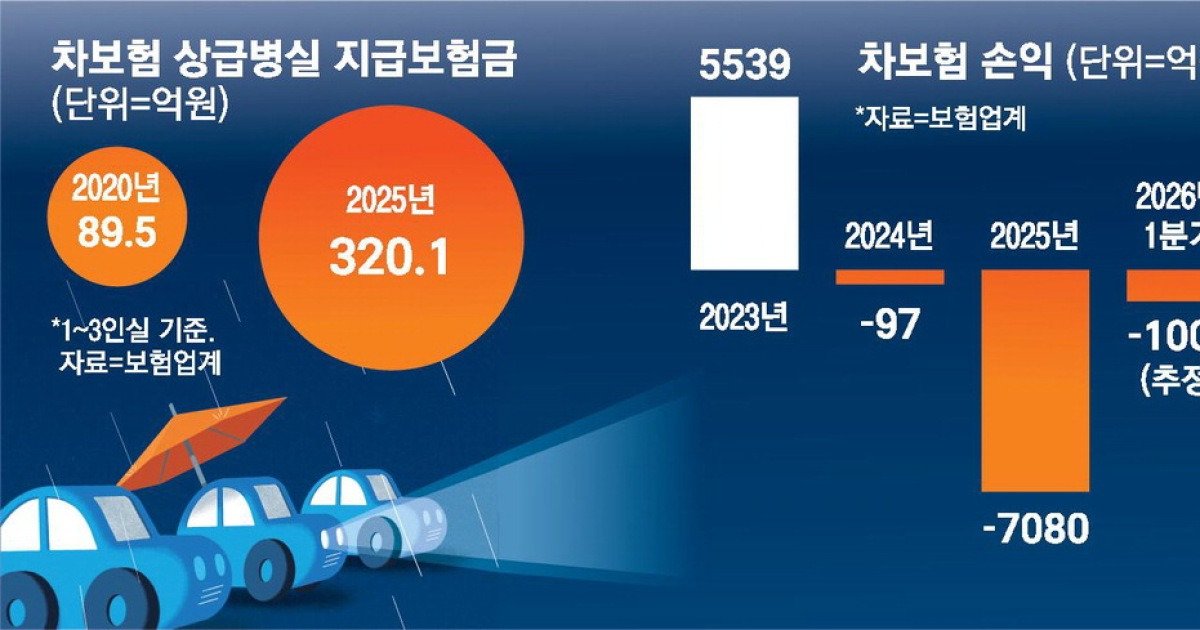
South Korea’s non-life insurance sector is facing a deepening financial crisis as automotive insurance deficits persist despite a rare premium hike. Despite increasing rates for the first time in five years at the start of 2026, domestic insurers remain trapped in a cycle of losses, with first-quarter operating deficits estimated at approximately 100 billion won according to industry data reported on April 12, 2026.
The current instability is driven by a surge in loss ratios, which are expected to reach between 86% and 87% for the first quarter of 2026—a 3 to 4 percentage point increase compared to the same period last year. Given that the industry’s break-even point typically hovers around 80%, the current structure means that insurers are effectively losing money on every new policy sold as detailed in recent market analysis.
This financial strain is compounded by a systemic issue known as “nylon patients”—individuals who admit themselves to hospitals for prolonged periods despite not requiring intensive medical care. This practice, often described as “hospital staycations,” has seen a proliferation in oriental medicine clinics and high-end hospital suites, where the cost of premium rooms has surged threefold over the last five years per reports from the General Insurance Association of Korea.
The crisis is not a sudden development but the result of several years of regulatory and environmental pressures. Prior to the 2026 hike, insurers faced four consecutive years of government-led pressure to lower premiums under “win-win finance” (Sangsaeng) initiatives, which severely eroded their profit margins whereas claims costs continued to climb according to data from August 2025.
The ‘Nylon Patient’ Phenomenon and Rising Medical Costs
A primary driver of the current deficit is the exploitation of the insurance system by “nylon patients.” This term refers to individuals who feign or exaggerate injuries following minor car accidents to secure extended hospitalizations in luxury facilities. Many of these patients are lured into high-end “special rooms” at oriental medicine hospitals, which effectively turn medical recovery into a luxury vacation funded by insurance payouts as reported by industry sources.
The economic impact of this trend is significant. The cost of these premium hospital rooms has increased three times over the past five years, placing an immense burden on the loss ratios of non-life insurers. When a large volume of claimants opt for expensive, unnecessary inpatient care, the total payout per accident rises sharply, neutralizing the benefits of the premium increases implemented earlier this year.
Industry insiders note that this behavior is often encouraged by clinics that actively induce patients to stay in expensive suites to maximize their own revenue. This creates a symbiotic relationship between unscrupulous medical providers and opportunistic claimants, leaving insurance companies to absorb the costs.
Structural Failures: From ‘Win-Win Finance’ to Climate Risks
The current fragility of the automotive insurance market is rooted in a conflict between government social policy and economic reality. For four years leading up to 2025, the South Korean government pressured insurance companies to lower premiums as part of a “win-win finance” strategy intended to reduce the financial burden on citizens as documented in 2025 reports.
This policy created a dangerous imbalance. While premiums were being forced down, the costs of claims were rising due to several factors:
- Climate Volatility: Record-breaking heavy rains and extreme weather events led to a surge in vehicle damage claims, pushing loss ratios to historic highs per analysis from August 2025.
- Medical Inflation: The aforementioned rise in “nylon patient” hospitalizations and the increasing cost of luxury medical suites.
- Regulatory Constraints: The inability to adjust pricing dynamically due to government oversight.
By August 2025, the impact of these combined factors was stark: the total deficit for automotive insurance was projected to exceed 600 billion won, marking the worst performance since 2020. At that time, five out of nine major non-life insurance companies were reporting expanding deficits according to industry data.
The 2026 Premium Hike and the Persistence of Deficits
In an attempt to stabilize the market, insurers raised automotive insurance premiums at the beginning of 2026, breaking a five-year streak of stagnant or declining rates. However, the first-quarter results indicate that these adjustments were insufficient to offset the operational losses.
The scale of the current deficit is concerning because it affects even the largest players in the industry. Major non-life insurers are reporting individual losses in the tens of billions of won for the first quarter alone per reports from April 12, 2026. This is particularly alarming given that the industry had recorded a surplus in the first quarter of the previous year, though it still ended that year with a total annual deficit of 708 billion won.
The fact that the 2026 year has begun with a deficit suggests that the “loss-making structure” is now deeply embedded. When the loss ratio exceeds the 80% threshold, the insurance model becomes unsustainable, as the premiums collected cannot cover the payouts and the administrative costs of running the business.
Key Financial Indicators Comparison
| Metric | 2020 – 2025 Period | Q1 2026 Status |
|---|---|---|
| Premium Trend | 4 Years of Forced Reductions | First Increase in 5 Years |
| Estimated Loss Ratio | Increasing due to weather/fraud | 86% – 87% |
| Operating Result | 2025 Deficit > 600 Billion Won | ~100 Billion Won Deficit (Q1) |
| Break-even Point | Approximately 80% | Exceeded by 6-7% |
What This Means for Consumers and the Market
For the average driver, the continued deficit in the insurance sector likely signals further premium increases in the near future. Insurers cannot sustain losses of this magnitude indefinitely, and the pressure to return to profitability will likely lead to more aggressive pricing strategies.
the industry is expected to tighten its scrutiny of medical claims. The “nylon patient” phenomenon has turned the automotive insurance sector into a target for insurance fraud. As companies seek to lower their loss ratios, consumers can expect more rigorous verification processes for hospitalizations and a potential crackdown on the “luxury suite” claims that have plagued the system.
The systemic risk also extends to the broader financial health of non-life insurance companies. While these firms often diversify their portfolios with fire, health, and life insurance, the massive scale of automotive insurance means that a persistent deficit in this sector can drag down the overall corporate credit rating and reduce the capital available for other investments.
The situation highlights a critical tension in the South Korean economy: the desire for “socially responsible” pricing (win-win finance) versus the mathematical necessity of actuarial soundness. When the government mandates lower prices while external costs (like luxury hospital fees and climate disasters) rise, the resulting gap is filled by corporate deficits, which eventually leads to the very price spikes the government sought to avoid.
The industry now looks toward the second quarter of 2026 to see if the premium adjustments start to capture effect or if the trend of “hospital staycations” continues to erode the sector’s stability. Further updates on regulatory changes regarding hospital admission criteria are expected as the General Insurance Association of Korea continues its consultations with financial authorities.
We invite our readers to share their thoughts on the balance between insurance affordability and industry stability in the comments below.
Worth a look