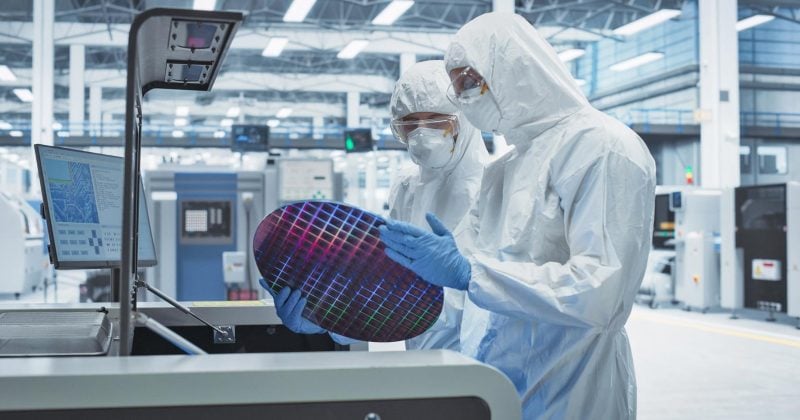
A softer U.S. inflation report lowered interest rate hike expectations, while chipmakers recovered from a violent July correction that had plunged the benchmark into a historic rout.
Asian stock markets mostly advanced as renewed demand for technology shares altered market trajectories. In South Korea, the KOSPI pared earlier gains to trade up 3.5 per cent, extending its rebound from the late-July trough to roughly 23 per cent and officially crossing into bull-market territory, according to market reports. The turnaround follows a turbulent period that saw the index plunge 22 per cent in July—its worst monthly decline since the global financial crisis—amid frequent trading halts and heavy intraday swings.
The broader macroeconomic catalyst stemmed from the United States, where a Consumer Price Index report showed consumer prices rising 0.1 per cent in July, matching expectations. Core CPI increased 0.2 per cent month-on-month and 2.5 per cent year-on-year. Consequently, money markets scaled back the probability of a September Federal Reserve rate hike to roughly 40 per cent, down from 54 per cent just a week prior.
Chipmaker Leadership and the Narrow Emerging-Market Rally
While emerging-market indexes show impressive headline figures, market mechanics reveal a remarkably concentrated engine behind the numbers. Those three entities alone have collectively contributed roughly 14 percentage points of that 22 per cent advance through late June.
This reliance on a handful of semiconductor giants highlights both the strength of artificial intelligence infrastructure spending and the systemic vulnerability of regional indexes. TSMC manufactures advanced logic chips for Nvidia, AMD, and custom hyperscaler processors, while Samsung and SK Hynix dominate high-bandwidth memory production required in AI servers.
“When three stocks drive half of an index’s earnings growth, the index isn’t really telling you much about emerging markets as an asset class. It’s telling you about semiconductors.”
Cryptobriefing editorial analysis
The narrow leadership creates sharp downstream risks. When semiconductor sentiment dips, broader emerging markets absorb the shock immediately, regardless of local sector performance in other developing economies.
Tokyo Market Gains and Corporate Earnings Guidance
In Japan, equity gauges posted solid gains alongside South Korea’s rebound.
Regulatory Tightening and Volatility Management in Seoul
The rapid recovery in Seoul comes against a backdrop of deliberate regulatory intervention designed to cool runaway speculation. During the July selloff, intraday swings exceeding 5 per cent prompted frequent trading halts across the exchange.
To stabilize the market, regulators tightened rules governing single-stock leveraged exchange-traded funds. New mandates introduced stricter minimum cash-deposit requirements and mock-trading rules, while retail participants scaled back margin borrowing. Daily turnover in those leveraged products contracted sharply, successfully depressing market volatility to its lowest level since April.
Beyond regulatory safeguards, market participants are anticipating enhanced shareholder returns. Expectations that major firms like Samsung and SK Hynix will implement aggressive payout plans have reinforced investor confidence during the current recovery phase.
Divergent Regional Trends and Commodity Pressures
Not all regional markets shared in the technology-led bounce. Chinese equities moved lower, with the Shanghai Composite and related gauges falling 0.5 per cent each, reflecting lingering local competition concerns that had earlier weighed on memory stocks. Australia’s ASX 200 dipped 0.2 per cent, while Singapore’s Straits Times Index slipped 0.77 per cent and India’s Nifty 50 lost 0.39 per cent.
Energy markets provided some inflationary relief as oil prices snapped a six-session rally. Crude benchmarks fell below $89 a barrel as traders evaluated ongoing U.S.-Iran developments, though energy costs remain a primary risk factor for global inflation metrics.
As the AI trade attempts to regain stable footing, analysts note that South Korea’s transition out of bear-market territory remains susceptible to shifting sentiment around AI infrastructure spending and foreign capital flows.
Keep reading