
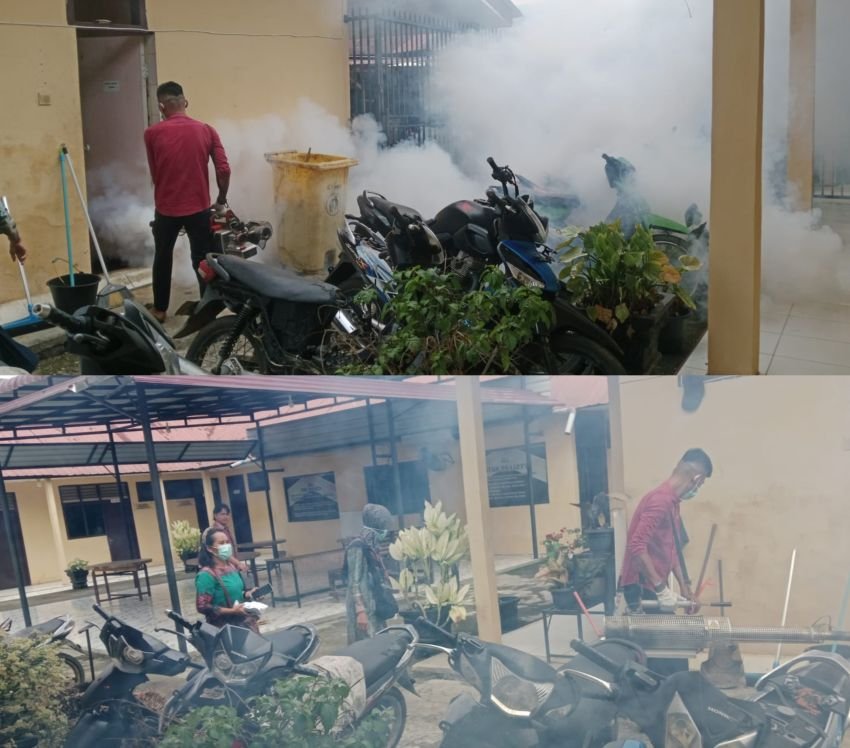
The Polsek Kotapinang police station in North Sumatra, Indonesia, has launched a proactive initiative to combat the rising threat of dengue fever (DBD) within the community. This rapid response includes fogging activities not only at the police station itself but likewise throughout residential areas under its jurisdiction, demonstrating a commitment to public health and community safety. The effort underscores the importance of preventative measures in controlling the spread of this mosquito-borne illness.
Dengue fever, a viral infection transmitted through the bite of infected Aedes aegypti and Aedes albopictus mosquitoes, poses a significant public health challenge in many tropical and subtropical regions, including Indonesia. Symptoms range from mild fever and headache to severe joint and muscle pain, and in some cases, can progress to life-threatening dengue hemorrhagic fever. Effective vector control, including mosquito eradication and preventative measures, is crucial in minimizing the incidence and severity of the disease. The recent actions by the Polsek Kotapinang reflect a broader understanding of the interconnectedness between community well-being and the responsibilities of local law enforcement.
Preventative Fogging Operations
The Polsek Kotapinang’s initiative centers around fogging, a method of pest control that involves dispersing insecticides into the air to kill adult mosquitoes. This process, also known as space spraying, is particularly effective in quickly reducing mosquito populations in localized areas. According to reports, the fogging operations commenced at the Mako Polsek – the police station headquarters – and have since expanded to encompass surrounding residential neighborhoods. This strategic approach aims to disrupt the mosquito breeding cycle and protect residents from potential infection.
Although fogging provides immediate relief, it is most effective when combined with other preventative measures. Eliminating mosquito breeding sites, such as stagnant water in containers like tires, flower pots, and uncovered water storage tanks, is paramount. Community participation in these efforts is essential for long-term success. The Polsek Kotapinang’s proactive stance signals a broader effort to engage the community in public health initiatives.
Understanding the Threat of Dengue Fever in Indonesia
Indonesia experiences a consistently high incidence of dengue fever, with outbreaks occurring regularly throughout the archipelago. The Ministry of Health of the Republic of Indonesia actively monitors dengue cases and implements national control programs. These programs typically involve surveillance, vector control, public education, and clinical management of patients. The country’s geographical characteristics – a tropical climate and abundant rainfall – create ideal conditions for mosquito breeding, making sustained prevention efforts particularly critical.

The World Health Organization (WHO) estimates that approximately half of the world’s population is now at risk of dengue fever. The WHO highlights the increasing global burden of the disease, driven by factors such as urbanization, climate change, and increased international travel. Effective surveillance and rapid response mechanisms, like the one demonstrated by the Polsek Kotapinang, are vital in mitigating the impact of outbreaks.
Community Engagement and Long-Term Strategies
The success of dengue fever control programs hinges on strong community engagement. Raising awareness about the disease, its transmission, and preventative measures is crucial. This includes educating residents about the importance of eliminating mosquito breeding sites, using mosquito repellents, and seeking medical attention promptly if symptoms develop. The Polsek Kotapinang’s initiative could serve as a model for other local authorities in Indonesia, demonstrating the potential for collaborative efforts between law enforcement and public health agencies.
Beyond fogging and community education, long-term strategies for dengue control require a multi-faceted approach. This includes improving sanitation infrastructure, promoting responsible water management practices, and investing in research and development of new tools for mosquito control, such as vaccines and genetically modified mosquitoes. The development of a safe and effective dengue vaccine remains a priority for global health organizations.
The Role of Local Police in Public Health
The involvement of the Polsek Kotapinang in dengue fever prevention highlights a growing trend of law enforcement agencies taking on a more active role in public health initiatives. This reflects a recognition that public safety extends beyond traditional crime prevention to encompass the overall well-being of the community. Local police often have strong relationships with residents and are well-positioned to disseminate information and mobilize resources during public health emergencies.
This proactive approach can be particularly valuable in reaching vulnerable populations and ensuring that preventative measures are implemented effectively. By collaborating with health authorities and community organizations, police can contribute to a more comprehensive and coordinated response to public health challenges. The initiative in Kotapinang demonstrates a commitment to community policing principles, where law enforcement actively partners with residents to address local concerns.
The Polsek Kotapinang’s swift action to address the potential for a dengue fever outbreak underscores the importance of preparedness and proactive public health measures. While fogging provides immediate relief, sustained efforts focused on community engagement, environmental management, and ongoing surveillance are essential for long-term control of this debilitating disease. Continued monitoring of dengue cases and adaptation of control strategies will be crucial in protecting the health and well-being of communities across Indonesia.
Further updates regarding the dengue fever situation in North Sumatra and the ongoing efforts of the Polsek Kotapinang can be found through official channels of the Indonesian Ministry of Health and local news outlets. Community members are encouraged to report potential mosquito breeding sites to local authorities and to practice preventative measures to protect themselves and their families.