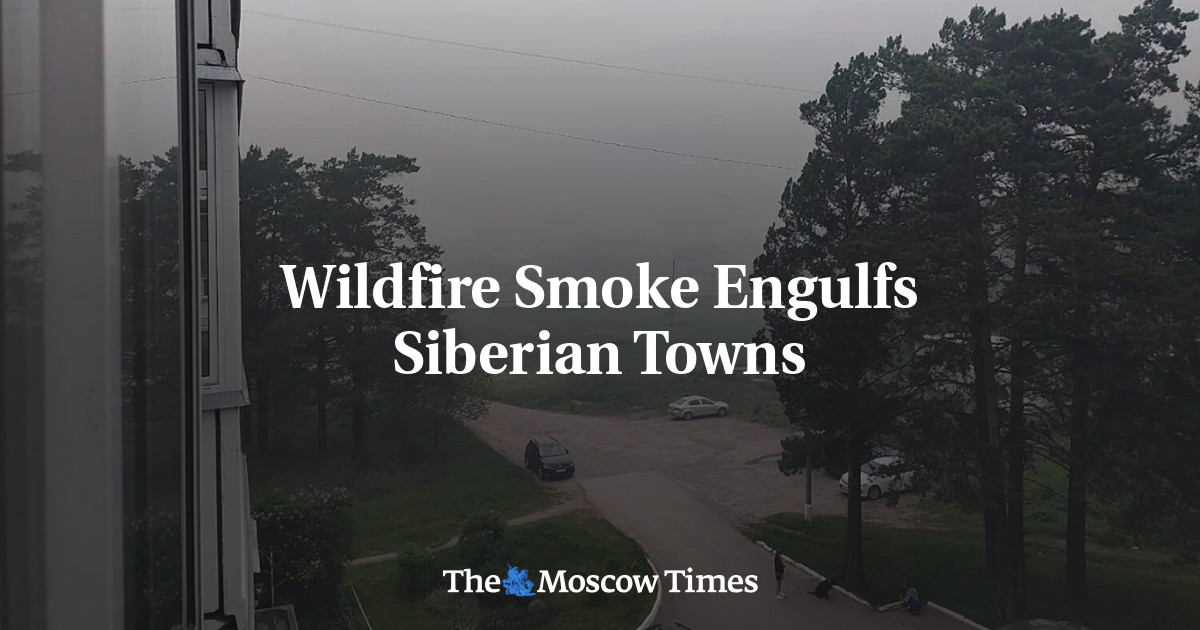
Wildfire smoke has blanketed large swaths of the Krasnoyarsk region in Siberia, as emergency services report more than 50 active fires burning across nine municipal districts. Regional officials confirmed that firefighting efforts are currently concentrated on containing blazes that have led to degraded air quality for residents in multiple towns, marking a significant escalation in the seasonal fire cycle for the Central Siberian plateau. While the Federal Aerial Forest Protection Service continues to monitor the situation, local emergency management authorities are coordinating ground crews to prevent further spread toward populated areas.
The current situation in Krasnoyarsk follows a pattern of increasing wildfire intensity across the Russian Federation, which experts often attribute to a combination of rising average temperatures and shifting precipitation patterns in the boreal forest zones. According to reports from the Ministry of Natural Resources and Environment, the scale of the fires is being tracked via satellite imagery, allowing for the deployment of specialized aerial units to remote regions where road access remains limited. The presence of smoke in urban centers has prompted local health departments to issue advisories for vulnerable populations, including the elderly and those with pre-existing respiratory conditions.
Drivers of the Siberian Fire Season
The persistence of wildfires in the Krasnoyarsk region is frequently linked to the unique characteristics of the Siberian taiga. The World Meteorological Organization has noted that northern latitudes are warming at a rate significantly higher than the global average, which contributes to the drying of peatlands and forest litter. These dry conditions provide abundant fuel for ignitions, which can be triggered by both human activity and lightning strikes during the summer months.
Official data indicates that while many fires are managed or monitored, those posing a direct threat to infrastructure or residential settlements receive immediate suppression priority. The Ministry of Emergency Situations maintains a tiered response system that determines how many resources are allocated to a specific fire based on its proximity to human habitation and the potential for economic loss. This year, the focus has remained on protecting critical infrastructure and minimizing the impact of smoke on regional air quality standards.
Public Health and Environmental Impact
For residents in the affected municipal districts, the primary concern is the sustained presence of particulate matter in the atmosphere. Air quality monitoring stations, often managed by regional environmental agencies, provide real-time data that dictates public health recommendations. When smoke density exceeds established safety thresholds, local governments typically advise citizens to remain indoors and minimize physical exertion.
Beyond the immediate human impact, the ecological consequences of these fires are a subject of ongoing study. The United Nations Environment Programme has highlighted that boreal forests act as critical carbon sinks; when they burn, they release stored carbon back into the atmosphere, potentially creating a feedback loop that exacerbates regional warming. The long-term recovery of these forest ecosystems depends on the frequency and severity of the burn cycles, with frequent fires often preventing the forest from returning to its original state.
Emergency Response and Surveillance
Managing wildfires in a region as vast as Krasnoyarsk requires a sophisticated infrastructure of surveillance and rapid response. Aerial monitoring, coordinated by regional and federal authorities, serves as the primary method for detecting new ignitions in inaccessible terrain. Once a fire is identified, a risk assessment determines whether the fire can be left to burn naturally—a strategy used in remote areas to conserve resources—or if it requires intervention by ground-based teams or water-bombing aircraft.
The Russian state news agencies have reported that firefighting personnel are utilizing a mix of manual trenching and aerial support to create firebreaks. These efforts are often hampered by high winds and the sheer scale of the affected areas. Cooperation between municipal, regional, and federal agencies remains a cornerstone of the strategy to mitigate the damage caused by the current fire season.
/archive-images.prod.global.a201836.reutersmedia.net/2020/07/21/2020-07-21T012109Z_35759_MRPRC24XH92GNS1_RTRMADP_0_RUSSIA-FIRES-SIBERIA.JPG "Emergency Response and Surveillance")
For citizens seeking the latest information, regional government websites provide daily updates on fire containment percentages and air quality indices. These official portals are the most reliable source for information regarding evacuation orders or specific health precautions for those living in the path of smoke plumes. The situation remains fluid, and authorities have indicated they will continue to provide updates as weather conditions evolve and new containment data becomes available. We invite our readers to share their local observations in the comments section below as we continue to track this developing story.