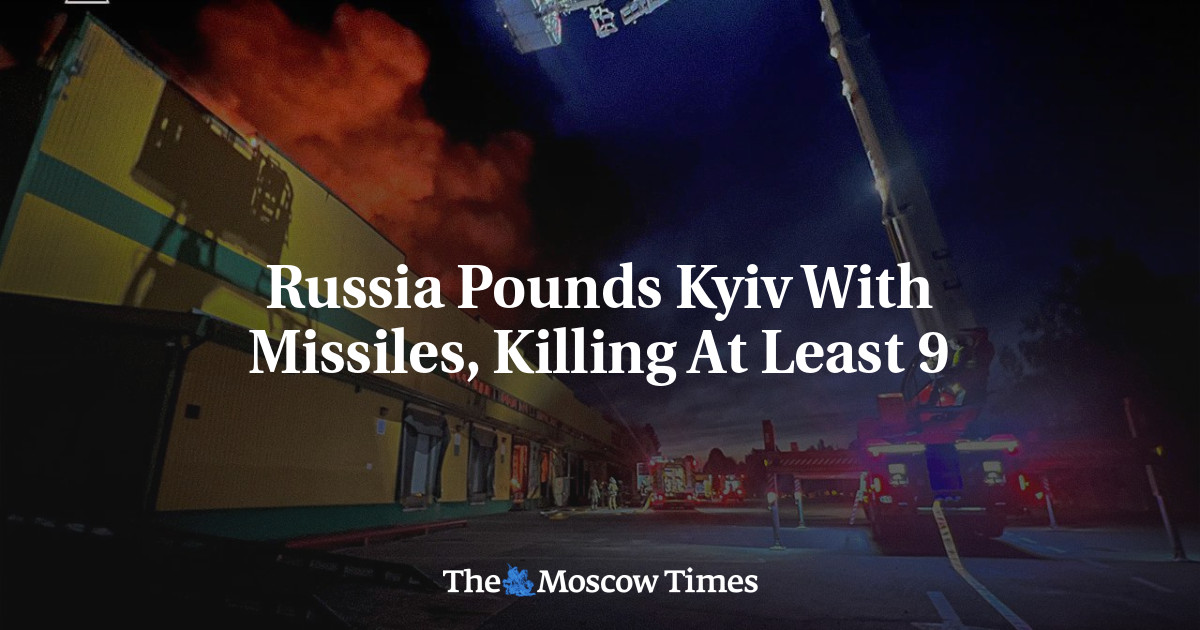
At least 10 people were killed and multiple others injured on Thursday as Russian forces launched a major missile barrage targeting Kyiv, according to local emergency services and municipal officials. The strikes, which struck residential areas and critical infrastructure across the Ukrainian capital, marked the second large-scale aerial assault on the city within a single week, leaving fires burning in several districts and triggering widespread power outages.
According to the Kyiv City Military Administration, air defense systems engaged incoming projectiles across multiple districts, but falling debris and direct impacts caused significant destruction. Emergency crews responded to blazing apartment blocks and commercial properties, while municipal engineers rushed to restore electricity to neighborhoods cut off by grid damage. The assault compounded the strain on residents already grappling with severe winter infrastructure challenges.
The escalation follows a pattern of intensified aerial attacks directed at major urban centers across Ukraine, prompting renewed international condemnation and urgent appeals from Kyiv officials for enhanced air defense munitions. As recovery operations continue, local authorities have urged residents to heed air raid alerts and seek shelter immediately whenever sirens sound.
Infrastructure Damage and Emergency Response
The Thursday morning strikes caused substantial damage to civilian housing and municipal utilities, according to statements released by the State Emergency Service of Ukraine. Rescue workers deployed heavy machinery and ladders to evacuate residents from upper floors of multi-story apartment buildings engulfed in smoke and flames. Medical personnel treated dozens of wounded civilians on-site before transferring critical cases to local hospitals.
Energy providers reported that grid infrastructure sustained direct hits, resulting in emergency power cuts that affected thousands of households. Municipal heating networks also experienced temporary disruptions as repair crews worked under hazardous conditions to isolate damaged lines. Local authorities established warming stations across the city to assist residents left without heat and electricity amid freezing temperatures.
The State Emergency Service confirmed that search and rescue operations remained active throughout the day as teams combed through rubble for survivors. City officials have promised financial and logistical support for families displaced by the bombardment, while volunteers mobilized rapidly to distribute food, blankets, and emergency supplies to affected communities.
Regional Context and Air Defense Challenges
Thursday’s bombardment represents a continuation of heavy aerial campaigns targeting Ukraine’s capital and surrounding regions. Military analysts note that these strikes increasingly target the country’s energy grid and logistics corridors in an effort to degrade civilian morale and disrupt supply chains. Ukrainian military spokespersons reiterated calls for western-supplied interceptor missiles, emphasizing that current air defense inventories are vital for shielding densely populated urban areas from incoming ballistic and cruise missiles.
International organizations and foreign embassies in Kyiv condemned the attacks, with diplomats emphasizing the protection of civilians under international humanitarian law. Local authorities continue to assess the full economic and structural toll of the week’s dual assaults as municipal repair crews work around the clock to restore basic services to the capital.