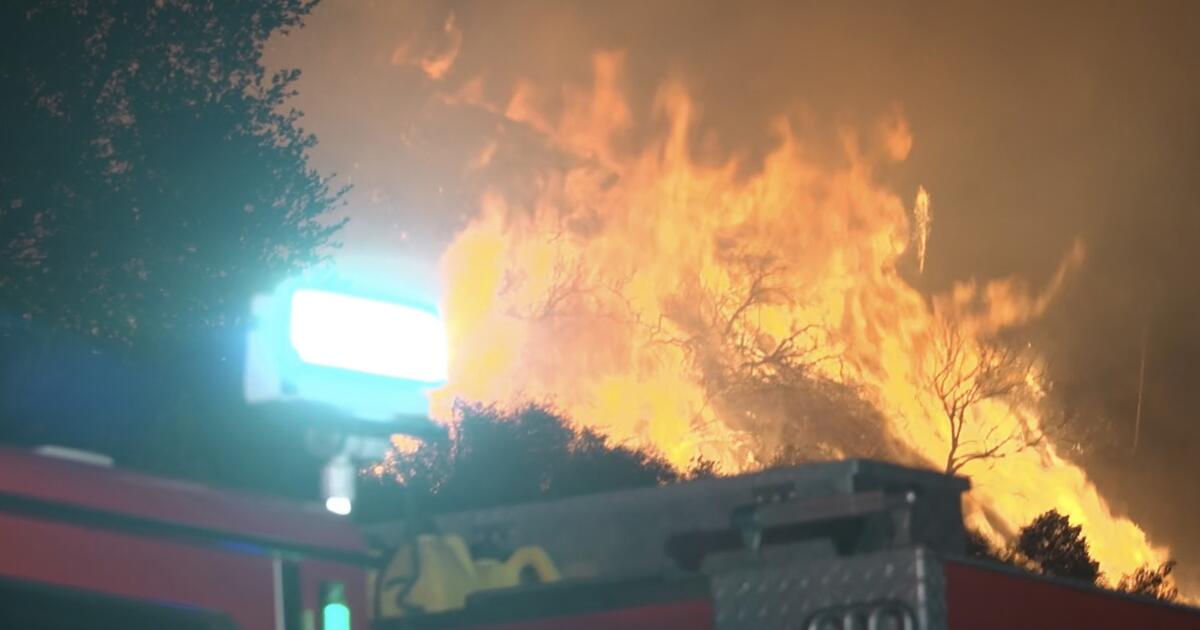
The devastating Palisades Fire of January 2025, which claimed twelve lives and destroyed thousands of homes in Los Angeles County, continues to spark debate and scrutiny over the response of the Los Angeles Fire Department (LAFD). Recent testimony reveals concerns raised by firefighters at the scene of the initial Lachman Fire – the blaze that rekindled into the larger Palisades Fire – that critical hotspots were left unattended, potentially contributing to the disaster’s scale. The incident has ignited a discussion about resource allocation, emergency preparedness, and the potential role of volunteer crews in bolstering fire management capabilities.
The core issue, as highlighted in depositions and a recent Los Angeles Times report, centers on the decision to withdraw crews from the Lachman Fire site before ensuring complete extinguishment. Firefighter Scott Pike, in sworn testimony, described observing actively smoldering areas, including ash pits with exposed, red-hot coals, as crews prepared to exit on January 2nd, 2025. He testified that he voiced his concerns to both fellow firefighters and the captain on scene, feeling his warnings were dismissed. This account, alongside testimony from a dozen other firefighters, challenges the LAFD’s previous assertions that the Lachman Fire was “dead out” before crews departed. The lawsuit brought by victims of the Palisades Fire alleges negligence on the part of the city of Los Angeles and the State of California, and these depositions are central to the ongoing legal proceedings.
The Lachman Fire and the Palisades Inferno: A Timeline of Events
The initial Lachman Fire erupted on January 1, 2025, in the Pacific Palisades area. The LAFD quickly responded and, within hours, deemed the fire contained. However, as detailed in reporting by CBS News Los Angeles, the fire wasn’t fully extinguished. Six days later, on January 7, 2025, fueled by strong Santa Ana winds, the fire rekindled, rapidly escalating into the Palisades Fire. The blaze quickly spread through the Pacific Palisades, Malibu, and the Santa Monica Mountains, causing widespread destruction and loss of life. According to the Los Angeles County Fire Department, the Palisades Fire ultimately burned over 23,000 acres.
The subsequent investigation has focused on the critical period between the initial containment of the Lachman Fire and its resurgence as the Palisades Fire. The depositions reveal a pattern of communication failures and questionable decisions regarding mop-up operations – the process of thoroughly extinguishing remaining hotspots to prevent reignition. Jacob Ulibarri, a rookie firefighter who worked on the Lachman Fire, testified that the number of visible hotspots diminished significantly between his arrival in the morning and the afternoon shift change, suggesting an inadequate level of sustained monitoring. Battalion Chief Martin Mullen, who oversaw the mop-up operation, conducted four perimeter checks but ultimately left the area with hoses remaining in place overnight, a decision now under intense scrutiny.
The Resource Gap and the Proposal for Volunteer Crews
A central argument emerging from the fallout of the Palisades Fire is the question of adequate resources. As noted in a letter to the editor published in the Los Angeles Times, the LAFD may simply lack the personnel to maintain continuous monitoring of a fire site for an extended period. This resource gap has prompted calls for innovative solutions, including the establishment of a trained volunteer crew capable of providing 24/7 monitoring of potentially hazardous areas. The idea draws parallels to the existing volunteer network of mountain lookouts, who play a crucial role in early fire detection and reporting.
The proposal specifically highlights the potential of utilizing amateur radio operators – often referred to as “ham radio operators” – as ideal fire monitors. These individuals possess specialized communications equipment and training, and many have established relationships with law enforcement agencies. The American Radio Relay League (ARRL), the national association for amateur radio, reports over 760,000 licensed amateur radio operators in the United States as of December 31, 2025, demonstrating a significant pool of potential volunteers. The ARRL provides training and certification programs, ensuring a high level of competence among its members. Ham radio operators are frequently deployed during emergencies, providing critical communication support when traditional infrastructure is compromised.
The Role of Ham Radio Operators in Emergency Management
The utility of amateur radio in emergency situations is well-documented. During natural disasters, such as hurricanes, earthquakes, and wildfires, ham radio operators often serve as a vital communication lifeline when commercial networks are overwhelmed or unavailable. They can establish temporary communication networks, relay critical information to emergency responders, and provide support to affected communities. The Federal Emergency Management Agency (FEMA) recognizes the value of amateur radio and actively collaborates with the ARRL to enhance emergency preparedness. FEMA’s Emergency Communications Coordination Working Group includes representatives from the ARRL, fostering a strong partnership between the agency and the amateur radio community.
The proposed volunteer monitoring service would leverage the skills and resources of ham radio operators to provide continuous surveillance of areas deemed at risk of reignition following a wildfire. These volunteers could be stationed at strategic locations, equipped with specialized monitoring equipment, and tasked with reporting any signs of renewed activity to the LAFD. This proactive approach could significantly reduce the risk of a minor, contained fire escalating into a large-scale disaster like the Palisades Fire.
Mayor Bass and the Independent Investigation
The recent testimonies have prompted a response from Los Angeles Mayor Karen Bass. According to CBS News Los Angeles, Mayor Bass described the firefighter’s statements as “alarming” and reaffirmed her commitment to an independent investigation into the Palisades Fire. The investigation is being conducted by the Fire Research Institute, an independent body commissioned by Governor Gavin Newsom. The institute’s findings are expected to provide a comprehensive assessment of the fire’s origins, causes, and the effectiveness of the response efforts.
The outcome of the lawsuit filed by victims of the Palisades Fire, and the findings of the independent investigation, will likely have significant implications for the LAFD’s policies and procedures. The debate over resource allocation and the potential implementation of a volunteer monitoring service underscores the require for a comprehensive review of fire management strategies in Los Angeles County and other wildfire-prone regions.
Key Takeaways
- Recent firefighter testimony challenges the LAFD’s account of the Lachman Fire’s extinguishment, raising concerns about potential negligence.
- A resource gap within the LAFD may have contributed to the Palisades Fire’s devastating scale.
- The proposal to utilize trained volunteer crews, particularly ham radio operators, offers a potential solution to enhance fire monitoring capabilities.
- An independent investigation is underway to determine the causes of the Palisades Fire and assess the effectiveness of the response.
The investigation into the Palisades Fire and the subsequent discussions about resource allocation and volunteer support highlight the ongoing challenges of wildfire management in California and beyond. As climate change continues to exacerbate fire risk, innovative solutions and proactive measures are essential to protect communities and prevent future tragedies. The next update from the Fire Research Institute is expected in late April 2026, and will likely provide further insight into the events surrounding the Palisades Fire. We encourage readers to share their thoughts and experiences in the comments below.
Related reading