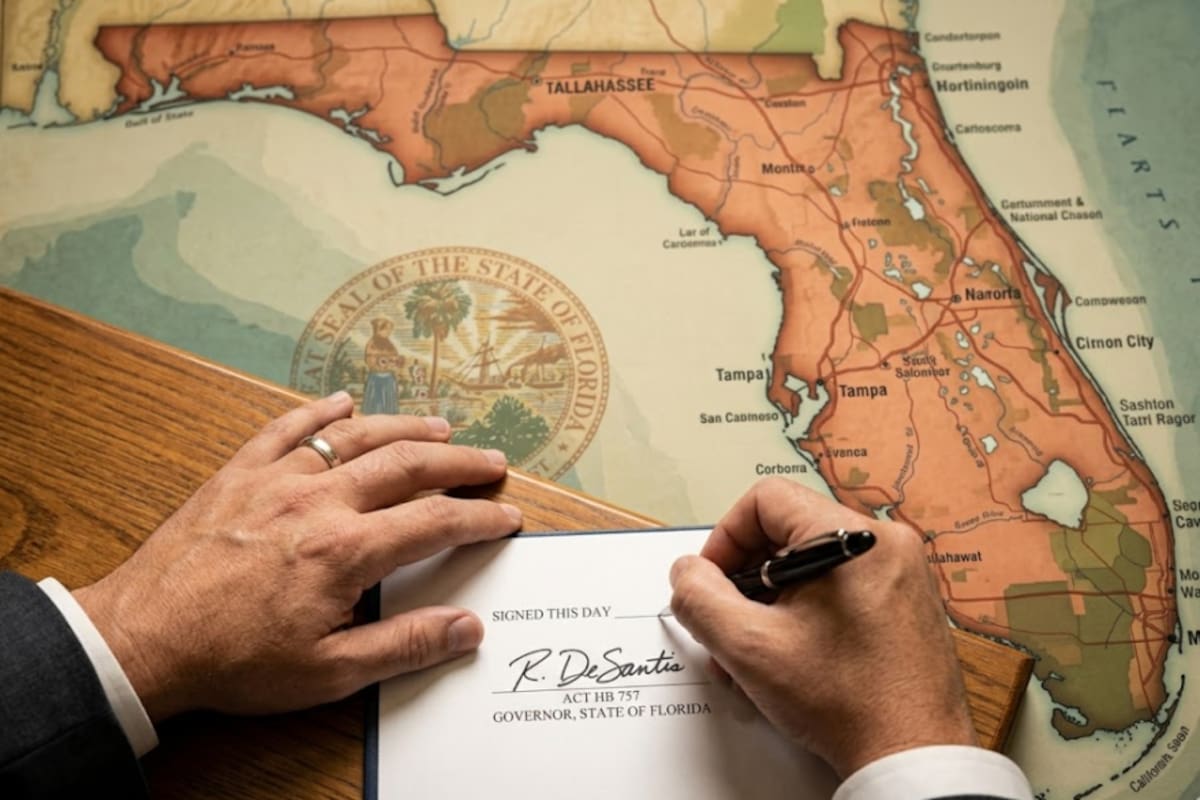
Florida Governor Ron DeSantis has signed new legislation, HB 757, into law, introducing a series of updated security requirements and protocols for public higher education institutions across the state. The move, enacted during the recent Commissioner’s Summit, represents a significant shift in how Florida’s public universities and colleges are expected to manage campus safety, particularly regarding the response to active assailant threats and the expansion of existing security programs.
The legislation, which took effect in mid-May 2026, mandates that public institutions of higher learning implement comprehensive safety frameworks. According to official legislative records from the Florida Senate, the measure is designed to align campus security practices with contemporary emergency management standards. By formalizing these requirements, the state aims to create a more uniform approach to protection for students, faculty, and staff in classrooms and public campus spaces.
Expanding the Guardian Program and Campus Protocols
A central component of HB 757 is the expansion of the “Guardian Program” to public higher education campuses. Originally established in Florida following the 2018 Marjory Stoneman Douglas High School Public Safety Act, the program allows for the training and arming of designated school personnel to serve as a line of defense during emergency situations. The expansion of this program into the university and college environment marks a notable evolution in the state’s approach to school safety and security policies.
Beyond personnel programs, the law requires institutions to adopt standardized protocols for active assailant scenarios. These protocols are intended to ensure that campus law enforcement and administration can coordinate effectively during high-stress incidents. The legislation also introduces stricter penalties for certain offenses involving firearms within proximity to educational institutions, further emphasizing the state’s focus on maintaining security within these academic environments.
What the Legislation Means for Higher Education
For administrators and campus safety departments, the enactment of HB 757 necessitates a thorough review of existing safety manuals and emergency response plans. Public universities and colleges are now required to ensure that their internal policies meet the new statutory benchmarks. This includes conducting regular drills and establishing clear lines of communication between campus security and local law enforcement agencies, as outlined in the Florida Department of Law Enforcement’s updated guidelines for educational facilities.
The emphasis on “best practices” suggests that the state intends for these institutions to move beyond basic compliance and toward a more proactive, integrated safety posture. For students and parents, this shift may manifest as increased visibility of security personnel and more frequent communication regarding safety drills and campus access policies. While the implementation phase is currently underway, the long-term impact on the daily campus experience remains a subject of ongoing discussion among educators and student advocacy groups.
Looking Ahead: Implementation and Oversight
As institutions work to integrate these new mandates, the Florida Department of Education is expected to provide oversight and support. The Commissioner’s Summit, where the law was formally highlighted, serves as a primary venue for disseminating these new expectations to university presidents and safety directors. The state’s focus remains on the seamless application of these standards to prevent future security lapses.
Observers are closely watching how individual campuses adapt to the new requirements, particularly regarding the training and deployment of personnel under the expanded Guardian Program. With the law now in effect, the coming months will likely see the release of further guidance from state officials regarding compliance reporting and the evaluation of these new safety structures. We will continue to monitor official government updates and institutional announcements regarding the rollout of these safety measures.
What are your thoughts on the expansion of security protocols in higher education? Join the conversation in the comments section below and share this article to keep your community informed on the latest policy changes in Florida.