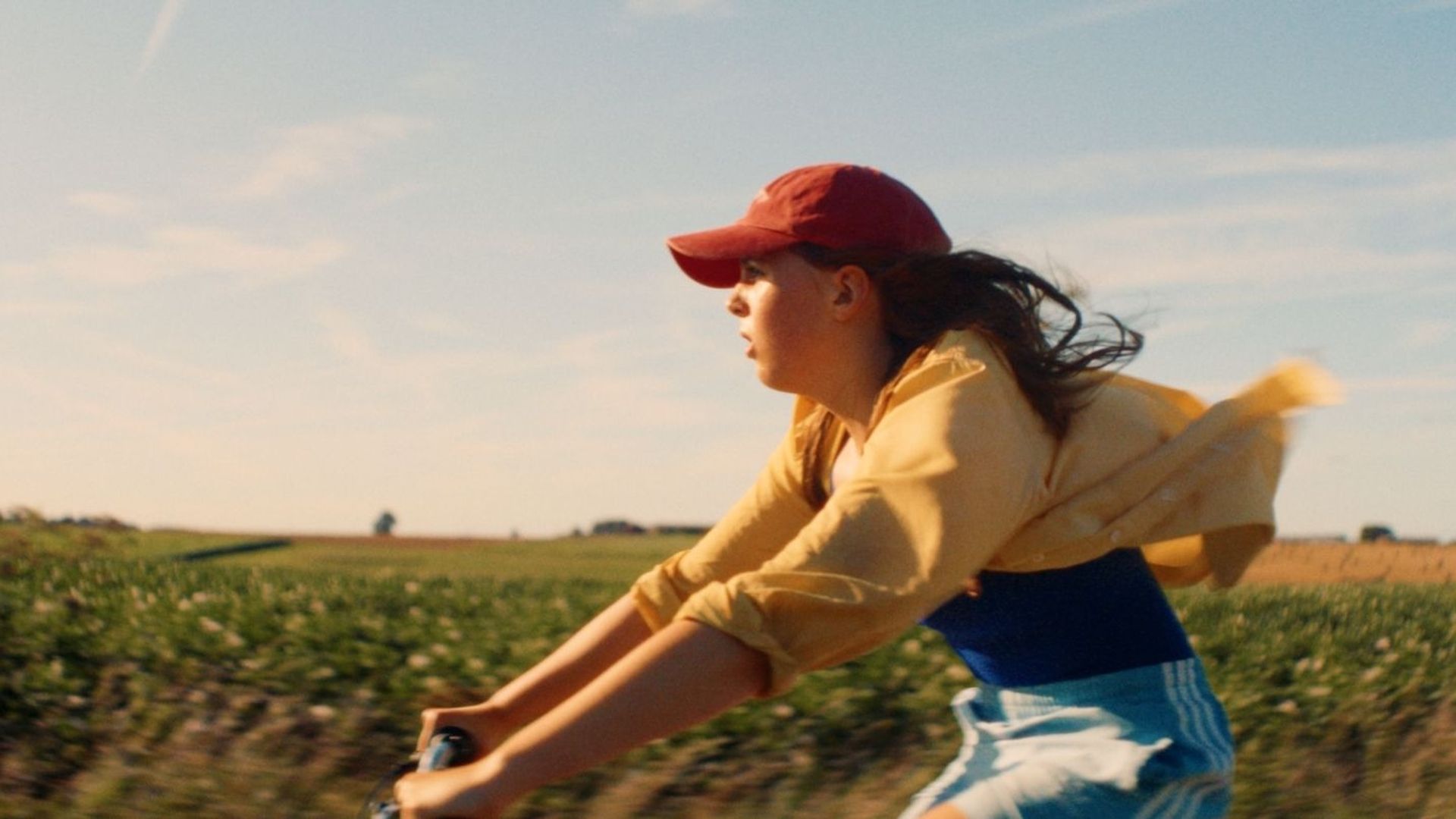
The short film “La Moisson” (The Harvest), a poignant exploration of grief and the challenges of communication, has received a nomination for the René du Cinéma awards, as announced by RTBF.be. The film, directed by Alice D’Hauwe, centers on Rosie, a 15-year-old girl who has stopped speaking following the death of her father. The nomination recognizes D’Hauwe’s sensitive and deeply personal approach to a universal theme, and the film’s ability to convey profound emotion through silence and visual storytelling.
D’Hauwe’s inspiration for “La Moisson” stems from her own experience with loss. She lost her father when she was 15 years old, an event that profoundly impacted her and her family. According to D’Hauwe, the experience sparked a fascination with the complex emotions surrounding grief and the difficulty of articulating such profound pain. “There are often very few words to show how devastated one is,” she explained, as reported by RTBF.be. This realization led her to portray Rosie’s grief through mutism, a powerful symbol of her internal struggle.
A Personal Journey to Filmmaking
Even as D’Hauwe is now a rising force behind the camera, her career began in front of it. She spent considerable time as an actress before deciding to transition to directing at the age of 30. This shift was driven by a desire to tell her own stories and to offer a female perspective in filmmaking. “I love being an actress, but at some point, I wanted to tell my stories, to tell the characters that I wrote,” D’Hauwe stated to RTBF.be. “And as a woman, I think it’s important to get behind the camera and speak out to tell our vision of the world.”
The path to realizing her vision for “La Moisson” wasn’t without its challenges. D’Hauwe faced obstacles in securing traditional funding through the film commissions in the Fédération Wallonie-Bruxelles. To overcome this hurdle, she turned to crowdfunding, launching a campaign on KissKissBankBank. The campaign proved remarkably successful, raising €8,000, exceeding her initial goal. As detailed on the KissKissBankBank project page, this initial funding was supplemented by support from the Fonds du cinéma du Hainaut and a tax shelter, allowing her to bring the project to fruition.
Exploring Grief and Silence
“La Moisson” delves into the emotional landscape of Rosie as she navigates life in the wake of her father’s death. The film’s synopsis, as outlined on IMDb, describes Rosie’s silence initially as a refuge, but it gradually transforms into a “poison that refuses to abandon her.” The story unfolds against the backdrop of the last day of the harvest, symbolizing an ending and a potential new beginning for Rosie. The film explores the impact of Rosie’s silence on those around her, highlighting the anxieties and frustrations of family and friends struggling to connect with her.
The narrative, as described in the director’s note on KissKissBankBank, is deeply rooted in D’Hauwe’s personal experience. She describes a feeling of falling into a void after her father’s death, a sense of disconnection from reality. “Everything is unbearable,” she writes, capturing the overwhelming nature of grief. The film aims to portray the raw and often unspoken emotions that accompany loss, offering a nuanced and empathetic portrayal of a young woman grappling with profound sorrow.
The Significance of the Harvest Setting
The choice of the harvest season as the film’s setting is particularly significant. The harvest represents a culmination of effort and a time of transition. For Rosie, the end of the harvest mirrors the end of a chapter in her life, but also the beginning of a journey toward healing and self-discovery. The visual imagery of the harvest – fields being cleared, crops being gathered – serves as a metaphor for the process of letting go and embracing change.
The film’s exploration of silence is also noteworthy. Rosie’s mutism is not simply a symptom of her grief; it is a form of communication in itself. Her silence forces those around her to listen more attentively, to observe her nonverbal cues, and to confront their own emotions. The film challenges viewers to consider the power of silence and its ability to convey profound meaning.
Cast and Crew
“La Moisson” features a cast led by Giulia Bendjilali as Rosie, with Ruth Becquart portraying Angèle, Lily Delfosse as Carmen, and Camille Detaye as Louise. Gaëtan Lejeune plays Jacques, Réhab Mehal is the Vendeuse, Sebastian Moradiellos is the Client, Malou Mullier is Rachel, Terry Ngoga is Marcel, and Sacha Pirlet is Henri. Alice D’Hauwe not only directed the film but also wrote the screenplay, demonstrating her complete creative control over the project. The film is a production of Tarentula Belgique.
The nomination for the René du Cinéma awards is a significant achievement for D’Hauwe and the entire team behind “La Moisson.” The awards, which celebrate Belgian cinema, are a prestigious recognition of artistic merit and storytelling excellence. The awards ceremony will be a key moment for the film, potentially raising its profile and reaching a wider audience.
About the René du Cinéma Awards
The René du Cinéma awards are a prominent event in the Belgian film industry, recognizing outstanding achievements in various categories. The awards are named after René Coll, a Belgian film critic and historian who played a vital role in promoting Belgian cinema. The awards aim to celebrate the diversity and creativity of Belgian filmmakers and to foster a vibrant film culture within the country.
“La Moisson” offers a compelling and emotionally resonant portrayal of grief, loss, and the power of silence. Alice D’Hauwe’s personal connection to the story and her dedication to crafting a nuanced and authentic narrative have resulted in a film that is both deeply moving and visually striking. The film’s nomination for the René du Cinéma awards is a testament to its artistic merit and its potential to resonate with audiences worldwide.
As “La Moisson” gains recognition, audiences can anticipate further opportunities to experience this powerful and poignant film. The René du Cinéma awards ceremony will be a key event to watch, and the film’s future distribution plans will be closely followed by those eager to witness D’Hauwe’s compelling vision. The film serves as a reminder of the enduring power of storytelling to explore the complexities of the human experience and to offer solace and understanding in the face of loss.
The next step for “La Moisson” is the René du Cinéma awards ceremony, where the winners will be announced. Stay tuned to World Today Journal for updates on the awards and further coverage of Belgian cinema. We encourage readers to share their thoughts on the film and the themes it explores in the comments below.
Worth a look