Here’s a breakdown of the key facts from the text,organized for clarity:
1. New Spinal Cord Organoid Model:
* Innovation: Researchers created a highly realistic 3D model of the human spinal cord (an “organoid”).
* Key Features: This is the first organoid to include:
* Neurons
* Astrocytes
* Microglia (immune cells of the central nervous system) - crucial for replicating the inflammatory response to injury.
* meaning: The inclusion of microglia makes the model more accurate and representative of what happens in a real spinal cord injury. It allows study of the immune system’s role in the injury and recovery process.
2. “dancing Molecules” Therapy:
* What it is: A therapy using controlled molecular motion to repair tissue and potentially reverse paralysis. It’s a type of supramolecular therapeutic peptide (STP).
* How it works:
* Injected as a liquid, it forms a nanofiber web mimicking the spinal cord’s structure.
* The speed of molecular movement within the web is key – faster movement leads to better interaction with cell receptors. Cells and their receptors are constantly moving, so “social” (fast-moving) molecules are more likely to connect.
* Previous Results: In mice, a single injection within 24 hours of injury allowed them to walk again within four weeks. Faster molecular motion = better results.
* Connection to other therapies: The concept of supramolecular therapies is also used in GLP-1 drugs for weight loss and diabetes.
3. Testing the Therapy in the Organoid:
* Injury Models: Researchers simulated two common types of spinal cord injury:
* Laceration: A clean cut, like a surgical wound.
* Contusion: compression injury, like from a car crash or fall.
* Results of Treatment: “Dancing molecules” led to:
* Reduced inflammation
* Shrinking of glial scars (scar tissue that hinders recovery)
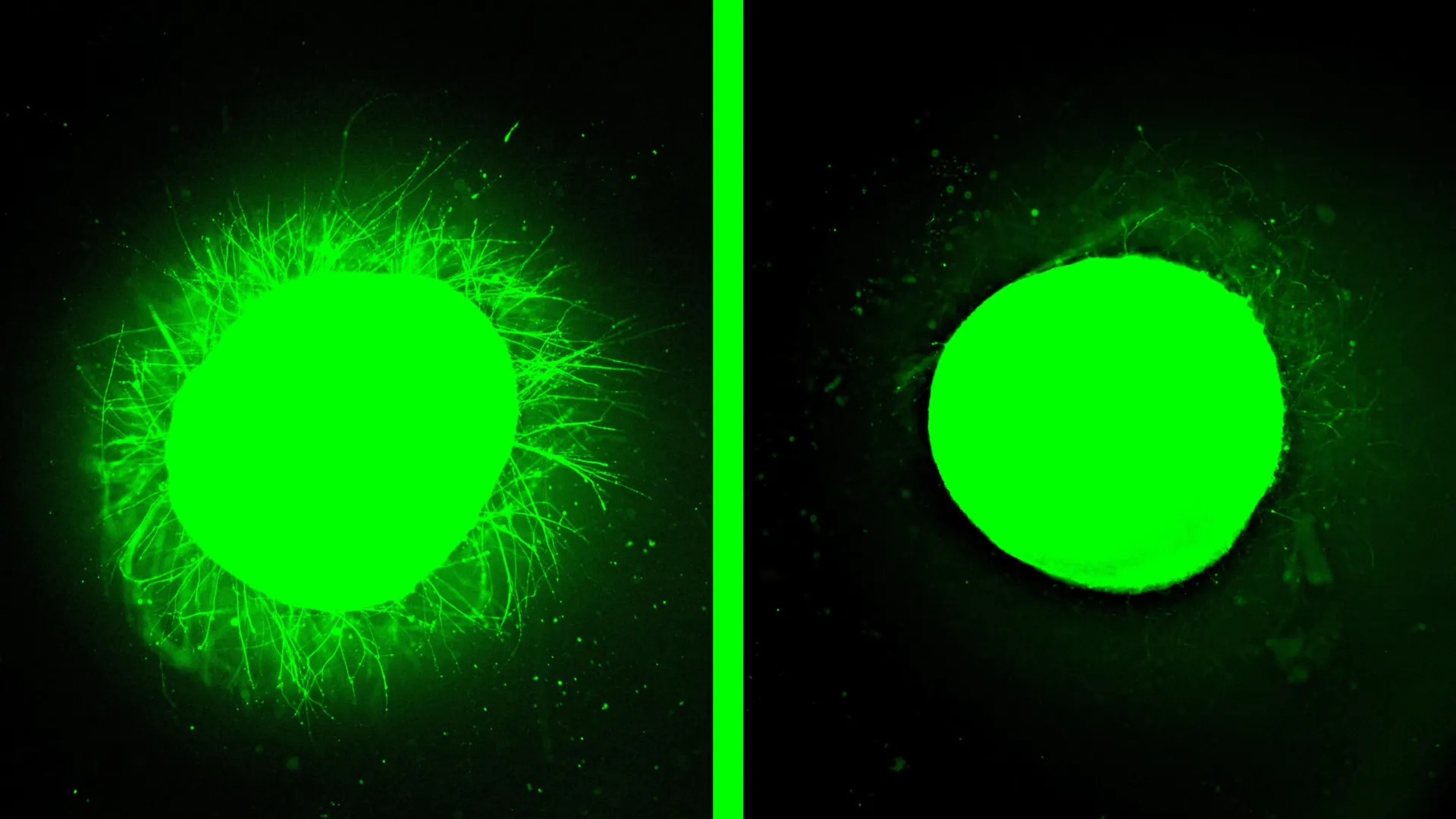
* Stimulated neurite extension (growth of nerve fibers)
* Organized neuron growth
4. Importance of Molecular Motion:
* Key Finding: The therapy’s success is directly linked to the molecules’ ability to move rapidly and briefly detach from the nanofiber network.
* Evidence: Healthy organoids treated with “dancing molecules” showed meaningful neurite growth, while those treated with less mobile molecules showed no effect.
5. Future Directions:
* Refining the Model: Developing more advanced organoids.
* Chronic Injuries: Creating models that replicate long-standing injuries with thicker scar tissue.
* Personalized Medicine: Potentially creating implantable tissue from a patient’s own cells using thes organoids.
In essence, this research represents a significant step forward in spinal cord injury treatment by combining a more realistic model for study with a promising therapy that leverages the power of molecular motion to promote nerve regeneration and reduce inflammation.
Related reading