
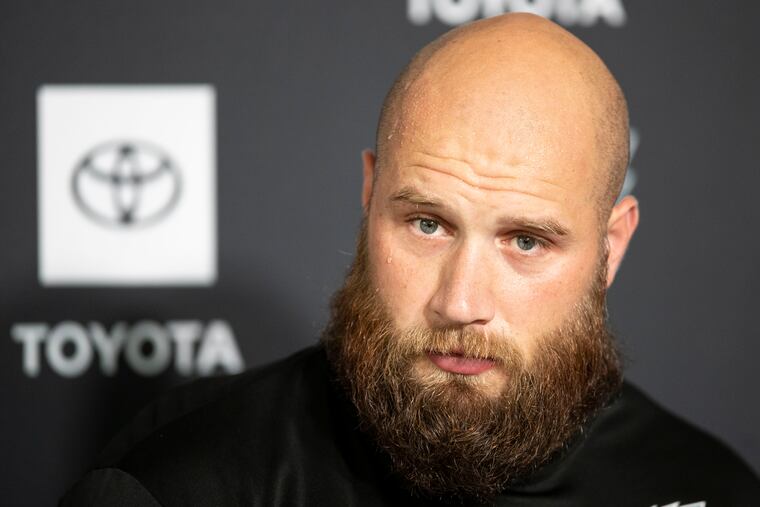
Philadelphia Eagles offensive tackle Lane Johnson has opened up about the heavy toll of professional football, addressing the often-overlooked intersection of elite physical performance and mental health struggles in the National Football League. In public statements and locker room disclosures spanning his nine-year tenure with the franchise, Johnson has detailed how managing anxiety, depression, and the intense scrutiny of professional sports requires a distinct form of resilience that extends far beyond the traditional weight room.
According to reporting from the Philadelphia Inquirer, Johnson’s candid admissions regarding his mental health have repeatedly challenged the hypermasculine culture of pro football. Over his career as the team’s starting right tackle, Johnson has been vocal about the psychological pressures unique to the league, shedding light on a side of elite athletics that fans and analysts rarely see.
Confronting the Stigma of Mental Health in Professional Football
The conversation around mental health in the NFL often collides with deeply entrenched athletic expectations. As noted by the Philadelphia Inquirer, Johnson has openly discussed how anxiety and depression affect players across the league, noting that the fear of being mocked or not taken seriously often forces athletes to suffer in silence. When teammates face similar challenges, the lack of open dialogue can exacerbate an already demanding work environment.
Johnson previously shared his experiences dealing with the same type of anxiety faced by his teammate and friend, former Eagles guard Brandon Brooks. According to the Philadelphia Inquirer, Johnson emphasized that self-disclosure carries risks in a competitive locker room culture, where vulnerabilities can occasionally be weaponized by opponents or critics. Despite these hurdles, Johnson chose to speak publicly to dismantle the persistent stigma suggesting that mental illness equates to personal weakness.
The Physical and Cognitive Toll of the Game
Beyond locker room dynamics, the physical realities of playing offensive line in the NFL contribute significantly to player well-being. Concussions and repeated head trauma create complex cognitive and emotional challenges for many athletes. While drawing a direct line between specific injuries and mental health outcomes remains a complex medical evaluation, the cumulative physical demands of the sport are undeniable.
Reporting from the Philadelphia Inquirer highlights that Johnson suffered concussions in 2017 and 2019. Observers and medical professionals frequently point out that the high-impact nature of professional football makes it nearly impossible to separate physical recovery from mental health support. By addressing both aspects of athlete wellness, players like Johnson help shift how sports organizations approach long-term care.
Next Steps and Ongoing Advocacy
We welcome your thoughts and perspectives on this vital conversation. Please share your comments below to join the discussion on athlete well-being and mental health awareness in professional sports.
Related reading
- Europe Rivers Dry Up Amid Record Heat and Disrupt Shipping
- Fidel Castro and the Cuban Revolution: The Rise and Fall of the Batista Regime
- Mississippi Health Official Warns Pregnancy Increases Vulnerability (news-usa.today)
- Free Cancer Wellness & Exercise Program: Rebuild Strength and Health (archyworldys.com)