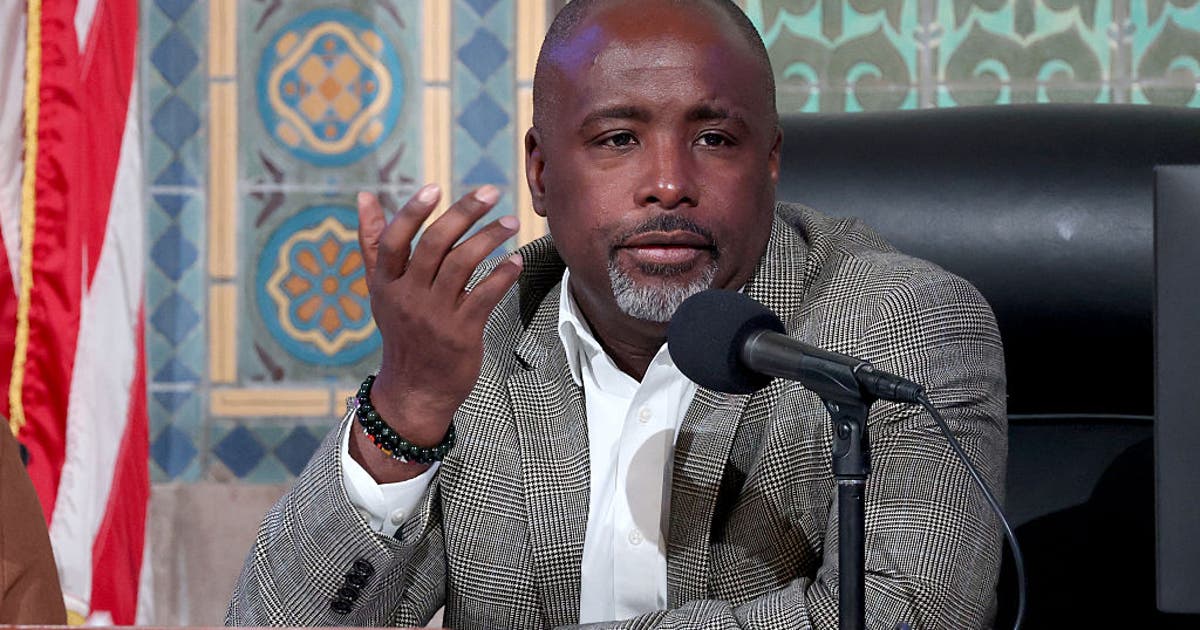
LOS ANGELES – A political firestorm erupted in Los Angeles on Thursday as the Los Angeles Police Protective League (LAPPL) formally requested criminal investigations into City Council President Marqueece Harris-Dawson. The union alleges that Harris-Dawson attempted to leverage his position to avoid a traffic citation during a stop earlier this month, sparking accusations of abuse of power and raising questions about potential obstruction of justice. The incident, which occurred on March 4th, centers around a reported phone call made by Harris-Dawson to a member of the Los Angeles Unified School District (LAUSD) Board of Education during a traffic stop initiated by a LAUSD police officer.
The LAPPL’s call for investigation, directed at both District Attorney Nathan Hochman and City Attorney Hydee Feldstein Soto, comes amid heightened scrutiny of interactions between law enforcement and public officials. The union argues that if the allegations are substantiated, Harris-Dawson’s actions represent a serious breach of public trust and a potential violation of California Penal Code 118(a)(1), which prohibits obstructing a peace officer in the performance of their duties. This incident also arrives as the Los Angeles City Council prepares to debate significant changes to the Los Angeles Police Department’s (LAPD) policies regarding traffic stops, specifically those categorized as “pretextual.”
According to reports, the traffic stop occurred near a high school during morning drop-off hours. The LAUSD police officer observed a moving violation, prompting the stop. The California Post initially reported details of the incident, alleging that Harris-Dawson subsequently contacted a member of the LAUSD Board of Education in an attempt to avoid receiving a citation. While the specific details of the conversation remain undisclosed, the LAPPL contends that the call was an attempt to improperly influence the officer and circumvent the legal process. The alleged citation amount was $238, according to reporting by Fox News.
LAPPL Demands Investigation, Cites Potential Obstruction
The LAPPL, representing rank-and-file officers of the Los Angeles Police Department, has framed the situation as a matter of principle and accountability. LAPPL President Ricky Mendoza released a statement asserting that Harris-Dawson’s alleged actions were “unethical and potentially illegal,” emphasizing that “the public deserves to know what was said during this phone call.” Fox 11 Los Angeles reported on Mendoza’s statement, highlighting the union’s demand for transparency and a thorough investigation.
The request for investigation centers on the assertion that Harris-Dawson’s communication with the school board member constituted an attempt to obstruct a peace officer. California Penal Code 118(a)(1) defines obstruction as willfully resisting, delaying, or obstructing any peace officer in the discharge or attempt to discharge any duty of his or her office or employment. Prosecutors will need to determine whether the alleged phone call meets the legal threshold for obstruction, considering intent and the specific circumstances of the interaction.
Harris-Dawson’s Response and Context of Police Reform Debate
Responding to the allegations, a spokesperson for Harris-Dawson, Cerrina Tayag-Rivera, dismissed the investigation as a politically motivated distraction. Tayag-Rivera stated that the Police Union was attempting to “distract from the immediate need for policy change.” As reported by Fox 11, this statement suggests a connection between the investigation and ongoing debates surrounding police reform within the city.
Harris-Dawson himself has been a vocal advocate for re-evaluating police tactics, particularly those related to traffic stops. During a March 6th committee meeting on unarmed crisis prevention, he publicly discussed being pulled over by law enforcement, characterizing such stops as “the most traumatic experiences that you have living in this country.” He has argued that pretextual stops – those initiated on minor infractions but used as a pretext to investigate other potential crimes – are often “unconstitutional” and “racially biased.” This stance has placed him at odds with some law enforcement officials and fueled the debate over police accountability in Los Angeles.
Mayor Bass Expresses Surprise, Investigation Looms
Los Angeles Mayor Karen Bass expressed surprise at the allegations, stating she was unaware of the LAPPL’s call for an investigation and that the situation “threw her for a loop.” Bass’s comments, reported by multiple news outlets including MyNewsLA, underscore the unexpected nature of the controversy and its potential to disrupt the city’s political landscape.
The District Attorney’s office and the City Attorney’s office have not yet publicly announced whether they will launch a formal investigation. Yet, the LAPPL has indicated it will pursue further action next week to address what it describes as Harris-Dawson’s “lie of omission” regarding the nature of the traffic stop. The outcome of this situation could have significant implications for Harris-Dawson’s political future and the ongoing debate over police reform in Los Angeles.
The Debate Over Pretextual Stops
The controversy surrounding Harris-Dawson’s traffic stop is unfolding against a backdrop of increasing scrutiny of pretextual stops and their potential for racial profiling. Advocates for police reform argue that these stops disproportionately target minority communities and contribute to a climate of distrust between law enforcement and the public. The Los Angeles City Council is currently considering a proposal to alter or eliminate the LAPD’s policy on pretextual vehicle stops, a measure that Harris-Dawson is expected to place on the agenda for a vote. The debate over this policy is likely to intensify in the wake of the allegations against the City Council President.
The potential changes to the LAPD’s policy on pretextual stops are part of a broader national conversation about police accountability and racial justice. Following the protests that erupted in 2020 in response to the death of George Floyd, there has been a growing demand for reforms to address systemic racism within law enforcement. Cities across the country are grappling with how to balance the need for effective policing with the imperative to protect civil rights and ensure equitable treatment under the law.
The LAPPL’s call for an investigation into Harris-Dawson represents a significant escalation in the ongoing tensions between the police union and city leadership. The outcome of this situation will likely have a lasting impact on the relationship between the two entities and the future of policing in Los Angeles. The investigation, if launched, will focus on determining whether Harris-Dawson’s actions constituted a criminal offense and whether he abused his position of power to avoid accountability for a traffic violation.
As of Thursday, March 19, 2026, the District Attorney and City Attorney have not publicly stated their intentions regarding an investigation. The next step in this unfolding situation will likely be a decision from those offices regarding whether to formally launch a probe into the allegations against Council President Harris-Dawson. Readers are encouraged to follow updates from reputable news sources as this story develops and to engage in respectful dialogue about the important issues it raises.
Related reading