
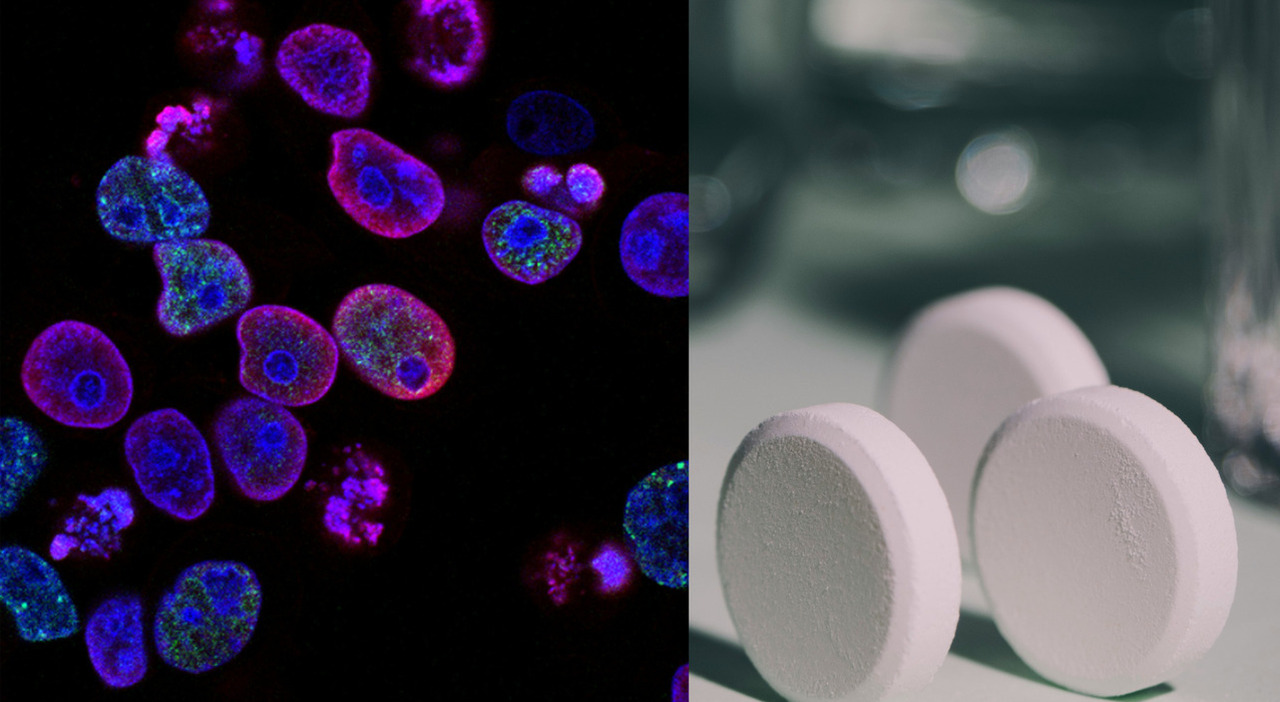
Recent research has shed new light on how aspirin, one of the most widely used medications globally, may influence cancer progression by affecting the body’s immune response to spreading tumour cells. A study published in Nature in March 2025 identified a specific biological mechanism through which aspirin could facilitate prevent metastasis – the process by which cancer cells spread from the primary tumour to distant organs, responsible for approximately 90% of cancer-related deaths worldwide.
The findings, led by researchers at the University of Cambridge, reveal that aspirin works by inhibiting the production of thromboxane A2 (TXA2), a molecule released by platelets that normally suppresses the activity of T cells – a critical component of the immune system tasked with identifying and destroying abnormal cells. By blocking TXA2, aspirin effectively “releases the brakes” on T cells, allowing them to recognize and attack metastasising cancer cells more effectively during their vulnerable phase in the bloodstream or early colonisation of distant tissues.
This mechanism was demonstrated in mouse models where aspirin treatment, selective COX-1 inhibition, or platelet-specific deletion of COX-1 led to reduced metastasis in the lungs and liver. Crucially, the anti-metastatic effect depended on T cells expressing the protein ARHGEF1, which mediates the immunosuppressive signalling pathway triggered by TXA2. When researchers deleted the Arhgef1 gene specifically in T cells, they observed heightened immune activation at metastatic sites and subsequent rejection of tumours, confirming that aspirin’s benefit relies on this precise molecular interaction.
These results provide a mechanistic explanation for earlier observational studies suggesting that regular low-dose aspirin use is associated with lower rates of cancer recurrence and metastasis in certain cancers, including breast, colorectal, and prostate tumours. While aspirin has long been studied for its potential anti-cancer properties, previous research often struggled to establish a clear cause-and-effect relationship. The current study moves beyond association by detailing how COX-1 inhibition disrupts a specific immune-evading strategy employed by metastasising cancer cells.
How Aspirin Influences Immune Surveillance Against Cancer Spread
To understand the significance of this discovery, it is significant to consider the unique vulnerability of circulating tumour cells. Unlike cancer cells embedded within the primary tumour – which actively create an immunosuppressive microenvironment to evade detection – metastasising cells are temporarily isolated from these protective signals as they travel through the bloodstream. This creates a brief window of opportunity for the immune system to eliminate them before they establish new tumours in organs such as the lungs, liver, or bones.
However, platelets encountering these circulating tumour cells often respond by releasing TXA2, which then acts on nearby T cells to inhibit their receptor signalling, proliferation, and effector functions. This platelet-mediated suppression represents a natural defence mechanism co-opted by cancer to survive in circulation. Aspirin’s ability to irreversibly inhibit COX-1 – the enzyme responsible for TXA2 synthesis in platelets – thereby prevents this immunosuppressive signal from being generated, preserving T cell functionality during a critical phase of cancer dissemination.
The research further showed that the protective effect was not observed in models lacking T cell-intrinsic ARHGEF1 expression, confirming that the benefit is contingent on this intracellular signalling pathway. This level of mechanistic precision helps explain why aspirin’s impact may vary across individuals and cancer types, depending on factors such as platelet reactivity, tumour-induced coagulation changes, and the immune landscape of metastatic niches.
Clinical Implications and Ongoing Research
Although the findings are promising, experts caution that aspirin is not a universal preventive measure for cancer and carries risks, particularly gastrointestinal bleeding and hemorrhagic stroke, especially with long-term use. The balance between potential benefits and harms must be carefully evaluated on an individual basis, taking into account age, cardiovascular risk, cancer type, and other health factors.
Several clinical trials are currently investigating aspirin’s role in cancer prevention and adjuvant therapy. For example, the Add-Aspirin trial, an international phase III study, is assessing whether daily aspirin can prevent recurrence in patients with early-stage breast, colorectal, gastro-oesophageal, or prostate cancer who have undergone primary treatment. Results from this and similar studies are expected in the coming years and will help determine whether the mechanistic insights from laboratory models translate into meaningful clinical outcomes.
In the meantime, medical guidelines continue to advise against routine aspirin use for cancer prevention outside of clinical trials or specific high-risk indications, such as certain hereditary colorectal cancer syndromes where the benefits may outweigh risks for selected individuals. Patients considering aspirin for any off-label purpose should consult their healthcare provider to discuss potential advantages and dangers based on their personal medical history.
Understanding the Limits and Future Directions
While the study provides a compelling explanation for aspirin’s anti-metastatic activity, researchers note that metastasis is a multi-step process influenced by numerous genetic, microenvironmental, and systemic factors. Targeting the TXA2-ARHGEF1 pathway may be particularly effective in cancers where platelet interaction plays a significant role in early dissemination, but may have limited impact in contexts where other immunosuppressive mechanisms dominate.

Future research may explore combining aspirin with immunotherapies such as checkpoint inhibitors to enhance anti-tumour responses, or identifying biomarkers that predict which patients are most likely to benefit from COX-1 inhibition based on their tumour’s interaction with platelets and immune cells. Developing more selective COX-1 inhibitors or platelet-targeted delivery systems could potentially improve the therapeutic index by maximising anti-metastatic effects while minimising off-target risks.
As scientists continue to unravel the complex interplay between haemostasis, inflammation, and immunity in cancer progression, insights like these underscore the value of repurposing well-understood medications through mechanistic research. Rather than viewing aspirin simply as a blood thinner or pain reliever, this perform highlights its potential role in modulating immune surveillance – a function that may have far-reaching implications beyond cardiovascular health.
For now, the message remains clear: any decision regarding aspirin use for cancer-related purposes should be made in consultation with a qualified healthcare professional, grounded in the latest evidence and tailored to individual circumstances. As ongoing trials yield results, clinicians and patients alike will gain a clearer understanding of where and how this century-old drug might fit into modern cancer care strategies.
We encourage readers to share their thoughts and experiences in the comments section below and to spread awareness by sharing this article with others who may find it informative. Stay informed, stay proactive, and always prioritise conversations with your healthcare team when considering preventive health measures.