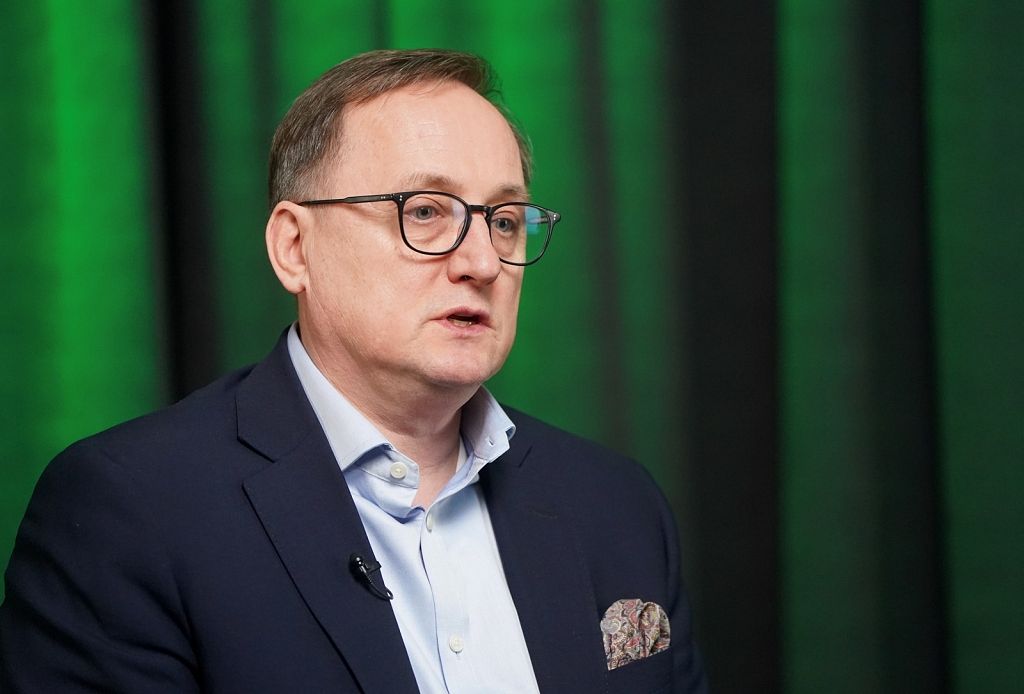
Riga, Latvia – Latvia’s economic future hinges on a significant shift in ambition for its businesses, according to Mārtiņš Kazāks, the Governor of the Bank of Latvia. Kazāks is urging Latvian companies to expand their horizons beyond the domestic market and actively pursue growth on a European scale. This call to action comes as Latvia navigates a period of moderate inflation and seeks to bolster its economic competitiveness within the Eurozone. The need for increased productivity, coupled with a widening gap between wage growth and output, is central to Kazāks’s assessment of the challenges and opportunities facing the Latvian economy.
Kazāks’s remarks underscore a broader concern about the size and scale of Latvian enterprises. Although acknowledging the strength of many Latvian businesses, he emphasizes that they are often too small to exert significant influence in the European market. This observation is particularly relevant as Latvia strives to enhance its economic resilience and attract greater investment. The governor’s advocacy for larger, more “powerful” companies reflects a strategic vision for fostering a more dynamic and internationally competitive Latvian economy. He points to Lithuania as a potential model, highlighting the success of company mergers and acquisitions in creating larger, more efficient entities.
The call for greater ambition is set against a backdrop of economic indicators that reveal a nuanced picture. While Latvia’s inflation rate, at 2.6% as of February 2026, remains slightly higher than the Eurozone average of 1.7%, the gap is narrowing. This difference, while still present, is less pronounced than it was earlier in 2024, when food prices were a major driver of inflation. Currently, the primary concern is the disparity between wage increases and productivity growth. Latvian wages have been rising at a considerably faster pace than productivity gains in recent years, averaging an 8-10% annual increase, which, while benefiting consumers, poses a risk to the country’s export competitiveness.
Addressing the Wage-Productivity Disconnect
Kazāks argues that the key to sustainable economic growth lies not in curbing wage increases, but in accelerating productivity gains. He warns that a prolonged imbalance between wages and productivity could erode Latvia’s competitive edge, potentially leading to economic stagnation. “Simply put, our exporters will lose competitiveness, and then there is a risk of recession,” Kazāks stated. To mitigate this risk, he advocates for policies that streamline bureaucracy and foster innovation, ultimately boosting overall economic output. This emphasis on productivity aligns with broader European Union initiatives aimed at enhancing competitiveness and promoting sustainable economic growth.
The governor’s assessment highlights a critical challenge facing many economies: how to balance wage growth with productivity improvements. While rising wages can boost consumer spending and improve living standards, they can as well lead to inflationary pressures if not accompanied by corresponding increases in output. Kazāks’s focus on productivity suggests a belief that Latvia can achieve both wage growth and price stability by investing in innovation, technology, and skills development. This approach is consistent with the principles of supply-side economics, which emphasize the importance of increasing the economy’s productive capacity.
The Role of Investment and Financial Support
Kazāks identifies a lack of sufficient financial support for mergers and acquisitions as a barrier to the creation of larger, more competitive Latvian companies. He specifically mentions the Development Finance Institution Altum as a potential source of funding for such initiatives, suggesting that increased investment in this area could facilitate the consolidation of smaller businesses and enhance their efficiency. Altum plays a crucial role in providing financial support to Latvian businesses, and expanding its capacity to fund mergers and acquisitions could be a key step in fostering a more dynamic and competitive business environment.
The need for increased investment extends beyond mergers and acquisitions. Kazāks also emphasizes the importance of investing in automation, digitization, and other technologies that can boost productivity. He argues that Latvia must embrace innovation to remain competitive in a rapidly evolving global economy. This call for investment aligns with the European Union’s broader agenda of promoting digital transformation and fostering a more innovative and sustainable economy. The EU’s Recovery and Resilience Facility, for example, provides significant funding for investments in digital technologies and green initiatives.
Looking to Lithuania for Inspiration
Kazāks points to Lithuania as a potential model for Latvia, noting that Lithuanian companies often demonstrate a greater level of ambition and a willingness to take risks. He characterizes Lithuanian businesses as being “more irresponsible and ambitious,” suggesting that a more entrepreneurial and risk-taking culture could be beneficial for Latvia. While the phrasing may raise eyebrows, the underlying message is clear: Latvia needs to foster a more dynamic and innovative business environment.
The economic performance of Lithuania and Latvia has followed similar trajectories in recent years, both benefiting from EU membership and integration into the global economy. However, Lithuania has arguably been more successful in attracting foreign investment and developing a more diversified economy. This success may be attributed, in part, to a more proactive approach to promoting innovation and fostering a more entrepreneurial culture. According to data from Eurostat, Lithuania’s GDP per capita is slightly higher than Latvia’s, and its unemployment rate is lower. Eurostat provides comprehensive economic data for the European Union, allowing for detailed comparisons between member states.
Latvia’s Strengths and Challenges
Despite the challenges, Kazāks emphasizes that Latvian companies possess strong balance sheets, providing a solid foundation for future growth. He also notes that banks are becoming more active in lending to small and medium-sized enterprises (SMEs), which are the backbone of the Latvian economy. However, he acknowledges that even the largest Latvian companies are relatively small compared to their counterparts in other European countries. This lack of scale presents a significant challenge to Latvia’s economic competitiveness.
The Latvian economy is heavily reliant on services, particularly transport and logistics. While these sectors have contributed to economic growth in recent years, they are also vulnerable to external shocks, such as fluctuations in global trade and changes in energy prices. Diversifying the economy and developing higher-value-added industries is therefore a key priority for policymakers. The government is actively promoting investment in sectors such as information technology, biotechnology, and renewable energy.
The Path Forward: A Call for Ambitious Growth
Kazāks’s message is clear: Latvia must embrace a more ambitious vision for its economic future. This requires a concerted effort to boost productivity, attract investment, and foster a more dynamic and innovative business environment. The governor’s call for greater ambition is not simply a matter of economic policy; it is a call for a change in mindset. Latvian businesses must be willing to take risks, invest in innovation, and compete on a European scale.
The Bank of Latvia, under Kazāks’s leadership, is actively working to support these efforts. The bank is conducting research on productivity trends, providing financial analysis to businesses, and advocating for policies that promote economic growth. Kazāks was re-elected to a second term as President of the Bank of Latvia in February 2025, demonstrating continued confidence in his leadership. Latvijas Banka remains a central pillar of Latvia’s economic stability and development.
Looking ahead, the nomination of Mārtiņš Kazāks for the position of Vice-President of the European Central Bank (ECB) could further elevate Latvia’s influence within the EU’s monetary policy framework. The Ministry of Finance prepared a draft order for his nomination on November 27, 2025, recognizing his expertise in monetary policy and financial stability. The Ministry of Finance highlighted that Kazāks would be the first representative of Latvia and Eastern Europe to serve in the ECB’s top management.
The next key development to watch will be the final decision on Kazāks’s nomination to the ECB Vice-Presidency. This decision, expected in the coming months, will have significant implications for Latvia’s role in shaping European monetary policy. We encourage readers to share their thoughts on these developments and the future of the Latvian economy in the comments below.
Related reading
- Drone Strikes Cripple Russian Refineries: Fuel Crisis Forces Import of Gasoline
- EU Emergency Summit on Ceuta: Necessary or Political?
- Why Your Printer Needs Color Ink to Print in Black and White (daybreakwire.com)
- University of Copenhagen Study Finds Brain Is Wired to Defend Higher Weight (archyworldys.com)