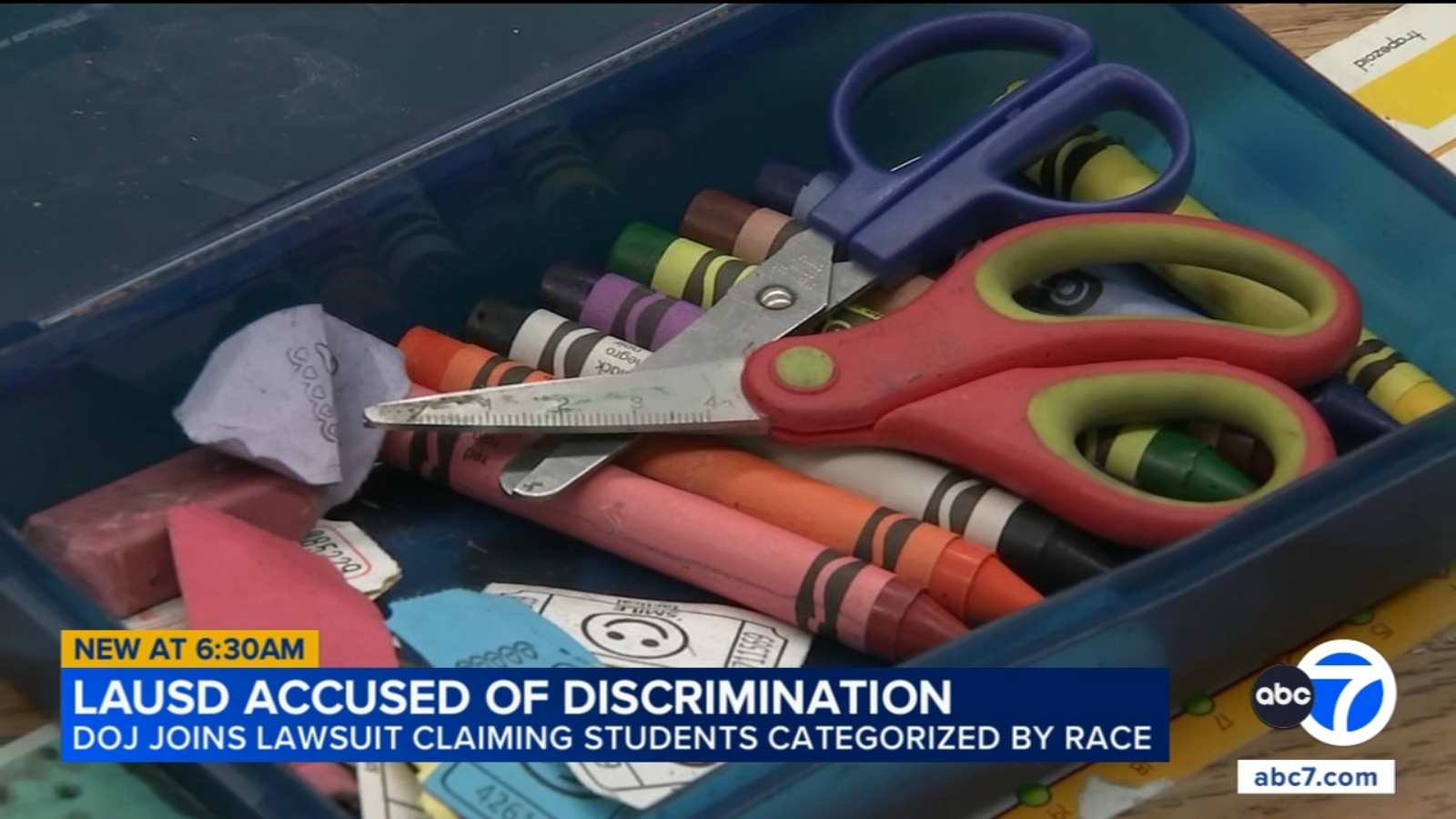
Federal Government Joins Lawsuit Alleging Racial Discrimination in Los Angeles Unified School District
Los Angeles, CA – The U.S. Department of Justice (DOJ) has moved to intervene in a federal lawsuit accusing the Los Angeles Unified School District (LAUSD) of discriminating against students based on their race. The legal challenge, initially brought by the 1776 Project Foundation, centers on the district’s decades-vintage desegregation policy and its use of a system categorizing schools based on student demographics. The DOJ’s decision to join the case, announced on Wednesday, February 18, 2026, signals a renewed focus on civil rights enforcement under the current administration and raises significant questions about the future of desegregation efforts in the nation’s second-largest school district.
The core of the dispute lies with LAUSD’s “Predominantly Hispanic, Black, Asian or other Non-Anglo” (PHBAO) program. Established as part of a broader desegregation plan, the program identifies schools with significant populations of minority students and allocates additional funding and resources to them. The lawsuit alleges that this practice effectively creates a two-tiered system, disadvantaging students attending schools that are not designated as PHBAO, including those with larger populations of white and Middle Eastern students. The DOJ contends that the district’s actions may violate the Equal Protection Clause of the Fourteenth Amendment, Title VI of the Civil Rights Act of 1964, and California’s Proposition 209, which prohibits preferential treatment based on race in public education.
The 1776 Project Foundation and the Origins of the Lawsuit
The lawsuit was initially filed in January 2026 by the 1776 Project Foundation, a conservative education nonprofit based in Billings, Montana. The Los Angeles Times reported that the foundation argues the PHBAO program has evolved from a remedy for past discrimination into a permanent system of racial preferences. According to the foundation, schools not designated as PHBAO receive less funding, fewer staff, and larger class sizes. They also claim that parents at PHBAO schools are guaranteed two annual parent-teacher conferences, a benefit not extended to parents at other schools.
The 1776 Project Foundation’s involvement highlights a growing conservative pushback against diversity, equity, and inclusion initiatives in education. The organization’s mission centers on promoting what it describes as a “patriotic education” and challenging what it views as ideological bias in schools. Their decision to target LAUSD’s desegregation policy reflects a broader effort to redefine civil rights and challenge long-standing legal precedents related to affirmative action and racial equity.
Department of Justice Intervention and Legal Arguments
The DOJ’s motion to intervene, filed on Wednesday, February 18, 2026, asserts that the case is of “general public importance” and warrants federal scrutiny. NBC Los Angeles reported that Attorney General Pamela Bondi stated, “Treating Americans equally is not a suggestion — It’s a core constitutional guarantee that educational institutions must follow.” Assistant Attorney General Harmeet K. Dhillon of the DOJ’s Civil Rights Division echoed this sentiment, arguing that Los Angeles County students “should never be classified or treated differently since of their race.”
The DOJ’s legal arguments center on the claim that LAUSD’s PHBAO program effectively penalizes students for attending schools with fewer minority students. The department alleges that the district treats attending a school with a predominantly white population as a disadvantage equivalent to attending an overcrowded school, granting students from PHBAO schools preferential access to magnet programs. This, the DOJ argues, constitutes unlawful racial discrimination. The department also points to the long history of desegregation efforts in Los Angeles County, suggesting that the PHBAO program has outlived its original purpose and now perpetuates segregation rather than dismantling it.
LAUSD’s Response and the History of Desegregation
LAUSD has remained largely silent on the specifics of the lawsuit, citing the ongoing litigation. A district spokesperson stated that they are unable to comment on the case but reaffirmed the district’s commitment to ensuring all students have access to enriching educational opportunities. However, the district has been grappling with desegregation efforts for over six decades, stemming from a 1981 court order aimed at addressing the harms of segregation. The current lawsuit challenges whether the PHBAO program, initially intended as a temporary remedy, has become an entrenched and unconstitutional practice.
The 1981 court order, a landmark decision in the history of Los Angeles education, mandated the district to implement measures to integrate schools and address racial imbalances. The PHBAO program emerged as one of the key strategies for achieving this goal. However, critics argue that the program has inadvertently created new forms of segregation and perpetuated inequalities. The lawsuit contends that the district has failed to adapt the program to changing demographics and has allowed it to become a permanent system of racial preferences, violating the principles of equal opportunity.
Potential Implications and Next Steps
The DOJ’s intervention in this case has far-reaching implications for desegregation policies across the country. A ruling in favor of the plaintiffs could force LAUSD to dismantle the PHBAO program and fundamentally alter its approach to resource allocation. It could also embolden similar legal challenges to desegregation policies in other school districts, potentially reversing decades of progress toward racial integration. Conversely, a ruling in favor of LAUSD could uphold the legality of targeted programs designed to address historical inequities and support disadvantaged students.
The case is currently pending before a federal court in Los Angeles. The next step will be a hearing to determine whether the DOJ will be allowed to formally join the lawsuit as a plaintiff. If the DOJ is granted permission to intervene, the case will proceed toward discovery and potentially a trial. The outcome of this legal battle will undoubtedly shape the future of education in Los Angeles and serve as a bellwether for the ongoing debate over race, equity, and opportunity in American schools. The court is expected to rule on the DOJ’s motion to intervene in March 2026.
This case raises critical questions about the balance between addressing historical injustices and ensuring equal treatment under the law. As the legal proceedings unfold, it is essential to consider the potential consequences for all students and the broader implications for the pursuit of a more just and equitable education system.
What are your thoughts on the LAUSD lawsuit? Share your comments below and join the discussion.
Worth a look