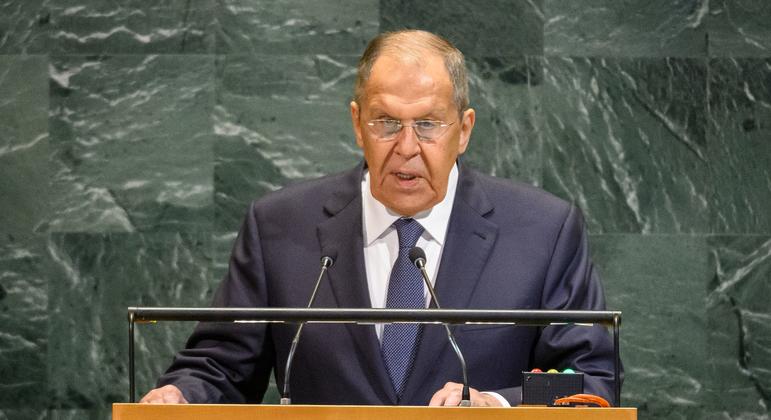
Lavrov’s UN Address: A Deep Dive into Russia‘s Worldview and Challenges to the International Order
Russian Foreign Minister Sergey Lavrov‘s recent address to the United Nations Security Council offered a stark portrayal of Russia’s outlook on the current global landscape. More than a simple policy statement, the speech was a comprehensive articulation of Moscow’s grievances, justifications, and proposed solutions – a window into a worldview increasingly at odds with that of the West. This analysis will unpack the key themes of Lavrov’s address, examining its implications for international relations and the future of the UN itself.
A World Divided: The Core of Russia’s Complaint
At the heart of Lavrov’s address lay a deep-seated critique of what Russia perceives as a relentless Western drive to divide the world. He argued that the constant framing of global issues through binary oppositions – “us versus them,” ”democracy versus autocracy” – is not only unhelpful but actively detrimental to finding constructive solutions. This isn’t merely rhetorical flourish; it reflects a genuine Russian belief that the West seeks to impose its values and interests on others, creating artificial divisions to maintain its dominance. This sentiment resonates with a broader narrative within Russia of being unfairly targeted and misunderstood by the West, a narrative carefully cultivated over years.
Lavrov’s pointed criticism of the failed attempt to extend sanction relief for Iran under the 2015 nuclear deal underscores this point. He framed the vote as evidence of western ”sabotage” and a preference for “blackmail and pressure” over genuine diplomacy. This isn’t simply about Iran; it’s about a perceived pattern of behavior where the West prioritizes political leverage over collaborative problem-solving. The minister’s call for lifting sanctions on Cuba and Venezuela further reinforces this theme, positioning Russia as a champion of nations resisting Western pressure.
Ukraine: Justification and Conditions for Negotiation
The conflict in Ukraine dominated a significant portion of Lavrov’s speech. He presented a familiar justification for the invasion, alleging that the current Ukrainian government came to power through a western-backed “anti-constitutional coup” in 2014. This narrative, consistently pushed by Moscow, aims to delegitimize the Ukrainian government and portray the conflict as a response to external interference.
Crucially, Lavrov outlined conditions for potential negotiations, emphasizing the need to address the “root causes of the conflict” and guarantee the interests of russia and Russian-speaking populations in Ukraine. This signals that any resolution, from Moscow’s perspective, must include security guarantees for russia and protections for its cultural and linguistic ties within Ukraine. While stating no intention to attack EU or NATO countries, the speech implicitly warned against further expansion of these blocs, framing them as provocative actions fueling instability. The expressed hope for improved US relations through continued dialogue,beginning with the alaska talks,suggests a desire to manage the conflict through direct engagement with Washington,potentially bypassing European intermediaries.
Challenging the UN’s Status Quo: A Call for Reform
Beyond specific geopolitical disputes, Lavrov’s address contained a broader critique of the United Nations itself. He argued that the current balance of global power is not adequately reflected within the UN system, particularly within the Security Council. This is why Russia supports the bids of Brazil and India for permanent seats – a move aimed at creating a more multipolar and representative Security Council.
Though, the critique went further. Lavrov warned against “attempts at a palace coup” and “privatization” of the UN Secretariat by a small group of countries, implicitly accusing the West of attempting to manipulate the organization to serve its own interests. This is a significant charge, suggesting a lack of trust in the UN’s impartiality and a desire to safeguard its independence. Russia’s planned special Security Council meeting on united Nations Day underscores its intention to push for meaningful reform and a rebalancing of power within the organization.
Escalating Rhetoric: Nazism and a Military Ring
The speech also included increasingly alarming rhetoric,with lavrov claiming that “Nazism is rearing its head in Europe” and that NATO is attempting to encircle Eurasia with a “military ring.” These assertions,while likely intended to rally domestic support and justify Russia’s actions,risk further escalating tensions and fueling a dangerous narrative of external threat. The mention of politicians discussing a Third World War as a likely scenario, while attributed to others, contributes to a climate of fear and uncertainty.
Implications and Analysis: A World Order in Flux
Lavrov’s address is a clear signal that Russia remains deeply dissatisfied with the existing international order and
Worth a look