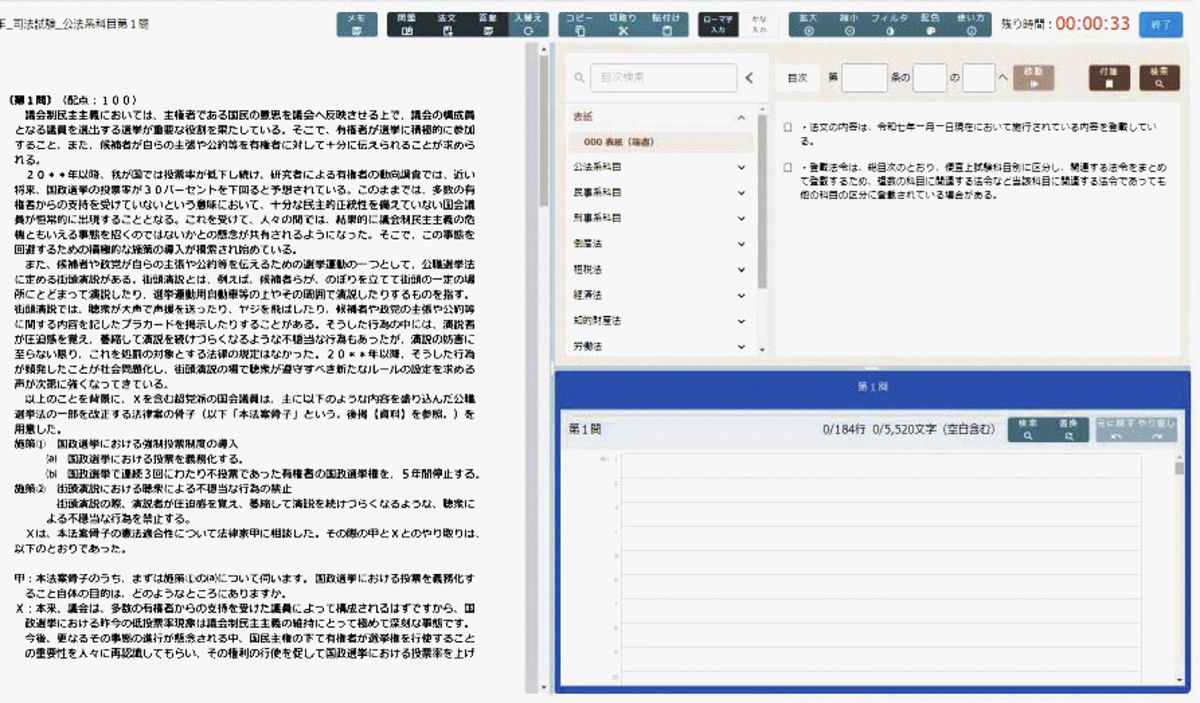
Japan’s Ministry of Justice has officially transitioned the national bar examination to a computer-based testing (CBT) format, marking a significant shift in how aspiring legal professionals demonstrate their competency. As of 2024, the exam requires candidates to input their answers using word processing software rather than the traditional handwritten method, a move designed to mirror the digital realities of modern legal practice.
This transition follows years of internal review regarding the efficiency of the testing process. According to the Ministry of Justice, the primary objective of introducing computer-based testing is to improve the accessibility and accuracy of the evaluation process for both examinees and graders. For candidates, the ability to edit, reorganize, and refine complex legal arguments digitally is expected to reduce the physical strain and time constraints associated with long-form handwriting.
Operational Efficiency and the Digital Shift
The move toward a digital examination infrastructure aligns Japan with international standards observed in jurisdictions like the United States, where the Uniform Bar Examination has long utilized computer-based platforms. By digitizing the examination, the Ministry aims to streamline the grading process. Digital submissions allow for more consistent legibility, potentially reducing the time required for examiners to decipher handwritten responses, which has historically been a point of contention during the manual grading of thousands of essays.

However, the transition has prompted scrutiny regarding the technical preparedness of candidates. While the Ministry provides practice environments, legal scholars have pointed to the need for a standardized interface that prevents technical disparities between test-takers. The Japan Federation of Bar Associations has frequently engaged in discussions with the government regarding the maintenance of high standards for legal education and testing, ensuring that the shift to digital platforms does not inadvertently diminish the rigor of the assessment.
Addressing the Quality of Legal Education
The integration of technology into the bar exam occurs alongside ongoing debates regarding the appropriate number of successful candidates. Various local bar associations have periodically issued statements expressing concerns about the capacity of the legal system to absorb new attorneys while maintaining the high quality of professional practice. These discussions, often involving groups such as the Association for the Future of Law Schools and the Legal Profession, highlight a tension between expanding access to the legal field and ensuring that the training provided by law schools meets the demands of the judiciary and private practice.
According to official data released by the Ministry of Justice regarding the 2024 bar examination results, the total number of successful candidates reached 1,736. This figure is closely monitored by stakeholders who argue that the number of admissions must be balanced against the sustainability of the legal market. The digital transition is viewed by some as an opportunity to modernize the pipeline, though critics maintain that the focus should remain on the qualitative rigor of the curriculum rather than just the mechanics of the examination itself.
Future Directions for Judicial Testing
Looking ahead, the Ministry of Justice continues to refine the digital testing framework based on feedback from the initial cohorts who have navigated the new system. Future adjustments are expected to focus on the stability of the testing software and the security of data transmission during the examination period. The goal remains to create a resilient, fair, and efficient system that accurately measures the analytical capabilities of prospective lawyers.

For candidates preparing for upcoming cycles, official updates regarding software specifications and site requirements are published regularly on the Ministry of Justice website. As the legal profession continues to embrace digital transformation, the bar exam serves as the foundational gatekeeper, ensuring that new entrants are not only legally proficient but also adept at using the tools that will define their careers in the digital age. Further announcements regarding the 2025 examination schedule are expected to be released in the coming months.
Worth a look
- FAA to Fine United Airlines $255,000
- China’s PBOC Injects Trillions via Reverse Repos: Record Liquidity Boost to Stabilize Markets
- Hazardous Air Quality Hits West Michigan as Canadian Wildfire Smoke Spreads (newsdirectory3.com)
- Are Restaurant Credit Card Surcharges Legal? It Depends on the State (daybreakwire.com)