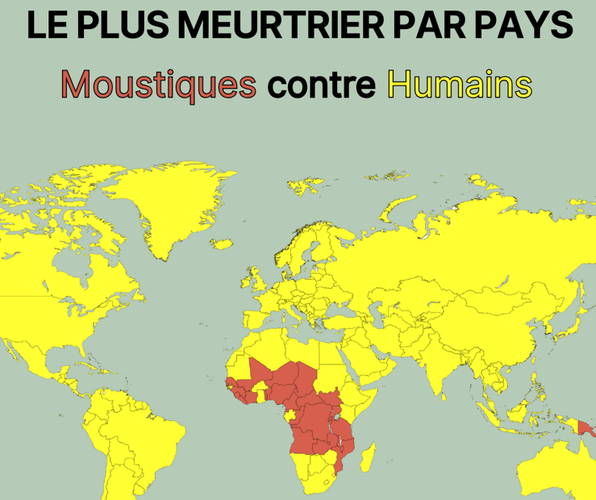
When we evaluate the most dangerous creatures on our planet, our instincts often point toward apex predators like sharks, wolves, or snakes. However, from a public health perspective, the data tells a starkly different story. The title of the world’s deadliest animal belongs to a creature that weighs only a few milligrams: the mosquito. As we examine the global burden of vector-borne diseases, it becomes clear that the mosquito remains the primary driver of mortality among non-human threats to human life, significantly outpacing all other animal-related causes combined.
According to the World Health Organization (WHO), vector-borne diseases account for more than 17% of all infectious diseases globally, resulting in more than 700,000 deaths annually. The vast majority of these fatalities are directly attributable to pathogens transmitted by mosquito bites, including malaria, dengue, yellow fever, and Zika virus. While human-to-human violence receives significant media attention, the sheer scale of the malaria epidemic alone—which caused an estimated 608,000 deaths in 2022—positions the mosquito as a persistent and unparalleled public health challenge.
The Global Burden of Mosquito-Borne Illness
The lethality of the mosquito is not distributed evenly across the globe. Geography, climate, and socioeconomic infrastructure play decisive roles in determining which populations are most at risk. In many tropical and subtropical regions, the lack of robust vector control programs and limited access to preventative healthcare—such as insecticide-treated bed nets—exacerbate the transmission rates of parasites and viruses.
Malaria remains the most significant threat. The World Malaria Report 2023 indicates that the WHO African Region carries a disproportionately high share of the global malaria burden, accounting for approximately 94% of all malaria cases and 95% of all malaria deaths. These figures underscore the critical necessity of international cooperation in funding vaccine distribution and environmental management strategies. The introduction of the RTS,S/AS01 malaria vaccine, recommended by the WHO for children living in regions with moderate to high P. Falciparum malaria transmission, represents a significant milestone in mitigating this mortality rate.
Comparing Threats: Humans vs. Vectors
Public discourse often focuses on interpersonal violence as a primary cause of death. While homicide rates are a grave concern for governments and law enforcement agencies, the statistical reality is that human-inflicted deaths are numerically dwarfed by the toll taken by mosquito-borne illnesses. For instance, global homicide estimates provided by the United Nations Office on Drugs and Crime (UNODC) generally place the annual global homicide count significantly lower than the total death toll attributed to malaria alone.

This comparison is not intended to minimize the impact of human violence, but rather to contextualize the scale of the public health crisis posed by insects. When we consider the “deadliest” threats, we must account for the intersection of biology and infrastructure. A mosquito does not require intent to kill; it requires only a suitable climate and a host. The mitigation of this threat requires a multi-faceted approach involving:
- Large-scale environmental sanitation to reduce breeding sites.
- Widespread use of personal protective equipment like long-sleeved clothing and repellents.
- Clinical advancements in rapid diagnostic testing and anti-malarial therapies.
- Ongoing research into gene-drive technologies and sterile insect techniques.
The Future of Vector Control and Prevention
As climate change alters global temperature and rainfall patterns, the habitats of mosquito species such as Aedes aegypti and Anopheles are expanding into new regions. This shift poses a challenge for health policy in countries that have not historically dealt with endemic malaria or dengue. The Centers for Disease Control and Prevention (CDC) emphasizes that surveillance and early detection are the cornerstones of preventing outbreaks in newly affected areas.
For individuals and communities, the most effective defense remains a combination of awareness and environmental management. By eliminating standing water and supporting public health initiatives that provide access to clinical care, the global community can continue to drive down the mortality rates associated with these vectors. The objective is clear: to transition from a paradigm of reactive treatment to one of proactive, sustainable prevention.

The next major update on global malaria trends and vector-borne disease control strategies is expected in the upcoming World Malaria Report, which serves as the primary international benchmark for progress in this field. We encourage our readers to stay informed through official updates from the World Health Organization and local public health departments. If you have questions or wish to share your thoughts on the role of public health infrastructure in your region, we invite you to join the discussion in the comments section below.
Worth a look