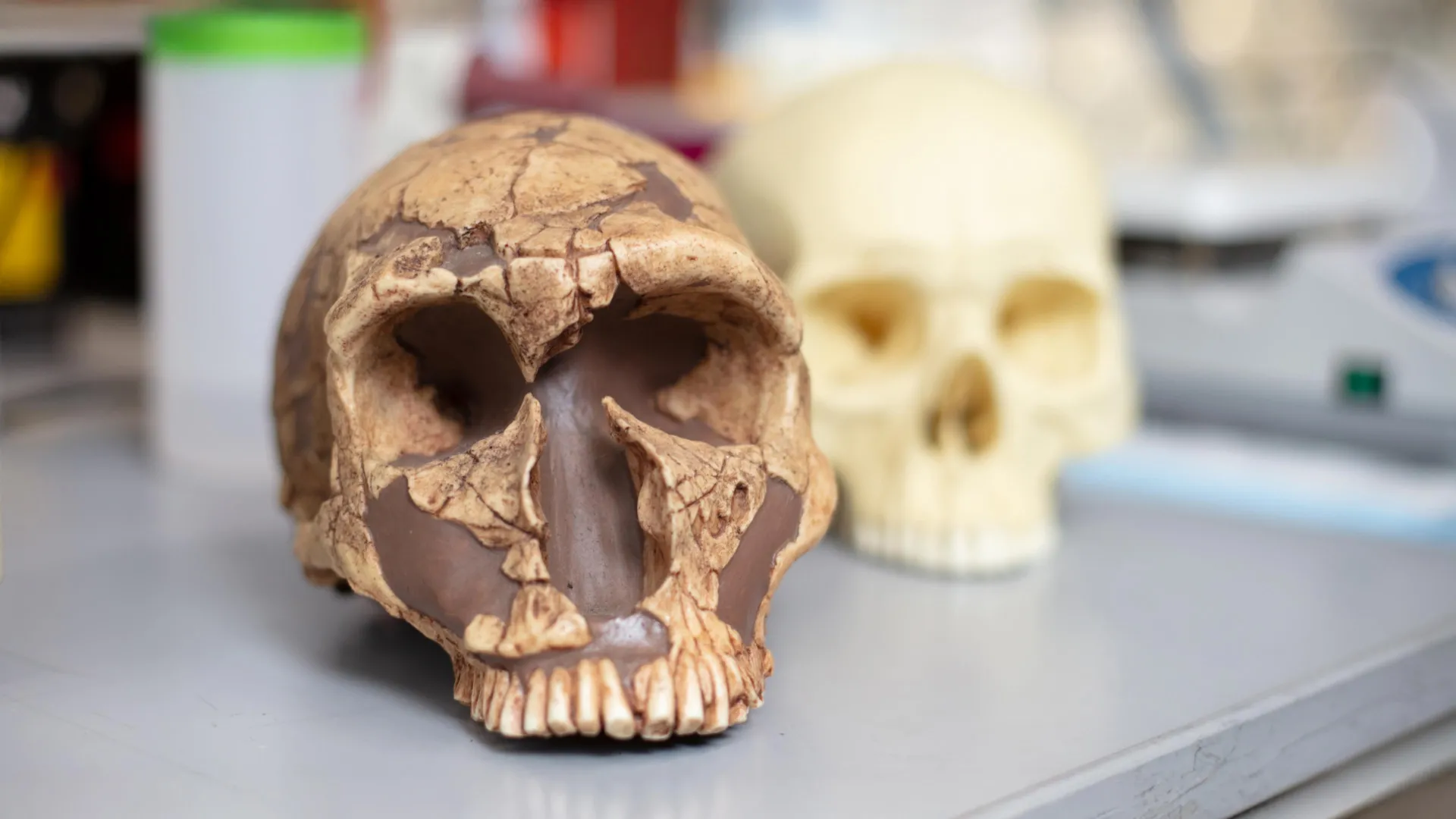
The Genetic Key to Human Language: How Lead Exposure May Have Shaped Our Evolutionary Edge Over Neanderthals
For decades, scientists have pondered the reasons behind Homo sapiens‘ remarkable success and the eventual extinction of our close relatives, the Neanderthals. While factors like climate change and competition undoubtedly played a role,a captivating new study suggests a more nuanced clarification: a genetic adaptation that not only protected our ancestors from the neurotoxic effects of lead but also unlocked the potential for complex language,a defining characteristic of our species.
This groundbreaking research, led by Dr. Fred Gage and Dr. Alysson Muotri at the University of California San Diego, delves into the evolutionary history of the NOVA1 gene, a crucial regulator of brain development. Their findings, published recently, reveal a significant genetic difference between modern humans and Neanderthals in this gene, and a compelling link between that difference, lead exposure, and the development of refined language capabilities.
uncovering the Genetic Distinction
The study centers on a single variant within the NOVA1 gene. Researchers discovered that modern humans possess a version of NOVA1 that differs from the archaic version found in Neanderthals. This isn’t simply a matter of genetic curiosity; the team hypothesized that this difference might reflect an adaptation to environmental pressures faced by our ancestors. Specifically, they focused on lead – a naturally occurring heavy metal that, even in low concentrations, can disrupt brain development and cognitive function.
“We know lead was present in the surroundings throughout human evolution,” explains Dr. Muotri, a leading expert in human brain organogenesis. “The question was, did this exposure exert selective pressure, favoring individuals with genetic variations that offered some protection?”
Brain Organoids: Recreating Evolution in the Lab
To investigate this hypothesis, the researchers employed a cutting-edge technique: creating brain organoids. These miniature, three-dimensional structures, grown from human stem cells, mimic the development of the brain, allowing scientists to study neurological processes in a controlled environment. Crucially, they created organoids with both the modern and ancestral NOVA1 variants.
These organoids were then exposed to lead, and the researchers meticulously monitored the growth and activity of cortical and thalamic neurons - brain regions vital for higher-level cognitive functions. The results were striking. Lead exposure altered NOVA1 activity in both types of organoids, impacting genes associated with neurodevelopmental disorders like autism and epilepsy. However, the archaic NOVA1 variant exhibited a particularly concerning effect: it disrupted the activity of FOXP2, a gene widely recognized as critical for speech and language.
The FOXP2 Connection: A Language Gene Under Threat
FOXP2 is often dubbed the “language gene” because mutations in it can severely impair an individual’s ability to produce and understand complex language. Individuals with certain FOXP2 mutations struggle with articulation, grammer, and the overall formation of coherent sentences. The study revealed that the archaic NOVA1 variant made neurons more vulnerable to lead-induced disruption of FOXP2 function.
“These neurons related to complex language are susceptible to death in the archaic version of NOVA1,” Dr. Muotri clarifies. “The FOXP2 gene itself is identical between us and Neanderthals, but it’s how the gene is regulated by NOVA1 that likely contributes to the language differences.”
Evolutionary Advantage and the Rise of homo Sapiens
The implications of these findings are profound.The acquisition of the modern NOVA1 variant appears to have conferred a significant evolutionary advantage. It not only shielded our ancestors from the neurotoxic effects of lead but also ensured the proper regulation of FOXP2, safeguarding the development of complex language.
This enhanced linguistic capacity, the researchers argue, was a game-changer. language enabled Homo sapiens to develop sophisticated social structures,share knowledge effectively,coordinate large-scale activities,and ultimately,thrive in challenging environments.
“Language is such an important advantage, it’s transformational, it is our superpower,” Dr. Muotri emphasizes. “Because we have language, we are able to organize society and exchange ideas, allowing us to coordinate large movements. There is no evidence that Neanderthals could do that. They might have had abstract thinking, but they could not translate that to each other. And maybe the reason is because they never had a system to communicate that was as efficient as our complex language.”
Beyond Neanderthals: Implications for Neurological Disorders
This research extends beyond understanding our evolutionary past.
Keep reading