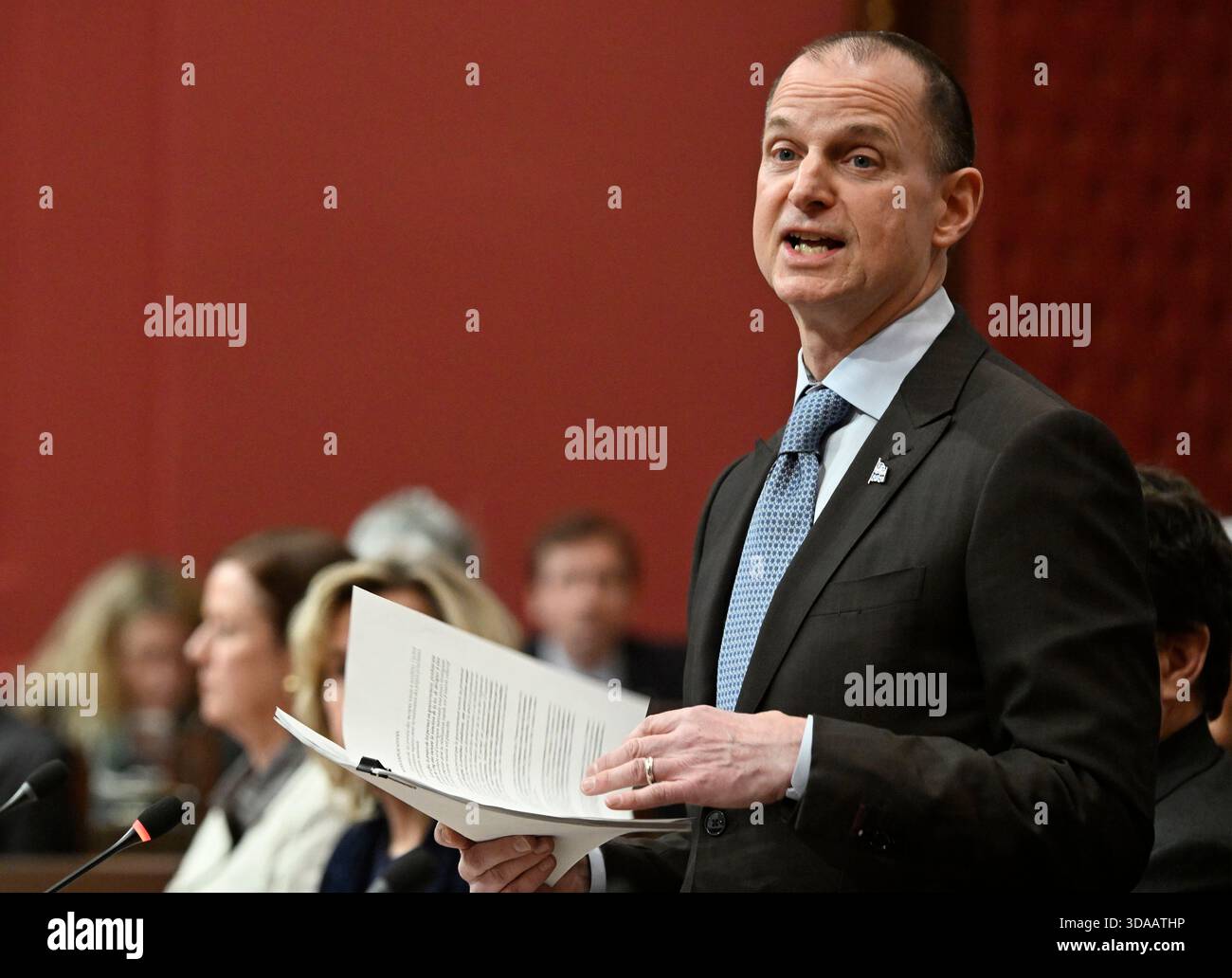
An internal email sent by Quebec’s Minister of Finance, Eric Girard, has sparked renewed scrutiny over the province’s fiscal policies amid ongoing budget negotiations. The leaked correspondence, obtained by a public broadcaster, reveals concerns about the financial implications of recent policy announcements—but officials have confirmed that no formal decision has yet been made on their implementation. As Quebec grapples with economic pressures and rising public debt, the email underscores the delicate balancing act between fiscal responsibility and social spending commitments.
According to sources familiar with the matter, the email was addressed to senior civil servants and raised questions about the cost estimates tied to proposed measures, including potential tax adjustments and public sector investments. While the document does not specify exact figures, it signals internal unease over whether the province’s current revenue projections can sustain the announced initiatives without triggering deeper budgetary cuts or new borrowing. The revelation comes as Quebec’s Ministry of Finance prepares to finalize its 2026–2027 budget, a process that typically involves months of interdepartmental consultations.
The email’s contents were first reported by a Quebec-based public broadcaster, but neither the ministry nor Girard’s office has provided a detailed response. In a statement to World Today Journal, a spokesperson for the Ministry of Finance confirmed that “an internal review of fiscal projections is underway,” but declined to comment on the specifics of the leaked correspondence. The spokesperson added that “any final decisions will be announced in the context of the upcoming budget presentation.” Meanwhile, opposition parties in the Quebec National Assembly have called for greater transparency, arguing that the email raises legitimate questions about the government’s fiscal management.
What We Know—and What Remains Unclear
1. The Email’s Context: Budget Pressures and Policy Trade-offs
Quebec’s fiscal landscape has been strained in recent years by a combination of factors: slower-than-expected economic growth, rising healthcare costs, and the lingering effects of the COVID-19 pandemic. The province’s net debt reached approximately CAD 210 billion in 2025, representing roughly 50% of its gross domestic product—a figure that has drawn criticism from financial analysts and rating agencies. Against this backdrop, Girard’s email suggests that officials are weighing the risks of expanding social programs against the need to avoid further debt accumulation.
The email’s focus on cost estimates aligns with broader concerns about Quebec’s approach to fiscal planning. In 2024, the province faced backlash when it revised its budget projections downward, citing unexpected expenditures. The current review appears to be an effort to preempt similar controversies by ensuring that new commitments are backed by realistic financial modeling.
Key Stakeholders in the Debate
- Eric Girard: Quebec’s Minister of Finance, responsible for overseeing the province’s budget and economic policies. Girard has previously emphasized the need to “prioritize essential services” while managing debt levels.
- Quebec National Assembly: Opposition parties, including the Parti Québécois and Coalition Avenir Québec (CAQ), have criticized the government’s handling of fiscal transparency.
- Civil Service and Treasury Board Secretariat: These bodies are tasked with conducting the internal reviews mentioned in the email, ensuring that policy proposals align with Quebec’s financial framework.
- Financial Markets: Investors and rating agencies will be closely watching Quebec’s budget decisions, as they influence the province’s creditworthiness and borrowing costs.
2. The Internal Review: Methodology and Timeline
The Ministry of Finance’s spokesperson confirmed that the internal review mentioned in the email is part of a standard process for evaluating major policy proposals. This typically involves:
- Cost-Benefit Analysis: Assessing the financial impact of proposed measures, including direct expenditures, administrative costs, and potential indirect effects (e.g., economic stimulus or job creation).
- Revenue Projections: Reviewing assumptions about tax collections, transfers from the federal government, and other sources of funding.
- Debt Sustainability: Evaluating whether new commitments could strain Quebec’s ability to service its existing debt obligations.
- Interdepartmental Consultations: Gathering input from ministries responsible for healthcare, education, infrastructure, and other areas affected by the proposals.
While the email does not provide a timeline for the review’s completion, sources suggest it is progressing in parallel with the broader budget preparation process. Quebec’s budget is traditionally tabled in the spring, with final details often locked in the weeks leading up to its presentation. If the review identifies significant gaps or risks, officials may adjust the proposals or seek additional revenue measures.
3. Political Fallout: Transparency and Public Trust
The leak of Girard’s email has reignited debates about fiscal transparency in Quebec. Opposition parties have seized on the correspondence to argue that the government is not being forthright about the challenges it faces. In a statement, Jean-François Simard, a critic for the Parti Québécois, stated that “citizens deserve to know the full picture before any new commitments are made.” Simard’s remarks reflect broader public skepticism, particularly in light of past budget revisions that were criticized as “opaque.”
supporters of the government have framed the email as evidence of a “prudent and deliberate” approach to fiscal management. They argue that internal reviews are necessary to ensure that policies are sustainable and that the province avoids the pitfalls seen in other jurisdictions with higher debt levels. For example, a 2023 IMF report highlighted Quebec’s need to balance social spending with long-term debt reduction—a challenge that Girard’s email appears to echo.
What Happens Next?
The next critical checkpoint will be the release of Quebec’s 2026–2027 budget, which is expected in late March or early April 2026. The budget document will include:
- A detailed breakdown of proposed expenditures and revenue sources.
- Updated economic forecasts, including growth projections and debt trajectories.
- Any new measures introduced to address fiscal pressures, such as tax adjustments or spending cuts.
Until then, the public can monitor developments through:
- The Ministry of Finance’s official updates.
- Questions and debates in the Quebec National Assembly.
- Financial market reactions, as reported by Bloomberg or Reuters.
4. Broader Implications: Lessons for Provincial Fiscal Policy
Quebec’s situation is not unique. Across Canada, provinces are grappling with the aftermath of the pandemic, aging populations, and rising healthcare costs—all while facing pressure to maintain affordable living standards. The leak of Girard’s email offers a rare glimpse into the internal deliberations that shape these decisions, highlighting the tension between:
- Short-term political promises and long-term fiscal sustainability.
- Public demand for services and the need to control debt.
- Transparency expectations and the realities of bureaucratic caution.
For other provinces watching closely, Quebec’s approach could serve as a case study in how to navigate these challenges. For instance, Ontario has also faced scrutiny over its debt levels, while Alberta has pursued a more aggressive fiscal consolidation strategy. The differences in their approaches—rooted in varying economic conditions and political priorities—illustrate the complexity of provincial fiscal management.
Key Takeaways
- The leaked email from Quebec’s Minister of Finance, Eric Girard, signals internal concerns about the cost of proposed policy measures amid budget pressures.
- An internal review is underway to assess the financial feasibility of new commitments, with results expected to influence the 2026–2027 budget.
- Opposition parties are demanding greater transparency, while supporters argue the review reflects a “prudent” approach to fiscal planning.
- Quebec’s budget, set for release in March or April 2026, will be the next major milestone in this debate.
- The episode underscores broader challenges faced by Canadian provinces balancing social spending with debt sustainability.
As Quebec prepares to finalize its budget, the question remains: Can the province deliver on its promises without further straining its finances? The answers will not only shape Quebec’s economic outlook but also set a precedent for other provinces grappling with similar dilemmas.
We welcome your insights and questions. Share your thoughts on Quebec’s fiscal challenges in the comments below, and follow World Today Journal for ongoing coverage of this developing story.
Keep reading