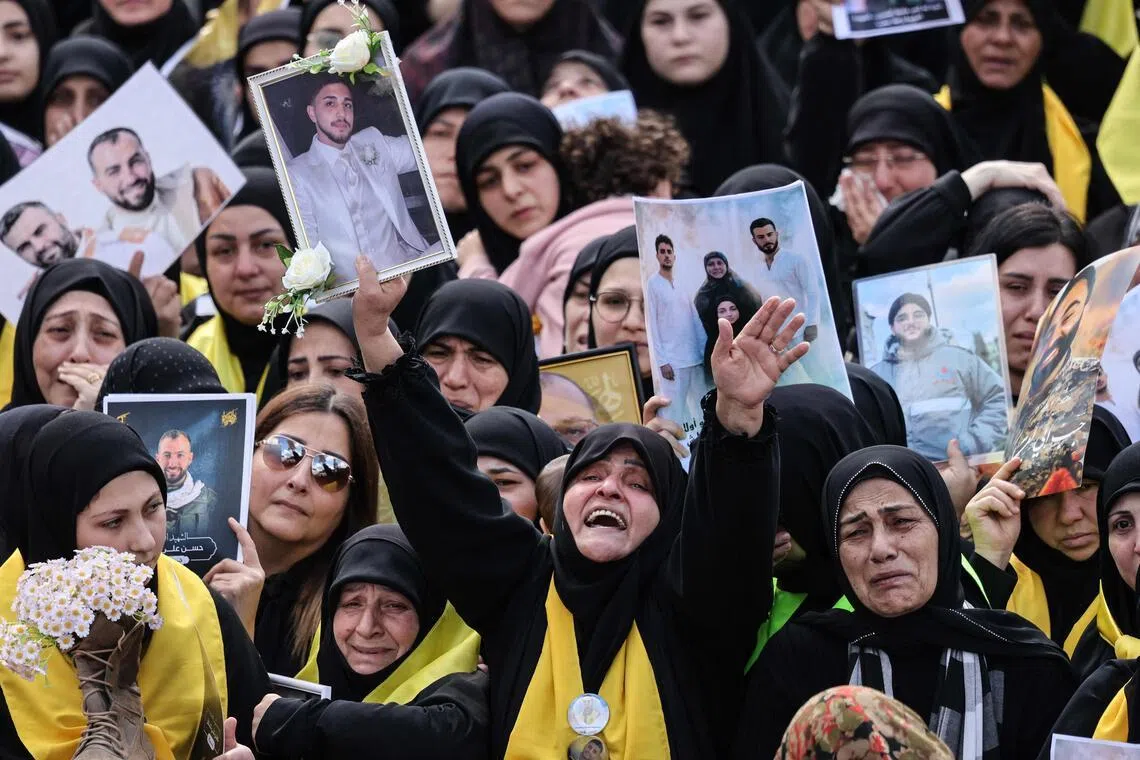
Hezbollah supporters have expressed defiance following the deaths of their sons who were killed while fighting Israel, according to reports from Lebanese authorities. The group, designated as a terrorist organization by several countries, has been engaged in periodic clashes along the Israel-Lebanon border, particularly escalating since the outbreak of the Israel-Hamas war in October 2023. Despite international calls for restraint, Hezbollah has continued its cross-border rocket fire and militant operations, framing them as resistance against Israeli aggression.
More than 2,400 people have been killed, according to the Lebanese authorities. This figure encompasses casualties on both sides of the conflict, including fighters, civilians and emergency responders, though Lebanese officials have not provided a detailed breakdown of combatant versus non-combatant deaths. The toll reflects the intensity of hostilities that have periodically flared along the Blue Line, the UN-demarcated border between Lebanon and Israel, since late 2023.
In the aftermath of these losses, gatherings in Beirut’s southern suburbs and other Hezbollah strongholds have featured mourning rituals accompanied by vows of continued resistance. Speakers at memorial events have emphasized that the sacrifices of fallen fighters strengthen the group’s resolve rather than diminish it. This sentiment echoes longstanding narratives within Hezbollah’s ideological framework, which frames martyrdom in the struggle against Israel as a path to spiritual redemption and national dignity.
The Lebanese government, led by Prime Minister Nawaf Salam, has faced mounting pressure to curb Hezbollah’s independent military actions, which critics argue undermine state sovereignty and drag the country into broader regional conflicts. In early March 2026, Salam’s cabinet announced a ban on Hezbollah’s military and security activities, a move described by analysts as an attempt to consolidate control over decisions related to national defence. Though, the implementation of such a ban remains highly contentious, given Hezbollah’s deep entrenchment within Lebanon’s political and social fabric, particularly among the Shia community.
Political scientist Imad Salamey of the Lebanese American University noted that the government’s decision to restrict Hezbollah’s arsenal reflects unusually broad national backing, including from within the Shia political sphere. He cited the support of Amal, the other major Shia political group led by Parliament Speaker Nabih Berri, as evidence that the push for state control over arms is increasingly viewed as a necessity for state stabilization rather than a sectarian demand. This shift, Salamey argued, is driven by Lebanon’s severe economic collapse and escalating regional tensions.
Conversely, Michael Young of the Carnegie Middle East Center warned that disarming Hezbollah would be far more difficult to implement than to declare. He emphasized that the group’s military capabilities are intertwined with its social services, patronage networks, and perceived role as a deterrent against Israeli incursions. Any attempt to dismantle its armed wing, Young argued, risks triggering internal strife, particularly if perceived as being imposed under foreign pressure.
The ongoing violence has also exacerbated Lebanon’s humanitarian crisis, with thousands displaced from border villages in the south. International organizations have reported strained access to healthcare, clean water, and electricity in affected areas, compounding the country’s pre-existing economic collapse. The World Bank has described Lebanon’s economic downturn as one of the most severe globally since the mid-19th century, with poverty rates exceeding 80% and the local currency having lost over 90% of its value against the US dollar since 2019.
As of April 2026, no formal ceasefire agreement exists between Hezbollah and Israel, and periodic exchanges of fire continue along the border. The United Nations Interim Force in Lebanon (UNIFIL) maintains a presence along the Blue Line to monitor violations and reduce the risk of escalation, though its mandate is limited to observation and reporting. Diplomatic efforts to de-escalate tensions have so far yielded limited results, with both sides accusing the other of violating the 2006 UN Security Council Resolution 1701, which ended the July War and called for the disarmament of all armed groups in Lebanon except the state.
The resilience of Hezbollah’s base, even in the face of personal loss, underscores the complex interplay of ideology, identity, and perceived external threats that sustains the group’s influence. For many supporters, the deaths of their sons are not seen as a reason to withdraw from conflict but as a reinforcement of their commitment to what they describe as a just struggle. Until a comprehensive political settlement addresses both the security concerns of Israel and the political aspirations of Lebanon’s Shia community, cycles of violence and mourning are likely to persist.
Readers seeking updates on the situation are encouraged to consult official statements from the Lebanese Ministry of Information, the Israel Defense Forces’ spokesperson unit, and periodic reports from UNIFIL. Verified casualty figures and incident reports are occasionally published by the Lebanese Red Cross and the Palestinian Red Crescent Society, which operate medical services in affected areas.
We welcome your thoughts on this developing story. Please share your perspective in the comments below and help spread awareness by sharing this article with others who may be interested in understanding the human dimensions of this ongoing conflict.