
Beirut, Lebanon – Lebanon has called for a “complete” ceasefire from Israel as a precondition for advancing negotiations, while U.S. President Donald Trump has revealed ongoing telephone conversations with Iranian officials, according to reports surfacing Wednesday. The developments reach amid heightened regional tensions and ongoing efforts to de-escalate conflict along the Israel-Lebanon border.
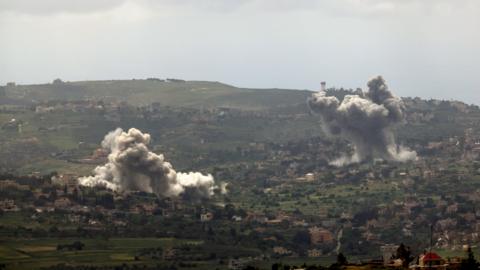
The call for a full cessation of hostilities was issued by Lebanese President Joseph Aoun, who emphasized that a lasting security solution can only be achieved through negotiations. Aoun stated that Israel’s continued violations and destruction of border villages will not yield security, referencing past experiences where such actions failed to produce lasting results. He asserted that the only way to secure the border is through a fully empowered Lebanese state present throughout the south, extending to the international boundary. Aoun indicated Lebanon is awaiting the United States to schedule a date for negotiations with Israel, viewing the inclusion of the Lebanese file on President Trump’s agenda as a significant opportunity.
Lebanon Seeks Comprehensive Ceasefire Before Talks
President Aoun’s remarks underscore Lebanon’s insistence on a definitive end to hostilities before engaging in substantive discussions with Israel. This position reflects a growing frustration with the ongoing cycle of violence and a desire for a more sustainable path toward peace. The Lebanese president’s comments, reported by the Lebanese Presidency, highlight the importance of a complete halt to military operations as a prerequisite for meaningful dialogue. The emphasis on a strong Lebanese state presence in the south is a key element of Beirut’s security strategy, aiming to assert sovereignty and prevent future conflicts.
The situation along the Israel-Lebanon border has been volatile in recent months, with intermittent exchanges of fire between Israeli forces and Hezbollah, the Iran-backed militant group operating in Lebanon. These clashes have raised concerns about a potential escalation into a wider conflict, prompting international efforts to mediate a ceasefire and facilitate negotiations. The United Nations Interim Force in Lebanon (UNIFIL) has been working to maintain stability in the region and prevent further escalation. UNIFIL’s mandate includes monitoring the ceasefire, supporting the Lebanese Armed Forces and investigating violations of the Blue Line, the demarcation line between Lebanon and Israel.
Trump Confirms Direct Communication with Iran
Simultaneously, President Trump has disclosed that he is engaging in direct telephone conversations with Iranian officials, a move that signals a potential shift in U.S. Policy toward Iran. While details of these conversations remain scarce, Trump’s revelation suggests a willingness to explore diplomatic channels with Tehran, despite ongoing tensions over Iran’s nuclear program and regional activities. This development comes after years of escalating tensions between the U.S. And Iran, marked by sanctions, military posturing, and proxy conflicts.
The BBC reported that Trump directed his aides to prepare for a prolonged confrontation with Iran, but the confirmation of direct talks indicates a simultaneous effort to avoid a full-scale conflict. The nature of these conversations and the specific issues being discussed are currently unclear. However, the fact that they are taking place at all represents a notable departure from the Trump administration’s previous approach, which largely focused on maximum pressure and containment. The U.S. State Department has not yet issued a formal statement confirming the details of these conversations.
Recent Developments and International Mediation Efforts
These developments follow a recent announcement by President Trump extending a ceasefire between Israel and Lebanon for an additional three weeks. The extension, announced on April 23, 2026, was the result of a meeting at the White House attended by Vice President JD Vance, Secretary of State Marco Rubio, U.S. Ambassador to Israel Mike Huckabee, and U.S. Ambassador to Lebanon Michel Issa. Trump emphasized the U.S. Commitment to helping Lebanon protect itself from Hezbollah during the meeting. Sky News Arabia reported on the extension, noting Trump’s anticipation of hosting both Prime Minister Netanyahu and President Aoun in the near future.
The extension of the ceasefire provides a window of opportunity for diplomatic efforts to gain traction. However, the underlying tensions remain high, and the prospects for a lasting peace are uncertain. The involvement of external actors, such as the United States, Iran, and the United Nations, is crucial to facilitating a sustainable resolution. The international community is closely monitoring the situation and urging all parties to exercise restraint and engage in constructive dialogue.
Challenges to Negotiations
Several key challenges stand in the way of successful negotiations between Lebanon and Israel. These include disagreements over the demarcation of the maritime border, the presence of Hezbollah in Lebanon, and the broader regional geopolitical landscape. The issue of Hezbollah’s military capabilities and its influence in Lebanese politics is a major concern for Israel, which views the group as a terrorist organization. Lebanon, considers Hezbollah a legitimate part of its defense strategy. Resolving these fundamental differences will require a significant degree of compromise and trust-building.
the involvement of Iran adds another layer of complexity to the situation. Iran is a key ally of Hezbollah and provides the group with financial and military support. Any attempt to address the conflict in Lebanon must take into account Iran’s role and its interests in the region. The ongoing negotiations over Iran’s nuclear program and its regional activities are closely intertwined with the situation in Lebanon.
Looking Ahead
The coming weeks will be critical in determining the future of the Israel-Lebanon conflict. The extension of the ceasefire provides a temporary respite from violence, but a lasting peace will require a comprehensive political settlement. The scheduled negotiations, facilitated by the United States, offer a potential pathway toward a resolution, but success is far from guaranteed. The direct communication between President Trump and Iranian officials could also play a role in de-escalating tensions and creating a more conducive environment for dialogue.
The international community will continue to closely monitor the situation and provide support for diplomatic efforts. The United Nations, the United States, and other key actors will need to function together to ensure that all parties are committed to a peaceful resolution. The stakes are high, and the consequences of failure could be devastating for the region. The next confirmed checkpoint will be the announcement of a date for negotiations between Lebanon and Israel, as awaited by President Aoun.
What are your thoughts on the latest developments? Share your comments below and help us continue the conversation.