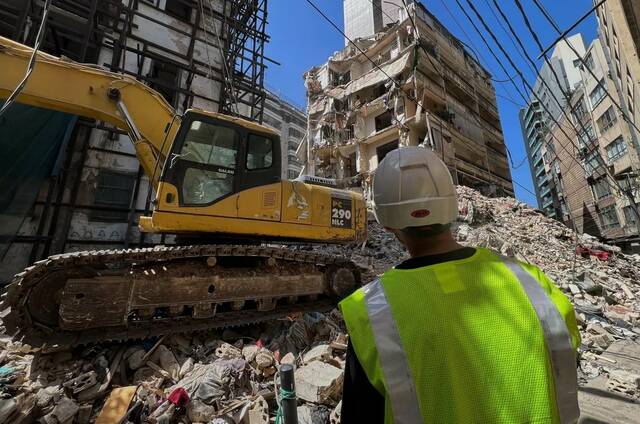
Direct diplomatic efforts to end decades of hostility reached a critical juncture on Tuesday, April 14, 2026, as Lebanon and Israel began high-level talks in Washington, D.C. Al Jazeera reports that these direct discussions are taking place even as military escalation continues on the ground, marking a rare and high-stakes attempt to establish a strategic framework for peace.
The Lebanon-Israel diplomatic talks in Washington represent the first direct engagement between the two nations in more than 40 years CNN. Whereas the diplomatic channel has opened, the atmosphere remains fraught; Lebanon is currently grappling with sharp internal divisions regarding the nature and content of these negotiations, while Israel continues its military operations in the region.
U.S. Secretary of State Marco Rubio has characterized the summit as a “historic opportunity,” suggesting that the current dialogue allows both parties to begin outlining a general framework for a long-term resolution. Rubio emphasized that the primary objective is to bring a definitive end to “twenty or 30 years of Hezbollah’s influence” Al Jazeera, though he cautioned that the most complex issues are unlikely to be resolved within the immediate hours of the initial meetings.
The Washington Summit: Key Participants and Objectives
The negotiations are being hosted at the U.S. Department of State, with the United States acting as the primary mediator to bridge the gap between the two adversarial neighbors. According to Al Jazeera, the core delegation includes Israeli Ambassador to Washington Yechiel Leiter and Lebanese Ambassador to Washington Nada Hamadeh Mouawad. The talks are being facilitated by Michel Issa, the U.S. Ambassador to Beirut.
For the Israeli government, the objective is clear: the establishment of a “historic and sustainable peace agreement” that can endure for generations, as stated by Prime Minister Benjamin Netanyahu CNN. However, this vision of peace is contingent upon a fundamental change in Lebanon’s internal security architecture—specifically the status of Hezbollah.
Lebanon, conversely, has entered the talks with an immediate priority: securing a firm commitment from Israel to implement a full ceasefire. The Lebanese delegation is seeking to halt the ongoing military escalation to provide breathing room for political stability and the protection of its civilian population.
The Hezbollah Dilemma: The Core of the Conflict
The central point of contention in the direct high-level negotiations is the role and armament of Hezbollah. Israeli Foreign Minister Gideon Sa’ar has asserted that Notice “no fundamental differences” between the state of Israel and the state of Lebanon, arguing instead that the sole obstacle to peace is Hezbollah CNN.
Sa’ar indicated that the discussions will focus on cooperation to dismantle the armed group, which he views as a prerequisite for transitioning toward a phase of peace and normalization with the Lebanese state CNN. This demand places the Lebanese government in a precarious position. While the Lebanese government has officially banned Hezbollah’s armed activities, the national army currently lacks the necessary capacity to disarm the group by force CNN.
This deadlock highlights the “what it means” for the Lebanese state: a choice between Israeli demands for disarmament and the internal political reality where the state cannot fully control all armed elements within its borders. Hezbollah has already expressed its criticism of the Washington talks, viewing them as an infringement or a strategic misstep.
Divergent Goals: Ceasefire Commitments vs. Strategic Shifts
As the talks progressed on Tuesday, a significant gap emerged between the immediate needs of Beirut and the strategic goals of Tel Aviv. Lebanon’s push for a comprehensive ceasefire has not yet been met with a reciprocal agreement from Israel. Instead, Israeli media reports indicate that Tel Aviv has only agreed to a limited set of concessions, specifically restricting attacks on the capital, Beirut, and reducing the intensity of strikes in other Lebanese locations Al Jazeera.
This partial agreement suggests that Israel is using the diplomatic process as a parallel track to its military pressure, rather than a replacement for it. By limiting attacks on the capital while maintaining operations elsewhere, Israel appears to be signaling that it will not trade military leverage for a ceasefire until its broader security demands—namely the neutralization of Hezbollah’s border capabilities—are addressed.
The impact of this approach is felt most acutely in South Lebanon, where residents remain caught between military escalation and the hope for a diplomatic breakthrough. The lack of a full ceasefire means that while the “Washington track” is active, the risk of further casualties and displacement remains high.
Internal Pressures and the Role of the Lebanese Army
The Lebanon-Israel diplomatic talks in Washington are not happening in a vacuum; they are mirrored by a sharp internal divide within Lebanon. The country is split over whether these talks are a necessary path to survival or a surrender to external pressure. This domestic friction complicates the Lebanese government’s ability to make the concessions that the U.S. And Israel are seeking.

A critical component of any potential agreement would be the role of the Lebanese Army. For the talks to result in a sustainable peace, there would likely need to be a significant deployment of the Lebanese Army to the border to ensure that no armed groups can operate in the southern region. However, as previously noted, the army’s current inability to forcibly disarm Hezbollah remains a primary concern for Israeli security officials CNN.
The stability of South Lebanon depends on this transition from non-state actor control to state-led security. Without a credible commitment and the actual capacity of the Lebanese Army to secure the border, any agreement reached in Washington may struggle to survive the realities of the ground.
Key Takeaways from the Washington Negotiations
- Historic Precedent: First direct high-level talks between Lebanon and Israel in over 40 years CNN.
- U.S. Mediation: Led by Secretary of State Marco Rubio, focusing on ending Hezbollah’s long-term influence Al Jazeera.
- Primary Obstacle: Israel demands the disarmament of Hezbollah as a condition for peace, while Lebanon seeks an immediate ceasefire CNN.
- Limited Concessions: Israel has agreed to limit strikes on Beirut but has stopped short of a full ceasefire Al Jazeera.
- Internal Friction: Lebanese leadership is facing severe domestic division over the legitimacy and goals of the talks.
As the delegations continue their meetings in the U.S. Capital, the world watches to see if this diplomatic breakthrough can outpace the military escalation. The next critical checkpoint will be the announcement of whether the “general framework” mentioned by Secretary Rubio can be translated into a binding agreement that includes a full cessation of hostilities and a verifiable security plan for the border.
World Today Journal will continue to monitor these developments. We invite our readers to share their perspectives on whether direct diplomacy can succeed in the face of ongoing military conflict in the comments below.
Related reading