
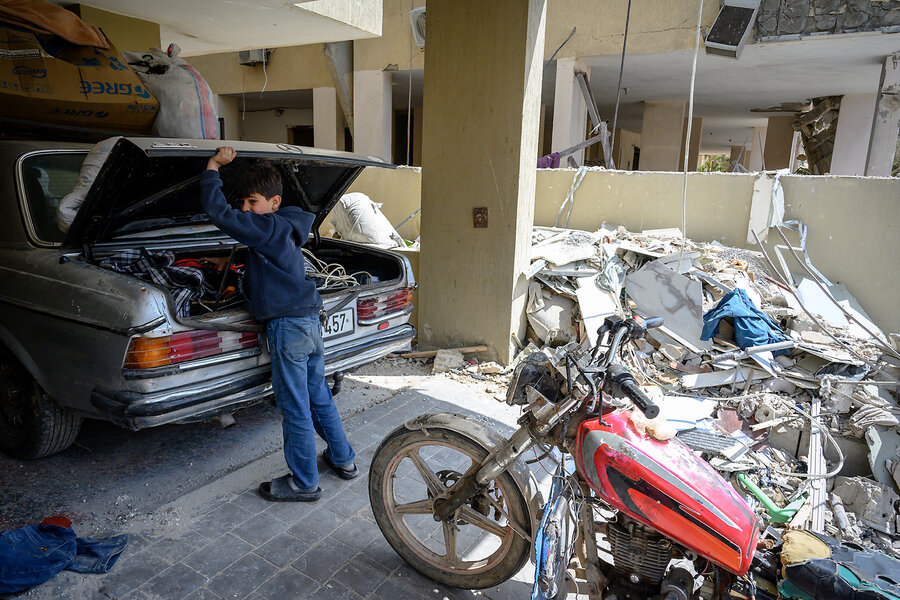
For thousands of Lebanese families, the road home is no longer a simple journey of kilometers, but a gamble with fate. In the wake of a volatile security landscape that has seen repeated escalations, the question for the displaced is no longer just when they can return, but whether there is anything left to return to.
The psychological toll of the ongoing conflict has left many in a state of anguished uncertainty
, caught between the desperate yearning for their ancestral villages and the stark warnings from military and humanitarian agencies. As of late April 2026, the situation remains precarious, with a fragile ceasefire attempting to hold against the backdrop of systemic destruction in southern Lebanon.
This precarious balance is underscored by the latest data from the United Nations Office for the Coordination of Humanitarian Affairs (OCHA). In a flash update released on April 23, 2026, OCHA reported a slight 3 per cent increase in the number of displaced people residing in collective shelters, bringing the total to 121,225 people as of April 23, 2026. This increase highlights the tentative nature of population movements, as families hesitate to leave the relative safety of shelters for homes that may be rubble.
A Cycle of Truces and Violations
The current humanitarian crisis is the result of a complex timeline of hostilities. While a ceasefire was initially established in November 2024, the security environment deteriorated sharply in early 2026. According to reports from ReliefWeb, hostilities between Hezbollah and Israel intensified significantly on March 2, 2026, following U.S.-Israeli strikes against Iran published April 24, 2026. This surge in violence represented the most serious deterioration in security conditions since the 2024 agreement.
In an attempt to stabilize the region, a 10-day cessation of hostilities came into effect at midnight on April 16, 2026, following direct talks between the governments of Lebanon and Israel brokered by the United States. This temporary truce was later extended for an additional three weeks on April 23, 2026, after an announcement by U.S. President Donald Trump following a trilateral meeting between representatives of Israel, the U.S., and Lebanon reported April 30, 2026.
Despite these diplomatic efforts, the “ceasefire” exists more on paper than on the ground. The Lebanese Armed Forces have recorded near-daily violations of the truce, and the Israel Defense Forces (IDF) confirmed over 500 airstrikes since the ceasefire took effect, citing alleged Hezbollah violations published April 24, 2026.
The Danger of Returning to the South
For those living in the south, the desire to return is often met with explicit warnings. The Israeli military has maintained a hold on significant portions of southern Lebanon, warning residents to stay out of a belt of territory running the length of the border and to avoid approaching the Litani River reported April 19, 2026. Residents of over 50 villages have been specifically told to stay away.

These warnings have transformed potential homecomings into brief, high-risk excursions. Many displaced residents who do venture back uncover that their visits are short and fraught with grief. The destruction of infrastructure—including bridges and residential blocks—has made many areas unreachable or uninhabitable. The uncertainty of the ceasefire’s durability means that a return to a home that is still standing could result in being trapped in a combat zone if the truce collapses again.
The humanitarian impact is compounded by a severe lack of funding. The OCHA Flash Appeal for the March-May 2026 period has seen its funding rise to only 33 per cent, totaling US$ 102.9 million as of April 23, 2026. This funding gap leaves thousands in overcrowded shelters with limited access to basic services and an increasingly fragile protection environment.
Key Challenges for Displaced Lebanese
- Structural Destruction: Many homes have been reduced to rubble by airstrikes, leaving families with no physical structure to return to.
- Military Restrictions: The IDF’s insistence on a border buffer zone and restrictions around the Litani River prevent access to dozens of villages.
- Security Volatility: Frequent violations of the ceasefire by both sides make any return a potential risk to life.
- Economic Collapse: The ongoing socio-economic crisis in Lebanon makes the cost of rebuilding nearly impossible for the average family.
The Human Cost of Uncertainty
The emotional weight of this conflict is best seen in the “short visits” described by residents. Families travel hours to reach their villages, only to find their homes destroyed or the area patrolled by foreign military forces. These trips, intended to provide closure or a sense of belonging, often end in further trauma.

The displacement is not limited to Lebanese nationals. The crisis has further strained the situation for Syrian refugees in Lebanon. According to a UNHCR factsheet from February 2026, 68 per cent of Syrian refugees were living below the Survival Minimum Expenditure Basket (SMEB) in 2025 published February 2026. The renewed hostilities have pushed these vulnerable populations further into precariousness, with some considering dangerous returns to Syria under adverse conditions.
The “emotional roller coaster” described by those on the ground is a cycle of hope and heartbreak: a ceasefire is announced, families pack their bags, they reach the outskirts of their towns, and they are either turned back by military checkpoints or find their childhood homes have vanished.
What Happens Next?
The immediate future for the displaced depends on the outcome of ongoing diplomatic negotiations. Lebanese President Joseph Aoun has stated that planned talks with Israel aim to end the hostilities and establish a more permanent security arrangement reported April 19, 2026.
However, until a comprehensive agreement is reached and verified on the ground, humanitarian agencies continue to urge caution. The primary checkpoint for the current phase of the crisis is the expiration of the current ceasefire extension. If a permanent peace is not brokered, the window for safe returns may close entirely, leaving thousands of Lebanese in a permanent state of displacement.
World Today Journal encourages readers to share this report to bring attention to the humanitarian crisis in southern Lebanon. We welcome your comments and insights on the global response to this displacement crisis in the section below.