
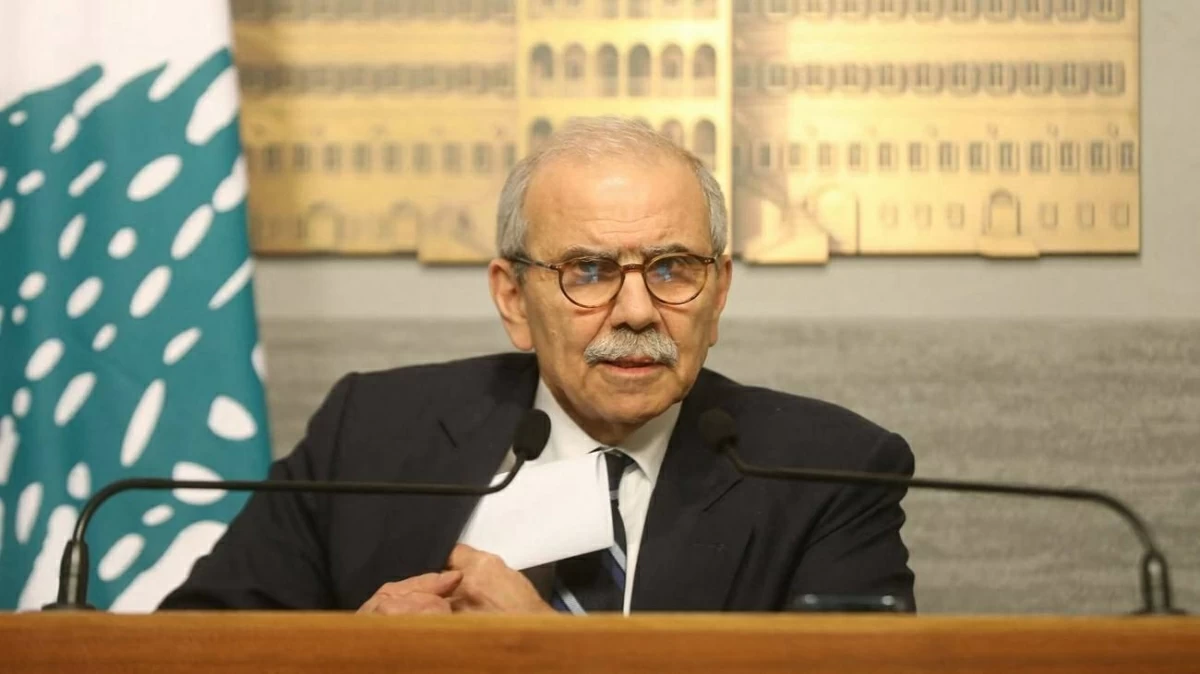
Lebanese Prime Minister Nawaf Salam has signaled a cautious approach to diplomatic engagement with Israel, stating that discussions regarding a high-level meeting with Israeli Prime Minister Benjamin Netanyahu are currently premature. Even as the Lebanese government remains open to negotiations, Salam emphasized that the primary objective is the achievement of a sustainable peace rather than a broader political normalization.
The Prime Minister’s remarks arrive at a critical juncture for Lebanon, as the administration attempts to navigate the complex intersection of national security, internal sovereignty, and international mediation. By distinguishing between “peace” and “normalization,” Salam is carving out a diplomatic middle ground intended to stabilize the border and ensure state authority without triggering internal political collapse.
Central to this strategy is the insistence that any new round of high-level negotiations, particularly those potentially hosted in Washington, must be predicated on the establishment of a verified ceasefire. This condition serves as both a security safeguard and a litmus test for the sincerity of the diplomatic process.
Peace vs. Normalization: Defining the Diplomatic Boundary
In a clear effort to manage domestic expectations and regional perceptions, Prime Minister Nawaf Salam has explicitly rejected the notion that Lebanon is seeking normalization with Israel. In the context of Middle Eastern diplomacy, “normalization” typically refers to the formal recognition of a state, the establishment of diplomatic ties, and the opening of economic and cultural exchanges. Salam clarified that Lebanon’s goal is not this level of integration, but rather “achieving peace.”
This distinction is vital for the Lebanese government. Seeking a peace agreement—defined by the cessation of hostilities, a clear border demarcation, and mutual security guarantees—allows Lebanon to pursue stability while avoiding the political firestorm that would accompany a formal normalization deal. For the global community, this indicates that while Lebanon is willing to engage in the Lebanon Israel negotiations, it will do so on terms that prioritize security over political alignment.
The Prime Minister noted that the current circumstances are not yet ripe for high-level summits. By labeling a meeting with Benjamin Netanyahu as premature, Salam is effectively placing the burden of progress on the ground-level security situation rather than on symbolic political gestures.
The Roadmap to Washington: Ceasefires as a Prerequisite
The prospect of negotiations in Washington remains a key objective, but the path there is strictly conditional. According to Prime Minister Salam, the establishment of a ceasefire will be the essential basis for any further diplomatic movement. This approach suggests that the Lebanese government will not commit to high-level summits until the immediate threat of escalation is neutralized.
The insistence on a ceasefire before traveling to the United States highlights a strategic preference for tangible security results over diplomatic optics. By making the ceasefire a prerequisite, Lebanon aims to ensure that any agreement reached in Washington is supported by a stable reality on the ground, reducing the risk of a deal collapsing due to a sudden border flare-up.
This sequence—ceasefire first, high-level talks second—reflects a cautious diplomatic cadence. It allows the Lebanese administration to demonstrate to its domestic constituency that it is not conceding security for the sake of international approval, but is instead using international mediation to secure a lasting end to conflict.
Internal Sovereignty and the Concentration of Weapons
One of the most sensitive aspects of the current negotiations involves the internal balance of power within Lebanon. Prime Minister Salam addressed the ongoing challenge of expanding the state’s authority, particularly concerning the presence of non-state armed groups. He indicated that the government will reconsider and reopen the plan for the concentration of weapons—specifically referencing the arsenal of Hezbollah—based on the developments of recent months.

The “concentration of weapons” refers to the effort to bring all military capabilities under the sole command and control of the Lebanese Armed Forces (LAF). This is a recurring demand in international negotiations and a point of significant internal contention. Salam’s willingness to revisit this plan suggests that the current diplomatic window may provide the necessary leverage to advance the state’s monopoly on force.
Expanding state authority is not merely a domestic requirement but a diplomatic necessity. For any peace agreement with Israel to be viable, the Lebanese state must be able to guarantee that its borders are not used as a launchpad for unauthorized attacks. The internal negotiations to consolidate weapons are inextricably linked to the success of the external negotiations with Israel.
The Regional Puzzle: The ‘Islamabad Track’ and Iran
Beyond the immediate bilateral tension with Israel, Prime Minister Salam highlighted the broader geopolitical landscape, specifically the role of the United States and Iran. He acknowledged the existence of negotiations between Washington and Tehran, noting that these are being mediated by Pakistan—a process referred to as the “Islamabad track.”
While Salam asserted that Lebanon is conducting negotiations on its own behalf, he admitted that these efforts are not disconnected from the broader U.S.-Iran dialogue. This admission underscores the reality that Lebanon’s security architecture is deeply intertwined with the relationship between the U.S. And Iran. A breakthrough in the Islamabad track could potentially ease the pressures on Lebanon, making a ceasefire and subsequent peace agreement more attainable.
The involvement of Pakistan as a mediator suggests a diversification of diplomatic channels, moving beyond the traditional U.S.-led frameworks to include regional actors capable of communicating with Tehran. For Lebanon, the synchronization of these different “tracks” is essential to ensure that a local peace deal is not undermined by regional power struggles.
By maintaining a degree of independence while acknowledging these external influences, Salam is attempting to position Lebanon as a sovereign actor that is aware of regional dynamics but is not a mere proxy in a larger geopolitical game.
What Which means for Regional Stability
The current stance of the Lebanese government represents a calculated risk. By refusing a high-level meeting with Netanyahu while simultaneously pursuing a “peace, not normalization” agenda, Lebanon is attempting to lower the temperature of the conflict without sacrificing its political identity.
For stakeholders in the region, this indicates several key trends:
- Pragmatism over Ideology: The shift toward discussing “peace” suggests a growing recognition that prolonged instability is unsustainable for the Lebanese state.
- Conditionality: The insistence on a ceasefire before high-level talks signals that Lebanon will not be pressured into symbolic meetings without concrete security gains.
- Sovereignty Focus: The mention of weapon concentration reveals that the Lebanese government is attempting to use the peace process to strengthen the central state.
The success of this strategy depends heavily on the willingness of Israel to accept a peace framework that excludes formal normalization and on the ability of the U.S. To maintain the momentum of the Islamabad track with Iran.
The next confirmed checkpoint in this process will be the monitoring of border activity to determine if the conditions for a ceasefire are being met, which would then pave the way for the proposed negotiations in Washington.
World Today Journal encourages readers to share their perspectives on the distinction between peace and normalization in the comments below.