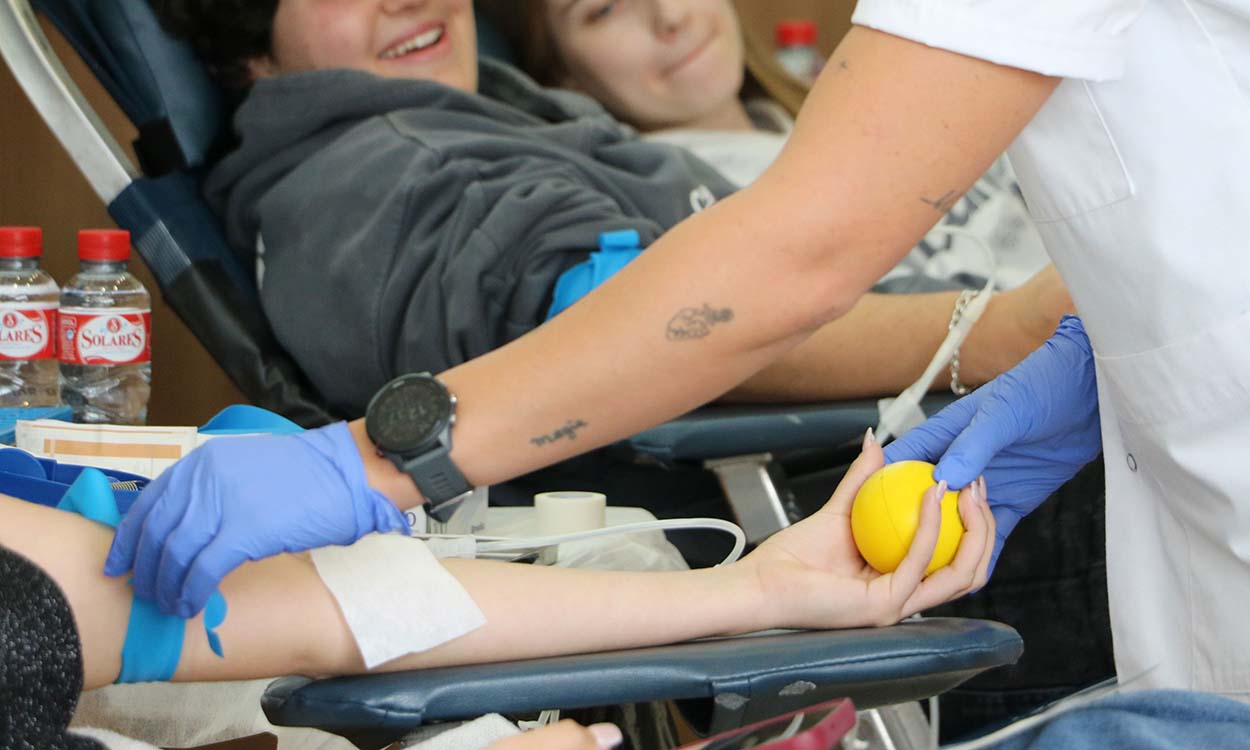
Blood Donation Rules Relaxed in Castilla y León to Boost Supply
Castilla y León is making it easier for residents to donate blood, implementing recent regulations on February 22, 2026, that increase the number of permitted donations annually. The changes, designed to bolster regional blood reserves, will allow men to donate up to six times a year, and women up to four, provided they adhere to the existing minimum interval of two months between donations. This adjustment comes as healthcare systems across Europe prepare for updated regulations regarding substances of human origin, and Castilla y León is proactively adapting to ensure a stable blood supply for its hospitals.
The move, spearheaded by the Centro de Hemoterapia y Hemodonación de Castilla y León (CHEMCyL) and the Hermandad de Donantes de Sangre de León, reflects a growing necessitate for consistent blood donations. Approximately 450 blood donations are needed daily in the region to meet the demands of hospital activity throughout the year, highlighting the critical role of volunteer donors in maintaining healthcare capacity. The updated rules aim to encourage regular donations and provide greater flexibility for those willing to contribute.
What’s Changing with the New Regulations
The core change is a straightforward increase in donation frequency. Previously, men were limited to four donations per year, while women were limited to three. Under the new rules, men can now donate six times annually, and women can donate four times, as long as the mandatory two-month interval between donations is observed. This adjustment is part of a broader effort to align with the evolving European standards for blood donation, and safety.
- Men: from 4 to 6 donations per year.
- Women: from 3 to 4 donations per year.
- Interval between donations: remains at 2 months.
Why Castilla y León is Ahead of the Curve
The update is rooted in the Regulation (EU) 2021/1163, often referred to as the SoHO (Substances of Origin Human) Regulation. This regulation establishes a harmonized framework for quality and safety standards for substances derived from the human body, including blood, tissues, and cells. While full implementation across European Union member states is slated for 2027, Castilla y León is proactively adopting the changes within the scope of blood donation. The European Commission details the regulation and its aims on its website. More information on the SoHO regulation can be found here.
CHEMCyL emphasizes that the goal isn’t necessarily to increase the *number* of donors, but rather to optimize donation schedules and foster donor loyalty. The new rules provide a framework for individuals who are able and willing to donate regularly to do so safely and effectively. This proactive approach is seen as crucial for maintaining a consistent and reliable blood supply throughout the year.
Regional Donation Statistics and Impact
In 2025, Castilla y León recorded 108,535 blood donations, a figure comparable to the 108,828 donations received in 2024. Maintaining this level of donations – and being prepared for surges in demand – is vital for supporting surgical procedures, cancer treatments, and emergency care. The region currently relies on approximately 15,500 active donors, who contributed 11,513 donations in 2025, an increase of 283 donations compared to the previous year.
The changes are particularly relevant in León province, where efforts are focused on engaging existing donors and encouraging consistent participation. CHEMCyL views the updated regulations as an opportunity to reinforce public awareness and promote a model of regular, planned, and safe blood donation.
What Donors in León Need to Know
For those looking to take advantage of the increased donation frequency, the core message remains consistent: each potential donor will be evaluated on a case-by-case basis at the time of donation. Healthcare professionals will assess individual eligibility and confirm when a donor can return for their next donation. It’s crucial to respect the minimum two-month interval between donations to ensure both donor safety and the quality of the blood supply.
- Respect the timeframes: the minimum interval is 2 months.
- Seek guidance during each visit: the healthcare team will confirm when you are eligible to donate again.
- Check fixed points and mobile collection schedules: Castilla y León maintains fixed donation centers and a mobile collection network that travels to municipalities, universities, and workplaces.
The new regulations offer greater flexibility for regular donors and may encourage those who haven’t donated in a while to resume the practice. The Centro de Hemoterapia y Hemodonación de Castilla y León provides detailed information on donation locations and schedules on their website: https://www.centrodehemoterapiacyl.es/. Donation points in León include a fixed location at the José Aguado Health Center and mobile collection units operating at various locations throughout the province, including Bembibre and San Andrés del Rabanedo, as of February 23, 2026.
Donation Locations in León (February 23, 2026)
- Fixed Donation Point: José Aguado Health Center, Av. José Aguado, s/n, 24005 León. (Monday & Tuesday 8:00-15:00, Wednesday, Thursday & Friday 15:00-22:00)
- Mobile Collection: Glorieta Donantes de Sangre, Plaza Donantes de Sangre, s/n, San Andrés del Rabanedo (15:45-21:15)
- Mobile Collection: Bembibre, C/ Lope de Vega, 3 (16:30-20:30)
The changes in donation rules represent a significant step towards strengthening the blood supply network in Castilla y León, ensuring that hospitals have the resources they need to provide life-saving care. The ongoing commitment of volunteer donors remains the cornerstone of this vital system.
The next key date for the SoHO regulation is 2027, when full implementation is expected across all European Union member states. CHEMCyL will continue to provide updates and guidance to donors as the regulatory landscape evolves. We encourage readers to share their thoughts on these changes and their experiences with blood donation in the comments below.
Related reading