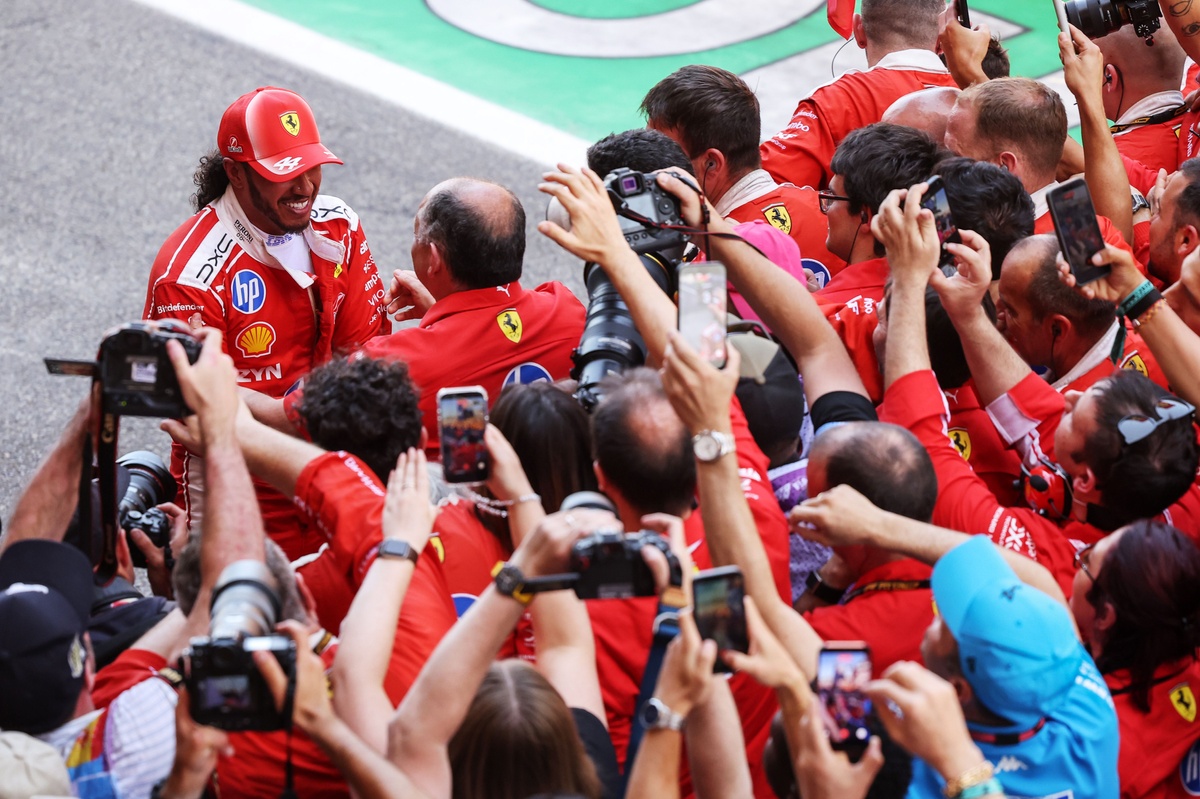
Lewis Hamilton’s transition to Scuderia Ferrari for the 2025 Formula 1 season represents one of the most significant driver transfers in the history of the sport, marking the end of a dominant era with Mercedes-AMG Petronas. The move, officially confirmed by both teams in February 2024, has shifted the focus of the Formula 1 paddock toward the technical and emotional implications of the seven-time world champion joining the Maranello-based outfit.
While the transition involves complex technical shifts and strategic rebranding for both manufacturers, recent behind-the-scenes footage released by Ferrari has highlighted the personal and emotional weight of the move. The imagery captures the gravity of Hamilton joining a team that has long been the center of racing’s cultural and competitive identity, signaling a new chapter for both the driver and the Scuderia.
The Emotional Weight of the Maranello Transition
The announcement that Hamilton would leave Mercedes after 12 seasons to join Ferrari was met with widespread reaction across the global racing community. For Hamilton, who has frequently cited the prospect of driving for the Italian team as a career ambition, the move is viewed by analysts as a pursuit of a final, definitive legacy. According to official statements released during the announcement, the decision was driven by a desire for a new challenge after achieving unprecedented success with the Silver Arrows.

Ferrari’s recent media releases have focused on the human element of this partnership. Behind-the-scenes content has showcased the initial interactions between Hamilton and the Ferrari personnel, emphasizing the respect and high expectations surrounding the signing. This emotional narrative is not merely a marketing tool; it reflects the immense pressure on the Scuderia to deliver a championship-winning car to a driver of Hamilton’s caliber. The visual storytelling provided by the team highlights the high stakes involved as the team prepares for the 2025 campaign.
Ending a Record-Breaking Era at Mercedes-AMG
Hamilton’s departure from Mercedes-AMG Petronas concludes a partnership that redefined Formula 1 dominance. Since joining the team in 2013, Hamilton has secured six of his seven world titles with the manufacturer, contributing to a period of technical supremacy that included consecutive constructors’ championships. The partnership was characterized by a highly integrated relationship between the driver, technical directorship, and team principal Toto Wolff.
The decision to part ways follows a period of technical turbulence for Mercedes, as the team struggled to match the performance of Red Bull Racing and McLaren in the ground-effect era of regulation. While Mercedes has remained a competitive force, the search for a new technical direction coincided with Hamilton’s desire to explore the possibilities offered by Ferrari’s current development trajectory under Team Principal Fred Vasseur.
The transition period throughout the remainder of the 2024 season is expected to be managed with professional decorum, as Mercedes prepares for a future driver lineup while Hamilton focuses on his final months with the team. This dual transition period is rare in modern Formula 1, where driver contracts are typically settled well in advance of seasonal changes.
Technical Implications for the 2025 and 2026 Seasons
Hamilton’s arrival at Ferrari coincides with a critical period in Formula 1 technical development. The 2025 season will serve as the final year of the current technical regulations before a major overhaul is implemented in 2026. This makes the timing of Hamilton’s move particularly strategic for both the driver and the Scuderia.

The 2026 regulations will introduce significant changes to power unit architecture, focusing on increased electrical power and sustainable fuels. By joining Ferrari now, Hamilton is positioned to be integral to the team’s developmental cycle as they design the chassis and power unit that will define the next era of the sport. This long-term integration is intended to provide Ferrari with a stable foundation as they attempt to break their recent championship droughts.
Analysts suggest that Hamilton’s experience in managing complex technical transitions will be a vital asset for Ferrari’s engineering department. His ability to provide precise feedback during development cycles is a documented strength that could accelerate the team’s understanding of the new 2026 aerodynamic requirements.
Comparison of Driver Eras: Mercedes vs. Ferrari
| Feature | Mercedes Era (2013–2024) | Ferrari Era (Starting 2025) |
|---|---|---|
| Primary Objective | Maintaining technical dominance | Reclaiming Constructors’ and Drivers’ titles |
| Leadership Context | Established partnership with Toto Wolff | New strategic alignment with Fred Vasseur |
| Regulatory Focus | Mastery of hybrid-era regulations | Preparation for 2026 regulation changes |
| Driver Role | Established record-breaker | Veteran leader and technical catalyst |
The Impact on the Formula 1 Driver Market
The Hamilton-Ferrari deal has created a significant ripple effect throughout the Formula 1 driver market. As one of the most influential figures in the sport, Hamilton’s movement forces other top-tier teams to reassess their long-term driver strategies. The vacancy left at Mercedes and the potential shifts in the Ferrari lineup—including the future of Charles Leclerc and Carlos Sainz—have become central topics for team principals and technical directors.
The increased scrutiny on driver contracts and team stability has also influenced how sponsors and stakeholders view team longevity. For Ferrari, securing a driver of Hamilton’s commercial and competitive stature reinforces their position as the sport’s most valuable brand. For the wider F1 ecosystem, the move signals a period of volatility and opportunity, particularly for junior drivers looking to ascend to senior roles in the wake of these major shifts.
Frequently Asked Questions Regarding the Move
When will Lewis Hamilton officially begin racing for Ferrari?
Lewis Hamilton will make his competitive debut for Scuderia Ferrari at the start of the 2025 Formula 1 season.

Why did Lewis Hamilton decide to leave Mercedes?
According to official communications from both Mercedes and Hamilton, the move was a mutual decision driven by Hamilton’s desire for a new professional challenge and the opportunity to join Ferrari.
Who will be Hamilton’s teammates at Ferrari?
The Ferrari driver lineup for 2025 is expected to feature Charles Leclerc, with the second seat subject to official confirmation following the conclusion of current contract negotiations involving Carlos Sainz.
How will the 2026 regulation changes affect this move?
The 2026 regulations will introduce new power unit and aerodynamic rules. Hamilton’s move allows him to be involved in Ferrari’s developmental process leading up to these changes, potentially offering more stability during a period of high technical uncertainty.
The next major checkpoint for this transition will be the conclusion of the 2024 Formula 1 season, which will confirm the final driver lineups and technical directions for the 2025 grid. Official updates regarding Ferrari’s technical preparations are expected to follow in the pre-season testing period.
What are your thoughts on Hamilton’s move to Ferrari? Will this be the catalyst for a new championship era for the Scuderia? Share your views in the comments below and share this article with your fellow racing fans.