Liberal Shift in Sweden: A Gamble on Governing with the Far-Right
Stockholm – In a dramatic political realignment, Sweden’s Liberal Party has agreed to abandon its longstanding opposition to governing with the Sweden Democrats, a move that has sent shockwaves through the Swedish political landscape. The decision, confirmed on Friday, March 14, 2026, represents a significant departure from the party’s previously firm “red line” and raises questions about the future of Swedish coalition politics. The move comes as the Liberal Party struggles with historically low polling numbers and a crisis of confidence in its leadership, prompting a desperate search for a path back to relevance. This shift, however, is not without internal dissent, with many party members expressing shock and dismay at the sudden change in direction.
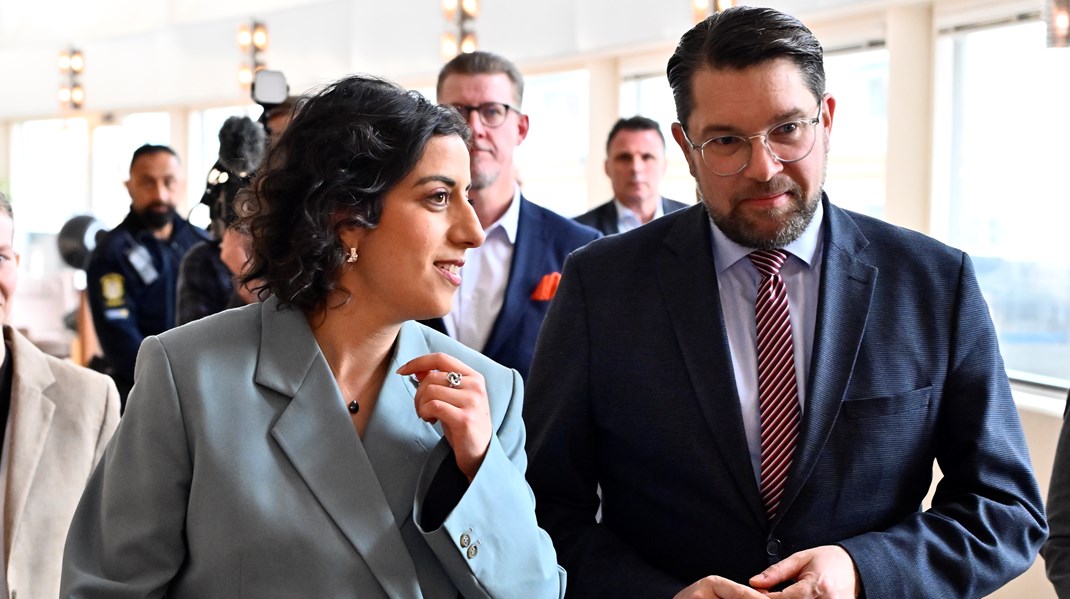
The agreement, unveiled at a joint press conference with the Sweden Democrats, outlines a commitment to a “stram men human” (strict but humane) migration policy and a broader collaboration on a range of policy areas. Simona Mohamsson, leader of the Liberal Party, framed the decision as a necessary step to take responsibility and deliver results for the Swedish people. However, critics argue that the move compromises the party’s core liberal values and legitimizes a far-right party with a controversial past. The implications of this alliance extend beyond domestic politics, potentially influencing Sweden’s position within the European Union and its international standing. The decision to potentially include the Sweden Democrats in a governing coalition marks a pivotal moment in Swedish political history, challenging established norms and raising concerns about the direction of the country.
The Liberal Party’s internal struggles have been mounting for some time. Recent polling data consistently places the party near the threshold for parliamentary representation, and Mohamsson’s leadership has faced increasing scrutiny. According to a report by Dagens Nyheter, a meeting held on Sunday, March 16, 2026, saw over 700 party members participate in an information session aimed at addressing concerns about the agreement with the Sweden Democrats. The meeting, conducted in a “silent mode” to prevent immediate public backlash, revealed deep divisions within the party, with many members expressing “shock and despair” at the decision to abandon the “red line.” The party’s decision-making process itself has come under fire, with some members claiming they were only informed of the agreement the day before its public announcement.
Navigating the Political U-Turn: A Communication Challenge
Presenting a significant policy reversal to a party base and the wider public requires more than simply outlining the new agreement; it demands a compelling justification. As the source material points out, Simona Mohamsson’s use of the phrase “värderingsmässig gemenskap” (value-based community) during the press conference appeared to stumble, potentially signaling a lack of genuine conviction. Although advisors likely intended the phrase to convey a sense of unity, it may have instead highlighted the inherent tension between the Liberal Party’s traditional values and the ideology of the Sweden Democrats. The challenge lies in demonstrating a clear rationale for the shift, particularly given the Liberal Party’s historical opposition to the far-right.
Effective communication in such situations requires a proactive and transparent approach. Rather than relying on optimistic pronouncements, leaders must address concerns head-on, acknowledging the difficult choices involved and outlining the specific benefits of the new collaboration. The source material notes that, in previous policy shifts, Mohamsson has adopted a more assertive stance, as seen in her defense of reforms to the Swedish school system. However, in this instance, the lack of detailed explanation regarding key policy areas, such as folkbildningen (adult education) and the EU relationship, has fueled skepticism and internal dissent.
The ‘Sverigelöftet’ and Unaddressed Priorities
The agreement between the Liberal Party and the Sweden Democrats, known as the “Sverigelöftet” (Sweden Promise), outlines 15 key policy areas for joint action. However, the initial presentation of the agreement appears to have glossed over several crucial points. The source material highlights the omission of detailed discussion regarding folkbildningen, a sector that has faced significant budget cuts in recent years and holds particular importance for the Liberal Party. These cuts represent a sensitive issue for the party, and the lack of a clear commitment to reversing them raises questions about the sincerity of the collaboration.
the agreement’s treatment of the European Union has likewise drawn criticism. The Liberal Party has historically been a strong advocate for closer European integration, yet the “Sverigelöftet” only mentions a “fördjupat samarbete” (deepened cooperation) with the EU without specifying concrete measures. This ambiguity is particularly concerning given the Sweden Democrats’ more Eurosceptic stance. Mohamsson did mention point 10 of the agreement, which focuses on maintaining the independence of cultural institutions, public service media, and research, but failed to elaborate on how this principle would be upheld in practice.
Internal Divisions and the Road Ahead
The decision to collaborate with the Sweden Democrats has undoubtedly exacerbated existing divisions within the Liberal Party. The source material references an anecdote about a liberal editor who famously quipped that the definition of liberalism is determined “here every morning at eight o’clock.” This illustrates the inherent flexibility and pragmatism that often characterize liberal politics, but also the potential for ideological drift. While Simona Mohamsson is expected to secure the support of the party leadership at an extraordinary party congress, the long-term impact on the Liberal Party’s base of voters remains uncertain.
The upcoming party congress on Sunday will be a crucial test of Mohamsson’s leadership and the party’s ability to navigate this turbulent period. The outcome will likely determine whether the Liberal Party can successfully rebrand itself as a pragmatic force capable of governing with a diverse range of partners, or whether it will succumb to internal divisions and further decline in the polls. The success of this strategy hinges on the party’s ability to convincingly articulate a clear vision for the future and demonstrate a genuine commitment to addressing the concerns of its members and the Swedish public.
Key Takeaways
- A Historic Shift: The Liberal Party’s decision to collaborate with the Sweden Democrats represents a significant departure from its long-held principles and a major realignment in Swedish politics.
- Internal Dissent: The agreement has sparked deep divisions within the Liberal Party, with many members expressing shock and dismay at the change in direction.
- Communication Challenges: Effectively communicating the rationale behind the shift and addressing concerns about the Sweden Democrats’ ideology will be crucial for the Liberal Party’s success.
- Unaddressed Priorities: The initial presentation of the “Sverigelöftet” lacked detail on key policy areas, such as folkbildningen and the EU relationship, raising questions about the sincerity of the collaboration.
The next crucial step will be the Liberal Party’s extraordinary congress on Sunday, where members will vote on the agreement with the Sweden Democrats. The outcome of this vote will significantly shape the future of the party and the potential for a new governing coalition in Sweden. Readers seeking further information on the “Sverigelöftet” can consult the official agreement details available on Altinget. We encourage readers to share their thoughts and perspectives on this evolving political situation in the comments below.
Related reading