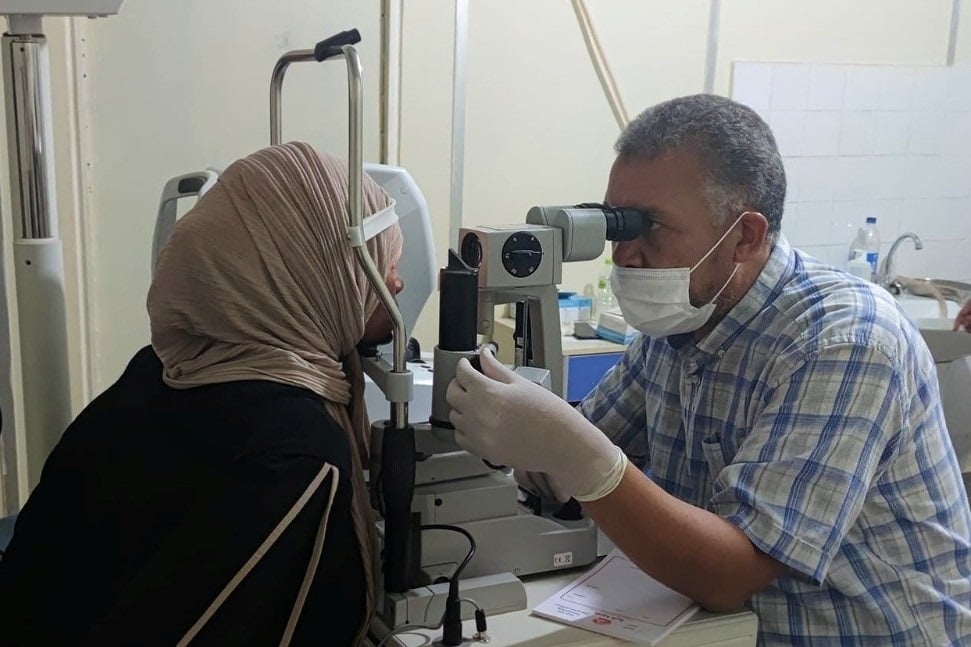
Libya Eliminates Trachoma, Marking a Milestone in Public Health
Libya has been officially validated by the World Health Organization (WHO) as having eliminated trachoma as a public health problem, a significant achievement for the Eastern Mediterranean Region. This victory represents a major step forward in preventing needless blindness and underscores the potential for overcoming neglected tropical diseases even amidst complex challenges. The announcement, made today, February 18, 2026, highlights Libya’s dedication to safeguarding the health of its population and serves as an inspiring example for other nations striving to achieve similar goals.
The validation confirms that Libya meets the WHO’s criteria for trachoma elimination, demonstrating a sustained reduction in disease prevalence below a threshold where it no longer poses a significant public health concern. This accomplishment is particularly noteworthy given the years of political instability and humanitarian crises that have impacted Libya, straining its health infrastructure and resources. “This milestone reflects Libya’s determination to safeguard the health of its people and reinforces our conviction that progress against neglected tropical diseases is possible everywhere,” stated Dr. Tedros Adhanom Ghebreyesus, WHO Director-General. “Eliminating trachoma as a public health problem is an inspiring achievement for the Eastern Mediterranean Region and for communities across Libya.”
With this validation, Libya becomes the 28th country globally and the 8th within the Eastern Mediterranean Region to eliminate trachoma. The success story demonstrates the effectiveness of evidence-based programs and coordinated technical support in tackling neglected tropical diseases, even in challenging environments. Dr. Hanan Balkhy, WHO Regional Director for the Eastern Mediterranean, emphasized that this result “reflects strong regional coordination and Libya’s perseverance during periods of great challenge.”
A History of Trachoma in Libya and the Path to Elimination
Trachoma, a bacterial infection caused by Chlamydia trachomatis, has been documented in Libya for over a century. Surveys conducted throughout the 20th century revealed high levels of active trachoma, particularly in the southern regions of the country. The infection spreads through contact with infected eye discharge via hands, clothing, or flies, and repeated infections can lead to scarring of the inner eyelid, causing eyelashes to turn inward and scratch the cornea – a painful condition known as trichiasis, which can ultimately result in blindness. The WHO details the disease’s impact and transmission pathways.
Early efforts to control infectious eye diseases in Libya began in the 1970s and 1980s, and subsequent strengthening of the health system led to a noticeable decline in trachoma transmission. However, a renewed focus on elimination was prioritized in 2017 as part of the National Prevention of Blindness Programme within the Ministry of Health. With support from the WHO, Sightsavers, the International Trachoma Initiative, and Tropical Data, comprehensive surveys were conducted in 2022 across six southern districts where trachoma was suspected to persist. These surveys revealed that active trachoma and trichiasis prevalences were below the WHO’s elimination thresholds, with the exception of trichiasis in Wadi Al Hayaa/Ghat. Following these findings, a targeted trichiasis surgery campaign was implemented.
A follow-up survey in 2025 confirmed that the prevalence of trichiasis had fallen below the WHO’s elimination threshold, solidifying Libya’s achievement. This success was built on a multi-faceted approach that integrated surveillance, expanded access to surgical care for trichiasis, and strengthened the capacity of eye health workers. The program also fostered strong partnerships with national and international stakeholders.
Overcoming Adversity: A Triumph of Public Health
Libya’s success in eliminating trachoma is particularly remarkable considering the significant political instability and humanitarian challenges the country has faced in recent years. These challenges strained health services, displaced populations, and increased demand for essential services like water, sanitation, and hygiene – all critical factors in controlling trachoma transmission. Despite these pressures, the national trachoma elimination program demonstrated resilience and adaptability.
Dr. Mohamed Al-Ghoj, Acting Minister of Health, expressed pride in the achievement, stating, “This validation is a source of pride for Libya and a testament to the commitment of our health workers and communities.” He emphasized that even during tough times, the focus remained on improving eye health services and ensuring that no one was left behind. “This success would not have been possible without the professionalism and dedication of our doctors, nurses and health workers in the field who reached all and every district to ensure a future free of preventable blindness.”
The WHO Country Office in Libya played a crucial role in providing extensive technical and operational support throughout the elimination process. Dr. Ahmed Zouiten, WHO Representative in Libya, highlighted the collaborative effort, stating, “Reaching trachoma elimination status in Libya is a testimony of what could be achieved when the Ministry of health teams and the WHO teams deliver as one. It is a collective public health triumph achieved through science, national mobilization and international solidarity.”
The Global Fight Against Neglected Tropical Diseases
Trachoma is just one of 21 neglected tropical diseases (NTDs) that affect over one billion people worldwide, primarily in impoverished communities in tropical areas. These diseases cause devastating health, social, and economic consequences. The WHO launched the WHO Alliance for the Global Elimination of Trachoma by 2020 (GET2020) in 1996, fostering a network of governments, non-governmental organizations, and academic institutions to accelerate elimination efforts. News-Medical.net reports on the broader context of trachoma elimination.
Public health targets for the control, elimination, and eradication of NTDs were established in the roadmap for neglected tropical diseases 2021–2030. In 2025 alone, nine countries were validated, verified, or certified by the WHO for achieving targets related to NTD control and elimination. Following the validation of trachoma elimination, Libya now joins the ranks of 59 countries globally and the 10th in the Eastern Mediterranean Region to have eliminated at least one NTD.
Key Takeaways
- Libya has successfully eliminated trachoma as a public health problem, a significant achievement for the Eastern Mediterranean Region.
- The success story highlights the importance of evidence-based programs, coordinated technical support, and strong partnerships.
- Libya’s achievement is particularly notable given the country’s recent political instability and humanitarian challenges.
- Trachoma is one of 21 neglected tropical diseases affecting over one billion people globally.
- The WHO continues to support endemic countries in their efforts to eliminate NTDs.
The WHO and its partners continue to work towards the global goal of eliminating trachoma and other NTDs, focusing on prevention, treatment, and improved access to water, sanitation, and hygiene. The next major milestone in the global fight against NTDs will be the progress reports on the 2021-2030 roadmap, expected to be released by the WHO in late 2026.
What are your thoughts on Libya’s achievement? Share your comments below, and please share this article with your network to raise awareness about the importance of eliminating neglected tropical diseases.
Keep reading