
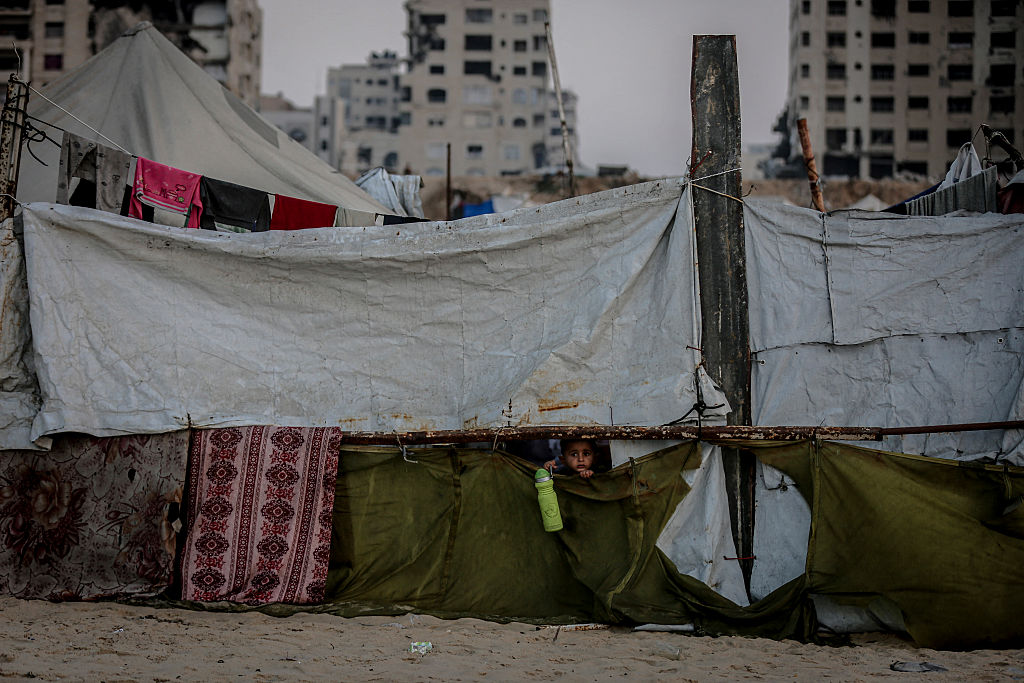
Since the intensity of aerial bombardments in Gaza diminished following the November 2023 ceasefire agreement, residents have reported that daily life remains profoundly constrained by a complex web of restrictions imposed by Israeli authorities. Although active combat has paused, Palestinians in the Gaza Strip continue to face severe limitations on movement, access to essential services, and communication with the outside world, creating what many describe as an open-air prison without visible walls.
The humanitarian situation in Gaza remains dire, with over 2 million people living in a territory of just 365 square kilometers, according to the United Nations Office for the Coordination of Humanitarian Affairs (OCHA). Despite reduced bombing, basic necessities such as clean water, electricity, and medical supplies remain intermittently available due to ongoing limitations on the entry of goods and fuel. The World Health Organization has repeatedly warned that Gaza’s health system is operating at minimal capacity, with only a fraction of hospitals functional and critical shortages of medicines persisting.
Movement within and outside Gaza is tightly controlled. Israel maintains authority over all land, air, and maritime access points, including the Erez and Kerem Shalom crossings. According to Gisha – Legal Center for Freedom of Movement, an Israeli human rights organization, the number of permits issued for Palestinians to exit Gaza for medical treatment, work, or study has remained significantly below pre-2023 levels, with only humanitarian cases typically approved after lengthy delays. Even internal movement is restricted by a network of checkpoints, buffer zones, and limited road access, particularly near the Israeli-imposed security fence and buffer zones along the perimeter.
Communication infrastructure has also been systematically degraded. While some telecommunications services have been restored since the height of the conflict, access remains inconsistent and subject to periodic disruptions. The Palestinian Telecommunications Company (Paltel) has reported repeated damage to its infrastructure, and internet access is often slow or unavailable due to limitations on importing equipment and fuel needed to run generators. Human Rights Watch has documented how these communication barriers impede not only personal contact but also the work of journalists and humanitarian organizations attempting to document conditions on the ground.
The Human Cost of Ongoing Restrictions
The cumulative effect of these constraints has led to widespread psychological distress among Gaza’s population. A 2024 survey conducted by the Gaza Community Mental Health Programme found that over 70% of respondents reported symptoms of anxiety, depression, or post-traumatic stress, with children particularly affected. The lack of safe spaces, combined with economic despair and uncertainty about the future, has eroded community resilience. Unemployment in Gaza remains among the highest globally, exceeding 45% according to the Palestinian Central Bureau of Statistics, with youth unemployment surpassing 60%.
Educational opportunities are severely limited. Schools operate on double or triple shifts to accommodate damaged infrastructure, and many lack basic supplies. UNRWA, the United Nations agency for Palestine refugees, continues to run over 280 schools in Gaza serving more than 290,000 students, but funding shortages and access restrictions frequently disrupt operations. Higher education is nearly inaccessible, as travel abroad for study is rarely permitted, and local universities struggle with damaged facilities and brain drain.
Agricultural and economic activity is similarly hampered. Farmers report difficulty accessing land near the perimeter due to buffer zone restrictions and the risk of encountering unexploded ordnance. Fishing is limited to a narrow nautical zone, frequently adjusted without notice, undermining livelihoods. The World Bank has described Gaza’s economy as “de-developing,” noting that GDP per capita has fallen to less than half of its 2006 level despite periodic infusions of international aid.
International Response and Legal Scrutiny
The ongoing situation in Gaza has drawn increasing scrutiny from international bodies. In March 2024, the United Nations Special Rapporteur on the situation of human rights in the Palestinian territories occupied since 1967, Francesca Albanese, submitted a report to the Human Rights Council asserting that Israel’s blockade and control measures may constitute collective punishment under international law, a claim Israel has rejected. The International Court of Justice is currently hearing a case brought by South Africa alleging violations of the Genocide Convention in Gaza, with proceedings ongoing as of mid-2024.
Humanitarian access remains a point of contention. While Israel states that it facilitates the entry of aid through coordinated mechanisms, humanitarian agencies frequently report delays, arbitrary denials, and insufficient volumes to meet needs. The UN Security Council has passed multiple resolutions calling for unimpeded humanitarian access, most recently Resolution 2720 in December 2023, though enforcement mechanisms remain limited. Egypt, which controls the Rafah crossing, has also imposed its own restrictions, further complicating efforts to deliver aid.
Paths Forward and Uncertain Prospects
Efforts to negotiate a lasting ceasefire and address the root causes of Gaza’s crisis continue through diplomatic channels led by Egypt, Qatar, and the United States. However, as of June 2024, no agreement has been reached on the phased withdrawal of Israeli forces, the release of hostages and detainees, or a comprehensive reconstruction plan. The Palestinian Authority, which governs parts of the West Bank, has limited influence in Gaza, where Hamas remains the de facto administrative authority despite its weakened military capacity.
Reconstruction remains stalled due to disagreements over security guarantees, the mechanism for aid delivery, and the political future of Gaza. The World Bank and UN have estimated that rebuilding Gaza could cost over $40 billion, but donor conferences have struggled to secure firm pledges without clear governance and security frameworks. In the meantime, residents continue to adapt to life under constraints, relying on informal networks, local initiatives, and enduring resilience to meet daily needs.
For those seeking official updates on humanitarian conditions, crossing status, or humanitarian access, the United Nations Office for the Coordination of Humanitarian Affairs (OCHA) maintains a regularly updated dashboard at https://www.ochaopt.org/, while the World Health Organization publishes periodic health cluster reports at https://www.who.int/health-topics/emergencies. These sources provide verified data on aid deliveries, health facility functionality, and population displacement.
The situation in Gaza remains fluid, with the next major diplomatic checkpoint expected in late July 2024, when mediators are scheduled to reconvene talks in Cairo to discuss potential phases of a renewed ceasefire agreement. Until then, the lived reality for most Palestinians in Gaza continues to be defined not by the presence or absence of bombs, but by the pervasive control over the fundamentals of daily life — where to move, what to buy, who to see, and whether basic needs will be met from one day to the next.
We invite our readers to share their perspectives, ask questions, and engage with this ongoing story. Your comments help us deepen our coverage and reflect the global conversation on humanitarian access, human rights, and the pursuit of lasting peace in the region.