A new Biological Clock for Proactive Healthcare: Promise adn Practical Considerations
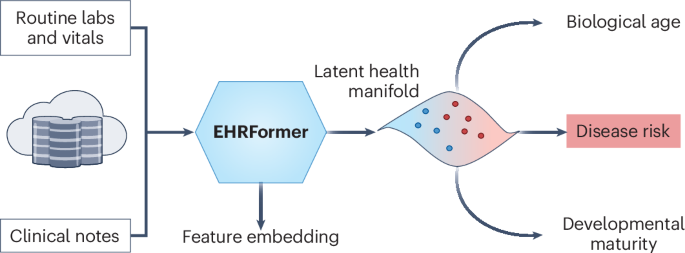
A recent study published in Nature Medicine introduces “LifeClock,” a sophisticated model for estimating biological age derived from routine electronic health record (EHR) data. This advancement offers a compelling vision for shifting healthcare from reactive treatment to proactive prevention. But how practical is this “clock” for widespread use, and what steps are needed to realize its full potential? Let’s delve into the details.
The Power of EHR-Based Biological Age
Traditionally, assessing biological age – how your body actually ages, versus chronological age – required complex and expensive tests.LifeClock changes that. It leverages the wealth of data already collected in your everyday healthcare visits: lab results, diagnoses, and more.
This approach, built on observational EHR data, demonstrates remarkable accuracy, as highlighted by recent research2, 8, 9, 10. It offers a scalable way to identify individuals who may be aging faster or slower than expected,perhaps signaling increased risk for age-related diseases.
Challenges to Widespread Implementation
Despite its elegance,several hurdles remain before LifeClock can be broadly implemented.
* Data Heterogeneity: EHR systems vary considerably between hospitals. Differences in lab platforms, coding standards, and testing frequency can introduce bias. This means age-gap estimates could be influenced by where you receive care, not just your underlying biology.
* Calibration Drift: The model’s accuracy may decline when applied to new populations, especially in pediatric settings or resource-limited environments. Training data heavily influences performance.
* Correlation vs. Causation: LifeClock, like many clinical prediction models, primarily identifies correlations.it doesn’t necessarily reveal why someone is aging at a particular rate.Understanding the underlying mechanisms is crucial.
Bridging the gap: Integration and Validation
Overcoming these challenges requires a multi-faceted approach. Here’s how we can move forward:
* Data Integration: Combining EHR data with other sources – proteomics, imaging, and wearable sensor data – can add mechanistic depth and functional resolution. Think of it as layering facts for a more complete picture.
* Continuous Monitoring & Local Calibration: Health systems should continuously monitor the model’s performance within their own patient populations and recalibrate as needed. this ensures accuracy and relevance.
* Hypothesis Generation & Biological Examination: LifeClock should be viewed as a tool for generating hypotheses. Deviations in biological age trajectories need to be linked to underlying biological processes through further research (proteomics, metabolomics, single-cell data).
* Rigorous Validation & Transparency: Before widespread clinical use, LifeClock requires rigorous external validation across diverse demographic subgroups. Transparent performance metrics are essential for building trust.
* Clear Clinical Frameworks: We need clear guidelines for interpreting LifeClock results and integrating them into clinical decision-making. Responsible implementation is paramount.
The Future of Proactive Prevention
The work by Wang et al.2 represents a important step toward translating aging research into practical healthcare tools. By leveraging data already available in health systems, LifeClock offers a pathway to earlier intervention and more equitable care.
Imagine a future where interventions are timed to your individual trajectory of change, before clinical events occur.This is the promise of biological age clocks like LifeClock.
If health systems embrace local calibration, continuous monitoring, and transparent communication, this clock can truly move prevention earlier in the disease process and improve patient outcomes for everyone.
References:
* 8. Ndumele, C. E. et al. Circulation 148, 1636-1664 (2023).
* 9. Tang, A. S. et al. Nat.Med. 30, 1847-1855 (2024).
* 10. Heumos, L. et al. Nat. Med. 30, 3369-3380 (2024).
* 2. Wang, K. et al. Nat. Med. https://doi.org/10.1038/s41591-025-04006-w (2025).
Worth a look