
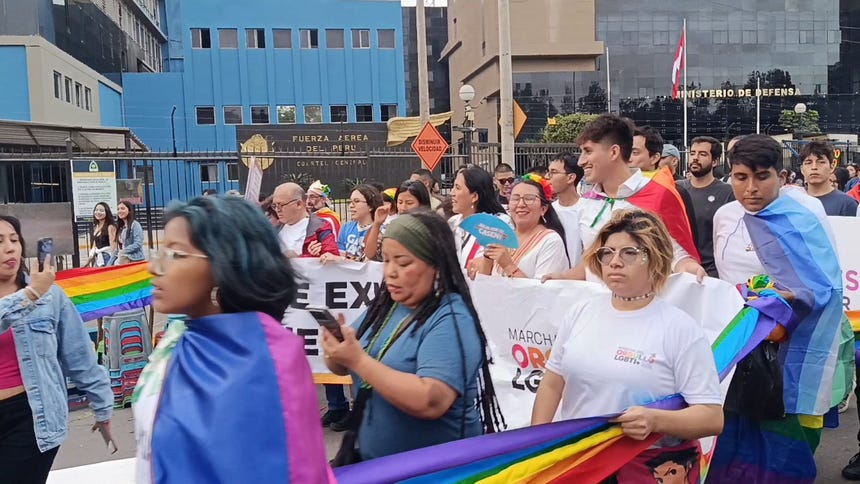
Thousands of citizens and civil society organizations marched through the streets of Lima this past weekend to commemorate the LGBTI+ Pride Day, calling for greater legislative protections and an end to discrimination in Peru. The mobilization, which brought together diverse groups under a unified call for equality, underscores the ongoing social and political debate regarding the rights of the sexual minority community in the Andean nation.
The demonstration, a fixture in the Peruvian capital’s calendar, saw participants traverse central avenues, carrying flags and banners that demanded the recognition of diverse identities and the implementation of policies to address violence and exclusion. According to reports from the local press, the march remained peaceful throughout the day, serving as a platform for activists to reiterate their long-standing demands to the national government and the Congress of the Republic of Peru.
The Legislative Context of LGBTI+ Rights in Peru
The march occurs against a backdrop of stalled legislative progress concerning the rights of the LGBTI+ population in Peru. Despite various petitions from human rights organizations, the country lacks comprehensive laws that specifically criminalize hate crimes motivated by sexual orientation or gender identity at the level of specific, stand-alone national legislation equivalent to marriage equality or gender recognition laws found in neighboring jurisdictions.

The Defensoría del Pueblo (Ombudsman’s Office of Peru) has frequently issued reports emphasizing the state’s obligation to protect the rights of all citizens regardless of their sexual orientation. In its most recent institutional assessments, the Ombudsman’s Office has highlighted the necessity of improving access to justice for victims of discrimination, noting that structural barriers continue to prevent many from reporting abuse effectively. Further information on the office’s ongoing monitoring of human rights in Peru can be accessed through the official portal of the Defensoría del Pueblo.
Demands and Public Discourse
The participants in the Lima march focused on several core issues, most notably the request for the approval of a Gender Identity Law and the implementation of inclusive educational policies. Organizers of the event stated that the march is not merely a celebration, but a political act intended to make visible a segment of the population that they argue is systematically ignored in public policy discussions.

Opposition to these proposals remains present in the legislative sphere, where conservative factions have historically blocked initiatives aimed at expanding legal recognition for same-sex couples or trans individuals. This tension between civil society movements and the legislative body remains a defining feature of the Peruvian political landscape. The Congress of the Republic of Peru continues to be the primary site where these conflicting agendas meet, with various legislative commissions periodically reviewing, tabling, or rejecting proposals related to the rights of the LGBTI+ community.
Community Impact and Safety
For many attendees, the march represents a rare opportunity for public assembly in an environment that is often perceived as hostile or indifferent. Activists emphasize that the visibility provided by these marches is essential for the psychological and social well-being of the community, particularly for youth.
While the event was marked by a celebratory atmosphere, it also served to highlight the persistent challenges faced by the community. According to data compiled by organizations such as the Centro de Promoción y Defensa de los Derechos Sexuales y Reproductivos (PROMSEX), discrimination remains prevalent in both the public and private sectors. For those seeking legal assistance or guidance regarding rights in Peru, resources are regularly updated by non-governmental organizations dedicated to monitoring constitutional compliance, such as the information provided by PROMSEX.
What Happens Next
The immediate future of the movement rests on upcoming legislative sessions and the potential for new bill presentations in the next parliamentary cycle. Activists have indicated that they intend to continue their advocacy efforts, focusing on the judiciary and administrative branches to enforce existing constitutional protections against discrimination.

Citizens interested in monitoring the progress of these legislative initiatives can access the official legislative record via the Congressional Legislative Portal, which tracks the status of all current bills and committee votes. As the national conversation continues, the visibility of the LGBTI+ community in public spaces remains a central pillar of their advocacy strategy. Readers are encouraged to follow local developments and share their perspectives on the evolution of these civil rights discussions in the comments section below.