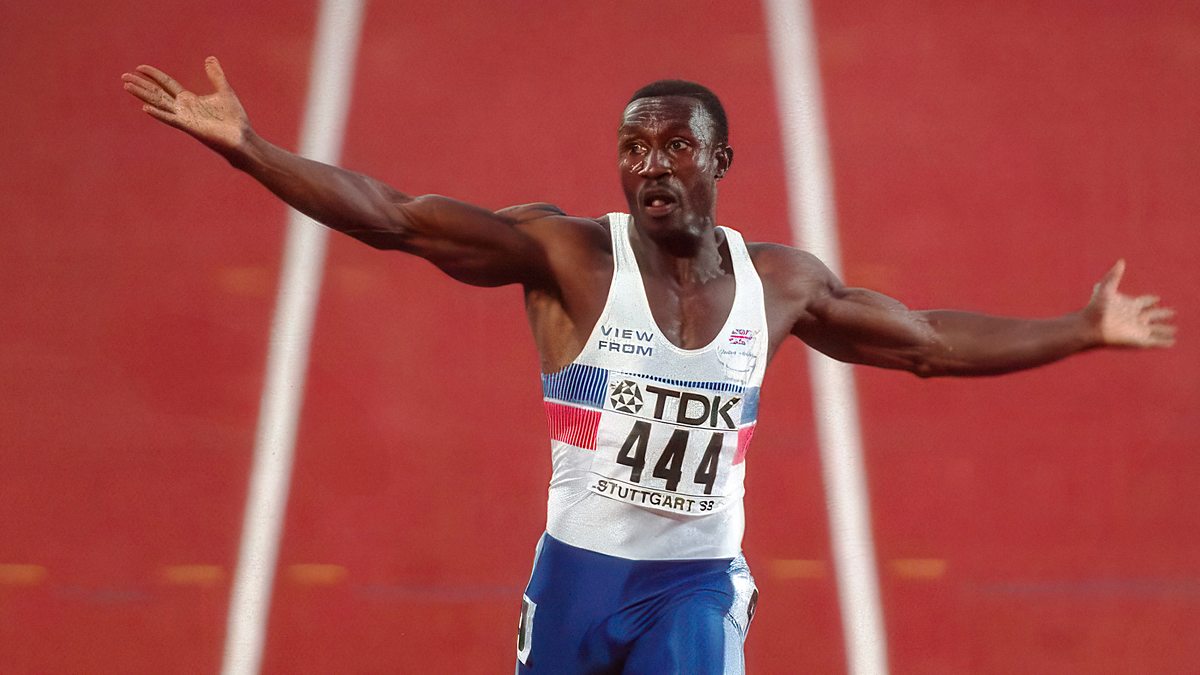
In the pantheon of British athletics, few figures loom as large or as controversially as Linford Christie. For a generation of sports fans, Christie represented the absolute pinnacle of human speed, a powerhouse whose presence on the starting block signaled a masterclass in the 100-meter sprint. Yet, the narrative of his career is not merely one of gold medals and record-breaking times; It’s a complex study of triumph intertwined with the enduring shadow of anti-doping disputes.
As a sports editor who has spent over a decade analyzing the intersection of athletic performance and regulatory scrutiny, I find Christie’s trajectory particularly telling. He did not just win races; he shifted the perception of what a British sprinter could achieve on the global stage. However, the duality of his legacy—the celebrated champion and the banned athlete—continues to spark debate within the sporting community regarding the evolution of drug testing and the preservation of athletic integrity.
The story of Linford Christie is a reminder that in elite sports, the finish line is rarely the end of the story. From the roar of the crowd in Barcelona to the sterile environment of the testing lab, his journey reflects the broader tensions of a professional era where the drive for perfection often collided with the emerging rigors of sports science and governance.
The Golden Standard: Dominance in the 100 Meters
Linford Christie’s ascent to the top of the sprinting world was marked by a combination of raw power and meticulous technique. His crowning achievement came at the 1992 Barcelona Olympics, where he captured the gold medal in the 100 meters. This victory cemented his status as the premier sprinter of his era and made him the first British man to win Olympic gold in the event. The International Olympic Committee records confirm his dominance during this period, highlighting a career defined by consistency at the highest level.
Beyond the Olympics, Christie’s resume is among the most decorated in the history of the sport. He achieved a rare “grand slam” of sprinting, winning gold medals at the Olympic Games, the World Championships, the European Championships and the Commonwealth Games. His victory at the 1993 World Championships in Stuttgart further solidified his grip on the 100-meter discipline, showcasing a level of psychological and physical fortitude that intimidated rivals.
For years, Christie held the British record for the 100 meters, a benchmark that stood for nearly three decades. His ability to maintain peak performance into his 30s was viewed as an anomaly at the time, challenging the conventional wisdom regarding the aging process of explosive athletes. This longevity is a key component of his legacy, as he proved that strategic training and mental discipline could extend a sprinter’s prime.
The Shadow of Infamy: Doping Allegations and Bans
Despite the accolades, Christie’s career is inextricably linked to the controversy surrounding performance-enhancing drugs. The most significant blow to his reputation occurred in 1999, when he tested positive for the banned steroid nandrolone. This result led to a lifetime ban from athletics, a decision that sent shockwaves through the sporting world and cast a retrospective light on his previous achievements.
The fallout from the 1999 test was not without legal battle. Christie consistently denied the allegations, arguing that the positive result was a fluke or the result of contaminated supplements. While the ban was a definitive blow, it highlighted the growing capabilities of the World Athletics (then IAAF) testing protocols and the increasing pressure on athletes to maintain absolute transparency regarding their biochemistry.
This incident was not the only time Christie faced scrutiny. Earlier in his career, specifically during the 1988 Seoul Olympics, he faced questions regarding pseudoephedrine levels. Although he was cleared in that instance, the pattern of proximity to banned substances created a narrative of suspicion that he could never fully shake. For many, the 1999 ban served as a confirmation of long-held doubts, while for others, it was a tragic end to a legendary career.
Evaluating the Legacy: Pioneer or Cautionary Tale?
When examining the Linford Christie career and legacy, one must weigh the objective results against the ethical breaches. On one hand, Christie was a pioneer who inspired countless British athletes to pursue sprinting, proving that a UK-based athlete could outpace the dominant forces from the US and Jamaica. His professionalism and insistence on high standards transformed the culture of British athletics.
the nandrolone positive serves as a cautionary tale. It underscores the perilous nature of the “win-at-all-costs” mentality that permeated the 1980s and 90s. The transition from the era of relatively lax testing to the modern, rigorous WADA (World Anti-Doping Agency) standards means that athletes like Christie are often judged by today’s more stringent ethical frameworks.
The impact of his controversy extends beyond his own medals. It contributed to a broader conversation about the “cleanliness” of the era and prompted sports governing bodies to implement more frequent and unpredictable out-of-competition testing. In this sense, the failures of the past helped build the integrity of the present.
Comparative Timeline of Key Career Milestones
| Year | Event/Milestone | Outcome/Status |
|---|---|---|
| 1992 | Barcelona Olympic Games | Gold Medal (100m) |
| 1993 | World Championships (Stuttgart) | Gold Medal (100m) |
| 1990s | British 100m Record | Held for nearly 30 years |
| 1999 | Nandrolone Drug Test | Positive result / Lifetime ban |
Life After the Track: Coaching and Influence
In the years following his retirement and the resolution of his legal battles with athletics bodies, Christie transitioned into coaching. By sharing his knowledge of biomechanics and race strategy, he has attempted to pass on the technical brilliance that fueled his own success. His approach to coaching is known for being demanding and precise, reflecting the same intensity he brought to the track.

Christie has occasionally reappeared in the public eye to comment on the state of modern sprinting. His critiques often center on the lack of “raw power” in current athletes or the overly cautious nature of modern training regimes. While his relationship with the official athletic establishment remains strained, his influence on the technical execution of the 100-meter start remains a point of study for coaches worldwide.
For the global audience, Christie remains a polarizing figure. To some, he is the gold medalist who put British sprinting on the map; to others, he is a symbol of an era of pharmacological experimentation. However, the factual reality is that he was an athlete of immense talent whose career serves as a bridge between the amateur spirit of the mid-century and the hyper-professionalized, scrutinized world of modern sports.
The next significant checkpoint for those following the evolution of athletics regulation will be the ongoing updates to the World Anti-Doping Agency (WADA) Prohibited List, which continues to refine the boundaries of what is permissible in the pursuit of human speed.
Do you believe an athlete’s legacy should be defined by their achievements or their controversies? Share your thoughts in the comments below or join the discussion on our social media platforms.
Keep reading