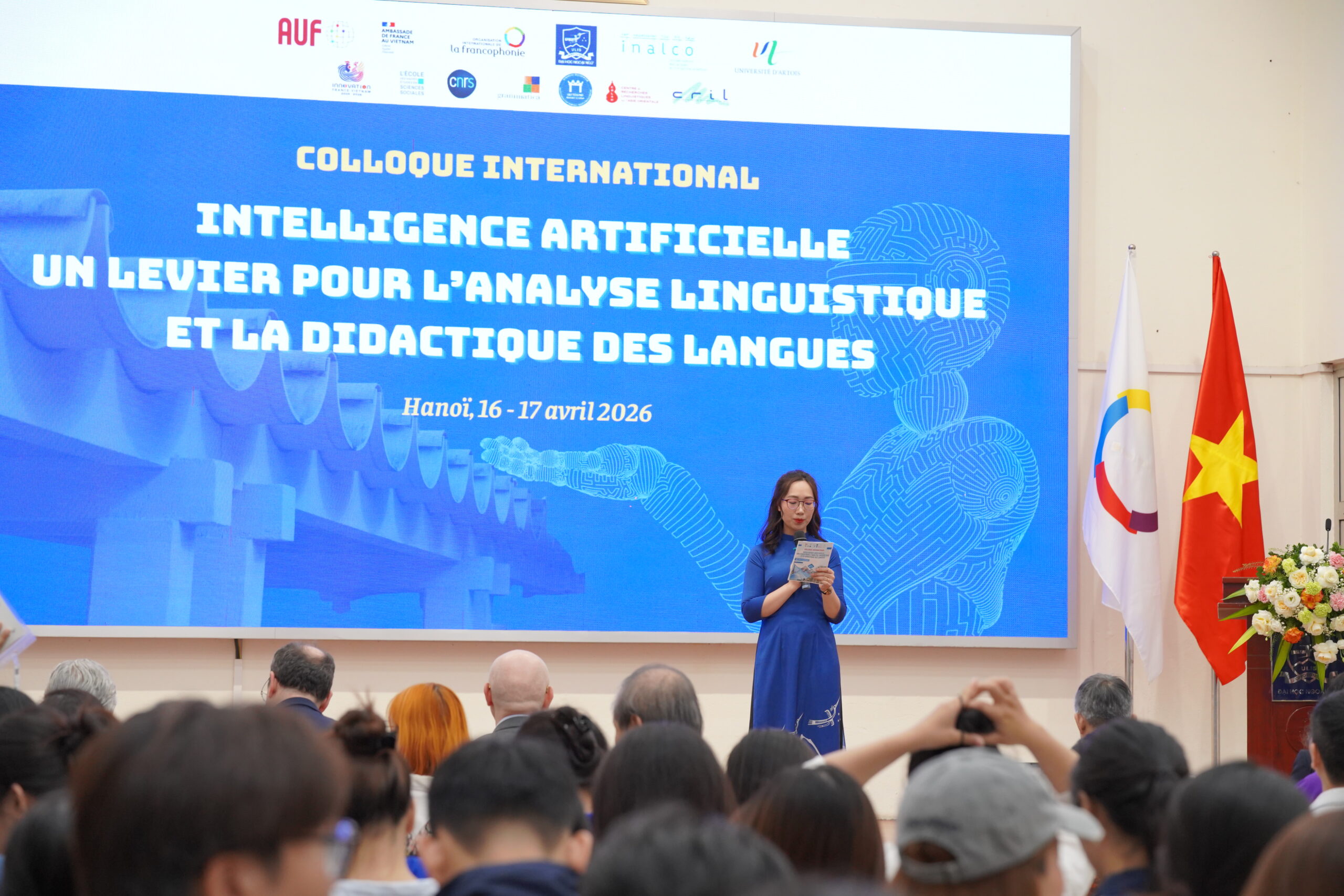
Hanoi has emerged as a focal point for academic discourse on artificial intelligence, linguistic analysis, and language teaching methodologies within the Francophone world. The Agence Universitaire de la Francophonie (AUF) has highlighted the city’s growing role in shaping how higher education institutions approach AI integration in language learning, particularly as educators grapple with the implications of generative models for linguistic diversity and pedagogical innovation.
This development aligns with broader efforts across the Francophonie to address both the opportunities and challenges posed by AI in education. In March 2026, Le Monde reported that university curricula worldwide are attempting to incorporate AI in a fragmented manner, aiming to teach students not only how to use these tools but also to critically assess their limitations and societal impacts. The AUF has reinforced this mission through targeted initiatives, including the launch of its first dedicated online training program on AI usage in education, announced in mid-April 2026.
Central to the discussions in Hanoi is the question of what AI systems actually make measurable and exploitable in language processing, rather than whether they perfectly mimic human cognition. As noted in a widely cited commentary from Le Monde.fr in March 2026, the focus has shifted from imitation to identification — specifically, determining which aspects of language learning can be quantified, assessed, and enhanced through algorithmic support without compromising authentic communication or cultural nuance.
These debates are especially pertinent given concerns about AI’s impact on linguistic diversity. Radio-Canada highlighted in early 2026 that the unchecked deployment of large language models risks privileging dominant languages while marginalizing lesser-used ones, potentially accelerating language loss. In response, scholars and policymakers within the Francophone network have advocated for AI applications that actively support endangered or under-resourced languages, including efforts to develop tools capable of recognizing and processing linguistic patterns from oral traditions and historical texts.
Such efforts resonate with findings from TechRadar, which observed in early 2026 that AI systems are increasingly capable of deciphering and even revitalizing languages with few living speakers — a phenomenon some have dubbed the emergence of AI as a de facto “King of Babel.” However, experts caution that technological capability must be paired with ethical stewardship, ensuring that language communities retain control over how their linguistic heritage is digitized, stored, and utilized.
The intersection of AI and language education also raises fundamental questions about the enduring value of reading and critical engagement with texts in an age of LLMs. Sciences et Avenir explored this tension in a March 2026 feature, arguing that while AI can summarize and translate efficiently, it cannot replicate the cognitive and empathetic benefits derived from deep, sustained engagement with literature — a point increasingly emphasized in teacher training programs supported by the AUF.
AUF’s Strategic Response to AI in Francophone Education
The Agence Universitaire de la Francophonie has positioned itself as a key coordinator in helping member institutions navigate the complexities of AI adoption. On April 14, 2026, the AUF announced two significant partnerships: one with the CPCCAF (Permanent Conference of African and Francophone Chambers of Commerce) focused on media literacy education, and another dedicated specifically to launching its inaugural online training module for educators on the pedagogical use of AI.
This training initiative, hosted through the AUF’s digital learning platform, aims to equip teachers across the Francophonie with practical frameworks for integrating AI tools into language instruction while upholding academic integrity and linguistic inclusivity. The program covers topics such as prompt design for language exercises, bias detection in AI-generated content, and methods for using technology to support multilingual classrooms without privileging any single language variant.
By mid-April 2026, the AUF’s press office confirmed that the initiative had drawn interest from universities in Southeast Asia, West Africa, and Eastern Europe — regions where access to advanced educational technology remains uneven but where demand for innovative language teaching solutions is growing rapidly. The organization emphasized that its approach prioritizes accessibility, offering low-bandwidth versions of the training and encouraging peer-to-peer knowledge sharing through its global network of over 1,000 member institutions.
Balancing Innovation with Linguistic Equity
A recurring theme in Hanoi-based discussions has been the need to prevent AI from exacerbating existing inequities in language education. Researchers have warned that if AI tools are trained primarily on corpora from dominant languages like English or French, they may inadvertently reinforce biases or fail to recognize valid linguistic structures in regional dialects, creoles, or indigenous languages spoken across Francophone territories.
To counter this, several pilot projects mentioned in AUF communications involve collaboration with local linguists to build more representative training datasets. These efforts include recording oral histories in Vietnamese, Wolof, and Khmer, then using AI-assisted transcription and annotation to create searchable archives that serve both preservation and educational goals. Such work underscores the argument that AI should serve as a tool for linguistic empowerment rather than homogenization.
The AUF has also advocated for policy-level interventions, urging national education ministries and university governing bodies to establish clear guidelines on AI use in assessment and accreditation. These guidelines, the organization argues, should require transparency about when and how AI is employed in student work, alongside provisions for human oversight in high-stakes evaluations such as thesis defenses or language proficiency certifications.
Implications for Educators and Learners
For teachers, the integration of AI into language classrooms presents both opportunities and challenges. On one hand, AI-powered tools can offer personalized feedback on pronunciation, grammar, and vocabulary usage at scale — particularly useful in large undergraduate courses where individualized instructor feedback is limited. Educators must remain vigilant about overreliance, ensuring that students develop metalinguistic awareness and the ability to critically evaluate AI-generated output.
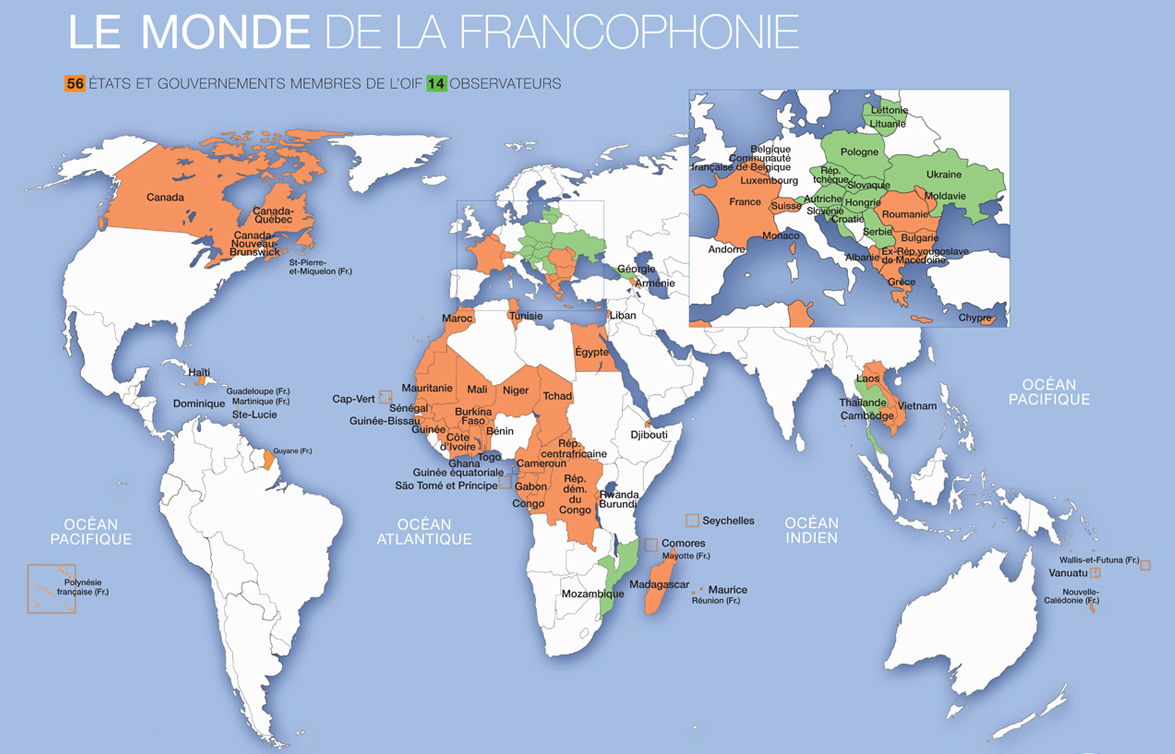
Learners, meanwhile, are navigating a landscape where AI tools are increasingly embedded in language-learning apps, translation software, and academic writing assistants. While these technologies can lower barriers to access — especially for students in remote or underfunded institutions — they also raise concerns about dependency and the potential atrophy of foundational skills such as independent composition and textual analysis.
In response, the AUF’s training program emphasizes a “blended competence” model, encouraging educators to design assignments that combine AI-assisted drafting with mandatory reflection components, peer review, and iterative revision. This approach aims to foster not just technical proficiency with AI tools, but also the higher-order thinking skills essential for meaningful language mastery.
Ongoing Developments and Future Outlook
As of April 21, 2026, the AUF continues to monitor the rollout of its AI in education training module, with plans to collect participant feedback and assess impact through follow-up surveys and institutional case studies later in the year. The organization has also indicated that future iterations of the program may include specialized tracks for STEM educators, administrator training on AI procurement ethics, and modules focused on AI-assisted research methodologies in the humanities.

Meanwhile, Hanoi is expected to host a regional symposium on AI and linguistic diversity in late 2026, organized in partnership with Vietnam’s Ministry of Education and Training and several Francophone universities. While specific dates and speaker lineups remain unconfirmed as of this writing, the event is anticipated to bring together experts from Southeast Asia, Africa, and Europe to share best practices in ethical AI deployment for language preservation and innovation.
For educators, administrators, and policymakers seeking official updates on the AUF’s AI and education initiatives, the organization maintains a dedicated press section on its website, featuring regularly updated communiqués, multimedia resources, and subscription options for its informational newsletters. These channels provide verified information on upcoming events, partnership announcements, and research findings related to the Francophonie’s collective response to technological change in higher education.
As the conversation around AI, language, and education evolves, the Francophonie’s approach — centered on inclusivity, critical engagement, and institutional collaboration — offers a model for how global education systems might harness technological advancement without sacrificing the richness of human linguistic expression. Those interested in contributing to or learning from this ongoing dialogue are encouraged to engage directly with the AUF’s programs and share their experiences through the network’s collaborative platforms.
Keep reading