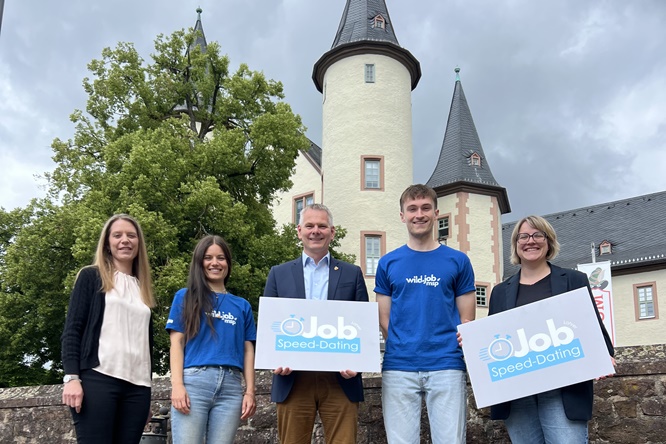
Lohr am Main is launching its inaugural job speed-dating event to address the growing demand for skilled labor and vocational apprenticeships in the region. Scheduled to take place on the 12th, the initiative aims to bridge the gap between local employers and prospective trainees through high-intensity, brief interviews designed to facilitate immediate matches in a competitive labor market.
Addressing the Regional Skills Gap
The decision to host a speed-dating format for apprenticeships reflects a broader trend among German municipalities to modernize recruitment processes. According to data from the Bundesagentur für Arbeit (Federal Employment Agency), the German labor market continues to face significant pressure regarding the placement of apprentices, particularly in technical and service-oriented sectors. By removing the traditional, often lengthy application barrier, organizers in Lohr am Main intend to lower the threshold for young job seekers to engage directly with hiring managers.

Speed-dating in a professional context allows candidates to present their personalities and motivations beyond the limitations of a standard CV. For local businesses, this provides a practical solution to the persistent challenge of filling vacant training positions, as noted in recent labor market analyses by the Deutscher Industrie- und Handelskammertag (DIHK), which highlight that small to medium-sized enterprises (SMEs) often struggle to compete for talent against larger corporations.
How the Recruitment Format Works
The structure of the event is designed for efficiency. Candidates rotate through a series of short, timed interviews with participating companies. This format serves to normalize the interview experience for students, many of whom may be navigating their first professional interactions. By condensing the initial screening phase into a single day, both parties can gauge mutual interest and compatibility in a fraction of the time required by traditional hiring cycles.

The efficiency of such events is backed by observations from the Bundesministerium für Bildung und Forschung (Federal Ministry of Education and Research), which advocates for diverse pathways into vocational training. The ministry emphasizes that direct contact between employers and prospective apprentices is a key factor in reducing the dropout rate during the first year of training, as it fosters a clearer understanding of role expectations before a contract is signed.
Economic Context and Local Impact
In the context of the current economic environment, the importance of vocational training cannot be overstated. With demographic shifts impacting the workforce across Bavaria, local initiatives are critical for ensuring the long-term sustainability of regional industries. According to the Bayerisches Staatsministerium für Wirtschaft, Landesentwicklung und Energie, strengthening the dual education system remains a top priority for economic development in the state.
The Lohr am Main event serves as a microcosm of these state-wide efforts. By creating a localized nexus for talent acquisition, the organizers are not only helping individual students secure a professional future but are also supporting the stability of the local business ecosystem. These events often result in a higher conversion rate of inquiries into formal apprenticeship contracts, as the personal connection made during the speed-dating phase often overcomes minor deficiencies in academic records that might otherwise lead to a rejection in a paper-based application process.
Future Outlook for Vocational Training
As the regional economy continues to evolve, the success of this inaugural event will likely influence future recruitment strategies in the area. The integration of technology and face-to-face interaction remains a balancing act; however, the consensus among human resources experts in the vocational sector is that human-centric approaches—like speed-dating—remain highly effective for entry-level positions.

Interested participants and local businesses are encouraged to monitor updates from local chambers of commerce and the regional job center for details regarding future sessions and post-event analysis. The effectiveness of this model will be assessed based on the number of successful placements confirmed in the weeks following the event. For those looking to participate in future initiatives, official guidance on apprenticeship standards and rights can be found through the Bundesinstitut für Berufsbildung (BIBB).
We welcome your thoughts on how regional recruitment events are shaping the local economy. Please share your experiences or questions in the comments section below.