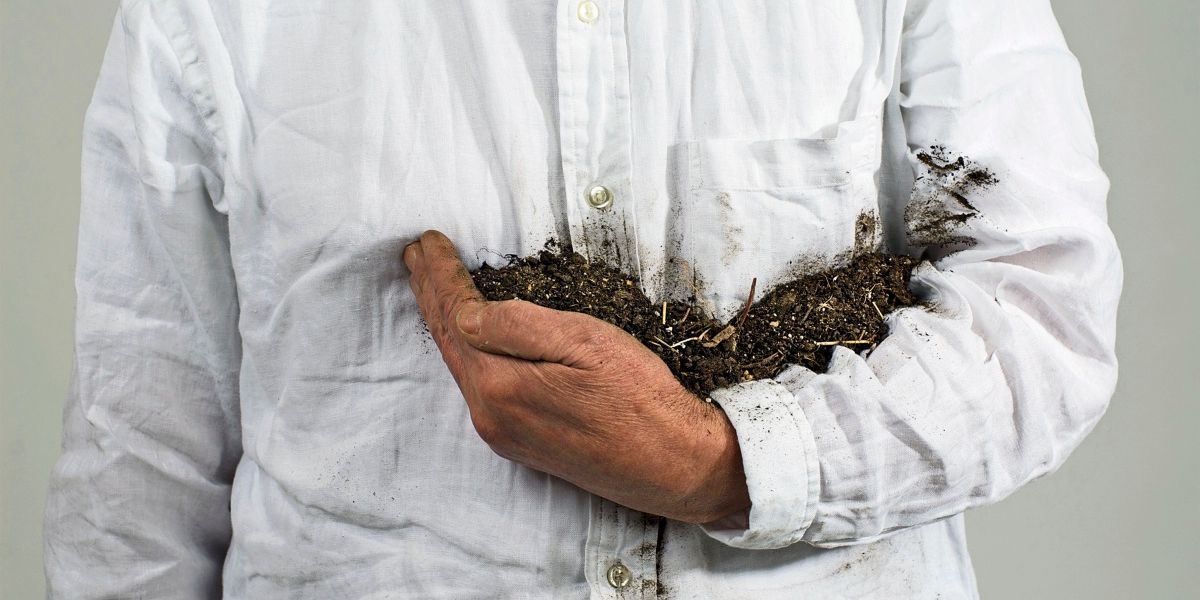
The essence of his work is a flowerpot he forgets somewhere,” Austrian artist Lois Weinberger once said, according to accounts of his artistic philosophy. This simple image encapsulates a career dedicated to observing what flourishes in unexpected places – between cracked asphalt in Salzburg, within mobile gardens constructed from hundreds of plastic containers, or amidst abandoned railway lines. Weinberger, who passed away in 2020, challenged conventional notions of art and nature, using the often-overlooked resilience of “weeds” as a metaphor for broader societal questions. His work, particularly the concept of a “Ruderal Society,” continues to resonate as a powerful commentary on migration, inclusivity and the beauty found in marginal spaces.
Born in 1947 in Stams, Tyrol, Austria, Weinberger’s artistic journey began in the 1970s with ethnopoetic explorations of his birthplace. This early work laid the foundation for decades of artistic investigation into the relationship between the natural and built environments. He didn’t see a dichotomy between the two, but rather a continuous interplay, a constant negotiation between control and wildness. Weinberger’s approach was that of a “field worker,” meticulously documenting and intervening in these overlooked landscapes. He wasn’t interested in pristine gardens or manicured parks, but in the spaces where nature reclaims what civilization abandons.
The Philosophy of the Ruderal Society
Weinberger’s work frequently centered around “ruderal plants” – those that thrive in disturbed or waste ground. These plants, often dismissed as weeds, became a central focus of his artistic practice. He saw in their tenacity and adaptability a powerful metaphor for resilience and the potential for life to flourish even in the most challenging circumstances. This observation led to the development of his concept of the “Ruderal Society,” a term he introduced during the 1997 Documenta exhibition in Kassel, Germany. As reported by Der Standard, Weinberger used the planting of neophytes – non-native plants – from Southern and Southeastern Europe along a 100-meter stretch of abandoned railway track to explore themes of migration and integration.
The planting wasn’t simply an aesthetic gesture; it was a deliberate provocation. At a time when debates surrounding immigration were intensifying, Weinberger’s “Ruderal Society” offered an alternative model – one that embraced diversity and rejected the notion of exclusion. The neophytes, like immigrants, were seen as disruptive elements, challenging the established order. Yet, they also possessed the capacity to adapt, to thrive, and to contribute to the ecosystem. Weinberger’s work suggested that a society, like a landscape, could be enriched by the inclusion of those considered “foreign” or “undesirable.”
A Career Spanning Decades and Continents
Lois Weinberger’s artistic career was remarkably prolific, encompassing a wide range of media and interventions. From drawings and photographs to sculptures and large-scale installations, his work consistently challenged viewers to reconsider their relationship with the natural world. According to his official website, his work has been exhibited in numerous prestigious institutions around the globe, including the Venice Biennale in 2009, documenta 14 in both Athens and Kassel in 2017, and the Centre Pompidou-Metz in 2017.
His installations often involved direct intervention in the landscape. He created “mobile gardens” using repurposed plastic containers, transforming neglected urban spaces into vibrant pockets of greenery. He allowed vegetation to grow freely within steel structures, blurring the boundaries between the artificial and the natural. He even, as noted by Wikipedia, “poured vegetation over the rubble in the Berlin Wall’s death strip,” treating it with the same care and attention one might supply to a rose garden. These interventions weren’t about imposing a vision onto the landscape, but about revealing the inherent beauty and resilience that already existed within it.
The “Portable Garden” and Beyond
One particularly striking example of Weinberger’s work is the “Portable Garden,” which has been featured at Art Basel Parcours and Sculpture Milwaukee. This installation consists of a collection of plants growing in a variety of discarded containers, creating a miniature ecosystem that can be transported and reconfigured in different locations. The “Portable Garden” embodies Weinberger’s core philosophy – the idea that life can flourish anywhere, even in the most unlikely of circumstances.
Beyond the “Portable Garden,” Weinberger’s oeuvre includes numerous other notable projects. “Soleil Politique” (Political Sun) explored the relationship between sunlight and political power, whereas “Invasion” investigated the dynamics of colonization and resistance. His “Skulptur mit 5 Birken” (Sculpture with 5 Birches) challenged traditional notions of sculpture, using living trees as the primary material. Throughout his career, Weinberger consistently pushed the boundaries of artistic practice, refusing to be confined by conventional categories or expectations.
A Lasting Legacy
Lois Weinberger’s death in April 2020 marked a significant loss for the art world. However, his work continues to inspire and provoke, challenging us to reconsider our relationship with nature and with each other. A documentary film, “Lois Weinberger – Ruderal Society,” directed by Markus Heltschl, is scheduled for release in March 2026, offering a deeper insight into his life and work. The film’s website promises a comprehensive exploration of his artistic vision and its enduring relevance.
Weinberger’s concept of the “Ruderal Society” remains particularly pertinent in a world grappling with issues of migration, climate change, and social inequality. His work reminds us that resilience, adaptability, and inclusivity are not merely abstract ideals, but essential qualities for survival. By celebrating the beauty of the overlooked and the marginalized, Weinberger offered a powerful vision of a more just and sustainable future. His legacy is not simply one of artistic innovation, but of a profound ethical and political commitment to a world where everyone – and everything – has a place to flourish.
The release of “Lois Weinberger – Ruderal Society” in March 2026 will undoubtedly spark renewed interest in his work and its enduring message. As we continue to navigate the complexities of the 21st century, Weinberger’s insights offer a valuable framework for understanding our relationship with the natural world and with each other. His art serves as a potent reminder that even in the most challenging of circumstances, there is always the potential for growth, resilience, and hope.
What are your thoughts on Weinberger’s concept of the “Ruderal Society”? Share your comments below, and don’t forget to share this article with your network.