
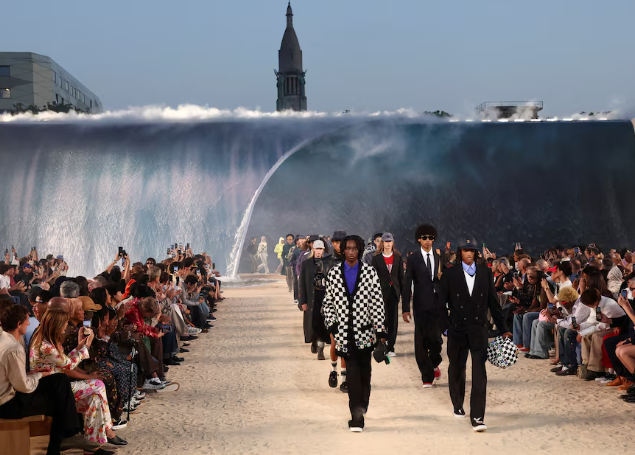
Luxury fashion house Louis Vuitton is facing public criticism following the installation of a large artificial waterfall at a recent event in Paris, occurring as the city grapples with significant heatwave conditions. The display, which featured an eight-meter-high water feature, has drawn scrutiny from environmental observers and the public regarding water usage during periods of extreme temperature and drought-related restrictions.
The event, held at the UNESCO headquarters in Paris, utilized the installation as a backdrop for a runway presentation. As European temperatures have surged, French authorities have frequently implemented water-use protocols to manage resources. According to reports from regional media, the visual impact of the flowing water during a time of heightened climate sensitivity has sparked a debate about the intersection of high-end branding and resource conservation.
Environmental Context and Public Response
France has experienced multiple heatwaves in recent years, leading to strict water conservation measures across various departments. These mandates often limit non-essential water consumption, including the filling of decorative fountains and the operation of large-scale water features. The decision by a major commercial entity to utilize high volumes of water for a temporary aesthetic installation has been described by critics as a disconnect from the current environmental reality.

Social media platforms and public forums have served as the primary venues for this discourse. Many observers have questioned the necessity of such displays when municipal governments are actively urging citizens to minimize consumption to protect local water tables. The critique centers on the contrast between the industry’s pursuit of spectacle and the broader societal efforts to adapt to climate change.
Regulatory Standards for Water Usage
In France, the “Arrêté Cadre” (Framework Decree) provides the legal basis for drought management, allowing local prefectures to restrict water usage based on the severity of the situation. These measures are tiered, ranging from vigilance to crisis levels, and can legally prohibit the operation of non-essential water features. While the specific permit status of the Louis Vuitton installation remains a point of public inquiry, the broader context of French environmental policy emphasizes the reduction of luxury consumption during climate-stressed periods.

According to the French Ministry of Ecological Transition, water restrictions are enforced to prioritize human consumption, sanitation, and agricultural needs. The public backlash suggests a growing expectation for corporate entities to align their event production with national sustainability goals, particularly in urban centers where the heat island effect is most pronounced.
Corporate Responsibility in the Fashion Industry
The incident highlights a recurring tension between the fashion industry’s reliance on elaborate set design and the increasing pressure for corporate social responsibility. Major brands have increasingly faced scrutiny over their carbon footprint, supply chain ethics, and resource management. This specific episode is being cited by environmental advocates as a case study in how luxury marketing can conflict with public sentiment regarding climate adaptation.
While the brand has not publicly detailed the mechanics of the water recycling system used for the waterfall, the scale of the structure alone has been sufficient to trigger calls for more transparency in how luxury houses account for their environmental impact. The fashion industry is currently under pressure to transition toward more sustainable event practices, including the use of digital sets or recycled materials that do not require high resource consumption.
Looking Ahead
The conversation surrounding this event is expected to influence future event planning in Paris. As municipal authorities continue to refine their approach to climate-related restrictions, event organizers may face more stringent oversight regarding the use of water and energy for commercial displays. The incident serves as a benchmark for how public perception of corporate sustainability is evolving in real-time.

For ongoing updates regarding water usage regulations and municipal environmental policies in the Paris region, residents and stakeholders are encouraged to monitor the official communications from the Prefecture of Police and the French Ministry of Ecological Transition. Engagement from the public remains a key driver in the ongoing dialogue between luxury brands and environmental advocacy groups. We invite readers to share their perspectives on the balance between artistic expression and resource conservation in the comments section below.