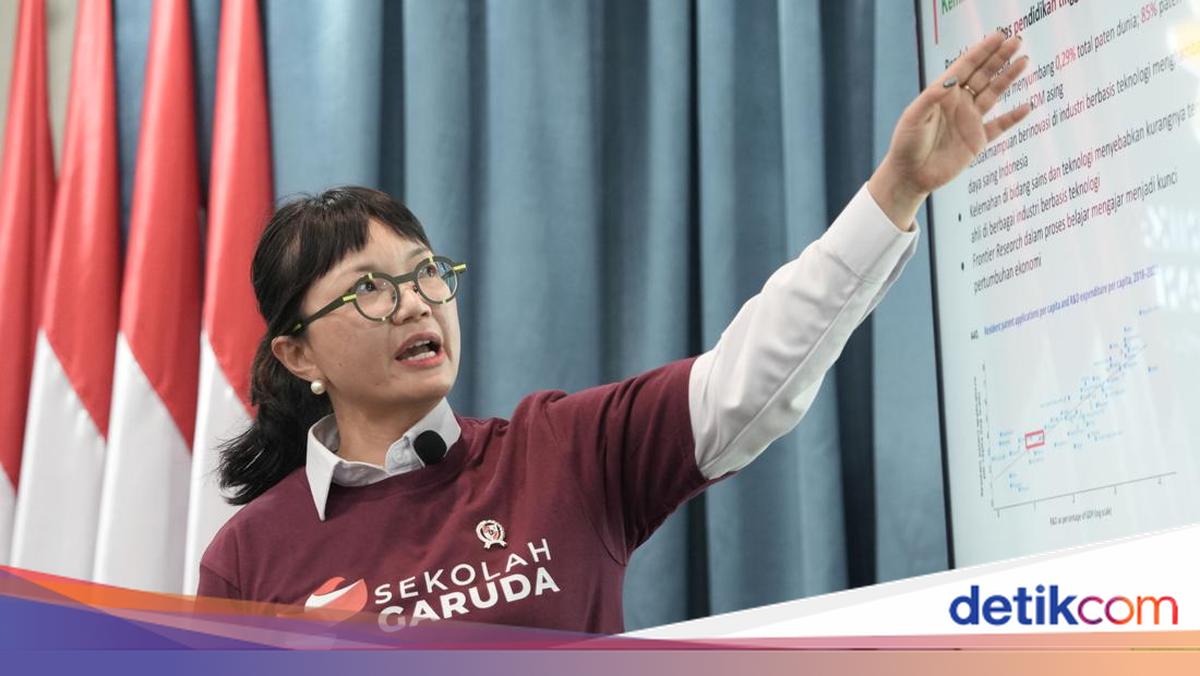
Jakarta – The concept of national obligation sparked debate in Indonesia this week following a viral social media post and subsequent comments from a high-ranking government official. The controversy centers on the expectation that recipients of Indonesian government scholarships, particularly those studying abroad, have a moral duty to contribute to the nation’s development upon their return. The discussion was ignited by a social media user expressing a desire for her children to hold foreign citizenship, a sentiment that drew swift criticism and prompted a response from Deputy Minister of Education, Science and Technology, Stella Christie.
Christie’s remarks, made on Sunday, February 22, 2026, underscored the idea that receiving a state-funded education creates a “debt of gratitude” that should be repaid through service to the country. This perspective, while not new, has resonated with a public grappling with questions of national identity, brain drain, and the responsibilities of those benefiting from public resources. The debate highlights a complex interplay between individual aspirations and collective national goals, particularly within the context of Indonesia’s ambitious efforts to cultivate a highly skilled workforce and foster innovation.
The initial controversy stemmed from a video posted on Instagram by a user with the handle @sasetyaningtyas, who shared news that her second child had been granted British citizenship. In the video, the user expressed a preference for her children to not be Indonesian citizens, stating, “I know the world seems unfair, but let me be the only one who is Indonesian, my children don’t need to be. We will strive for our children to have strong foreign passports.” This statement quickly went viral, sparking widespread condemnation and accusations of ingratitude towards the Indonesian state, particularly given the user’s reported receipt of a prestigious LPDP (Indonesia Endowment Fund for Education) scholarship.
The “Debt of Gratitude” and the LPDP Scholarship
Deputy Minister Christie addressed the issue publicly, reiterating her long-held belief that scholarships from the state carry an inherent obligation. “I was once criticized by netizens when I urged recipients of undergraduate scholarships abroad from Kemdiktisaintek that a scholarship is a debt,” Christie stated, as reported by DetikNews. “But that is indeed the case: every scholarship from the state is a debt of gratitude.”
The LPDP scholarship is a highly competitive program designed to fund Indonesian students pursuing advanced degrees at leading universities worldwide. Established in 2010, the program aims to develop a cadre of highly skilled professionals who will contribute to Indonesia’s economic and social development. Recipients are expected to return to Indonesia after completing their studies and dedicate a period of service to the nation, though the specifics of this obligation have been a subject of ongoing discussion and, increasingly, scrutiny. The program’s website details the scholarship requirements and expectations for returnees, emphasizing the importance of contributing to Indonesia’s progress.
Christie acknowledged that the recent uproar reflects a broader failure in moral education. “This controversy essentially reflects a failure of moral education at an early stage of life,” she explained. “Scholarships are not understood as a trust, but merely as a facility. That is where the problem lies.” She cautioned against overly restrictive measures, arguing that excessive limitations could breed cynicism and resentment among scholarship recipients, potentially hindering their willingness to contribute meaningfully to Indonesia.
Beyond Restrictions: Fostering a Sense of National Purpose
Instead of tightening regulations, Christie advocated for fostering a sense of trust and empowering scholarship recipients to find their own ways to benefit the nation. “The excessive restrictions could potentially foster a cynical attitude: scholarship recipients grow less grateful to the state and busy looking for loopholes to avoid obligations,” she said. “What is more needed is trust – giving space for scholarship recipients to find their own ways to benefit the nation.”
Christie highlighted the contributions of Indonesian scientists and academics in the diaspora as positive examples. She specifically mentioned Professor Vivi Kashim in China, Professor Sastia Putri in Japan, and Professor Haryadi in the United States, noting their dedication to contributing to Indonesia’s progress and creating opportunities for others. “These good examples need to be highlighted,” she stated, emphasizing that demonstrating gratitude to the country can take many forms.
To cultivate a stronger sense of patriotism among scholarship recipients, Christie suggested focusing on benefiting individuals within Indonesia rather than abstract institutions. She too stressed the importance of preserving the Indonesian language, even within multicultural families. “For scholarship recipients, focus on how you can benefit individuals in Indonesia, more than institutions,” she advised. “And for parents, both those living in Indonesia and abroad, use Indonesian at home and instill pride in the Indonesian language in your children.” She even shared that she requires her Polish husband to speak Indonesian at home, demonstrating her commitment to linguistic preservation.
The Apology and Ongoing Debate
Following the public backlash, the individual behind the viral Instagram post, identified only as DS, issued a public apology. In a statement posted on Friday, February 20, 2026, DS acknowledged that her comments were “inappropriate and could be interpreted as belittling Indonesian citizenship.” She attributed her remarks to feelings of disappointment but admitted that her actions were wrong. The apology, while widely reported, did little to quell the broader debate about national identity and the obligations of those who benefit from state-funded education.
The incident has reignited discussions about the terms of the LPDP scholarship and the expectations placed upon its recipients. While the scholarship agreement does not explicitly mandate a specific period of service upon return, it emphasizes the importance of contributing to Indonesia’s development. Critics argue that the lack of clear guidelines and enforcement mechanisms has contributed to the current situation, while proponents maintain that a more flexible approach is necessary to attract and retain top talent.
Key Takeaways
- The controversy highlights the tension between individual aspirations and national obligations.
- Deputy Minister Stella Christie emphasizes that scholarships from the state create a “debt of gratitude.”
- A more nuanced approach, focusing on trust and empowerment, may be more effective than stricter regulations.
- The incident has sparked a broader debate about the terms of the LPDP scholarship and the expectations placed upon its recipients.
The debate surrounding the LPDP scholarship and the responsibilities of its recipients is likely to continue. The Indonesian government is expected to review the scholarship program’s guidelines and explore ways to strengthen the connection between scholarship recipients and the nation’s development goals. Further discussion is anticipated during upcoming parliamentary hearings on education funding and policy. The next official update on the LPDP program is scheduled for release in March 2026.
What are your thoughts on the responsibilities of scholarship recipients? Share your opinions in the comments below, and please share this article with your network.